Beyond Trees: How to REALLY Cool Our Sweltering Cities

Beyond Trees: How to REALLY Cool Our Sweltering Cities
Think trees are the ultimate heatwave solution? Think again! We need a multi-layered green strategy for truly livable, cooler cities. From ground cover to green roofs, discover why diverse urban nature is key to combatin
Our cities are turning into concrete ovens, and the relentless march of heatwaves is a stark reminder of climate change's grip. The knee-jerk reaction, often well-intentioned, is to plant more trees. While trees are undoubtedly beneficial, relying on them as the sole savior for our sweltering urban centers might just be a green pipe dream.
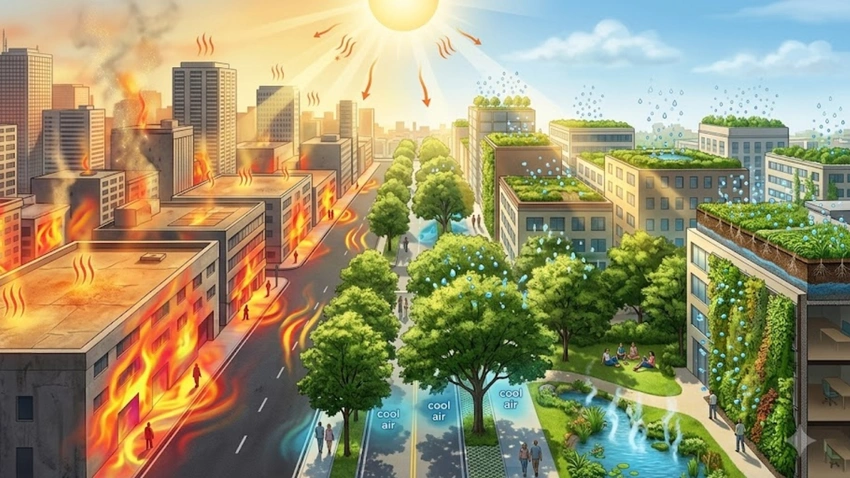
It's time for urban planners and city dwellers alike to look beyond the canopy. The secret to genuinely cooling our cities lies in a rich, multi-layered tapestry of green infrastructure. Imagine a city where not just trees, but also a vibrant understory of shrubs, dense ground cover, and even green roofs and walls work in concert. This isn't just about aesthetics; it's about creating a powerful, natural air conditioning system.
The cooling magic of urban greenery operates on two primary fronts. First, there's shading. A mature tree can block a staggering amount of incoming solar radiation, dramatically lowering surface temperatures by several degrees. This instant relief is palpable on a scorching afternoon. But the story doesn't end there. The second, more subtle, yet equally powerful mechanism is evapotranspiration. Plants release water vapor into the air through their leaves, much like how our bodies sweat to cool down. This process effectively reduces ambient air temperatures, making the surrounding environment noticeably more comfortable.
While trees are the heavy hitters in this green orchestra, studies are increasingly showing that a diverse, layered approach delivers superior results. A standalone tree, however grand, creates a cool spot, but it can't transform an entire streetscape. When trees are complemented by shrubs and ground cover, they create a more complete microclimate. The ground cover minimizes heat absorption from the soil, while shrubs add another layer of shade and contribute to evapotranspiration. This layered density maximizes both shading and evaporative cooling, creating a far more effective buffer against extreme heat.
Urban planning needs to evolve from simply 'greening' to strategically 'ecologizing' our cities. This means designing public spaces, residential areas, and commercial zones with integrated green systems. It's about understanding that a mosaic of diverse plant life contributes to more robust ecosystems, better stormwater management, improved air quality, and crucially, more livable temperatures. Investing in this holistic green infrastructure isn't just an environmental luxury; it's an economic imperative and a public health necessity. Let's ditch the single-solution mindset and embrace the power of diverse nature to truly cool our urban jungles.
