Behind Sonam Wangchuk’s Rise, the Deep State Whispers, Foreign Funds, and American Ties

Behind Sonam Wangchuk’s Rise, the Deep State Whispers, Foreign Funds, and American Ties
Is Sonam Wangchuk a grassroots hero or a pawn of foreign interests? We at Opiniown connect the dots between his Rockefeller/Ford-backed awards, American ties, and the recent FCRA ban over foreign funding in Ladakh.
The Making (and Unmaking) of a Himalayan Hero
For over a decade, Sonam Wangchuk has been the undisputed poster child for Indian indigenous innovation. Widely credited as the inspiration for the protagonist in the 2009 Bollywood blockbuster 3 Idiots, the Ladakhi engineer captured the nation’s imagination by building "ice stupas" to combat climate change and founding the Students' Educational and Cultural Movement of Ladakh (SECMOL). He was the quintessential underdog: a brilliant, soft-spoken educator fighting for the marginalized youth of the high Himalayas.
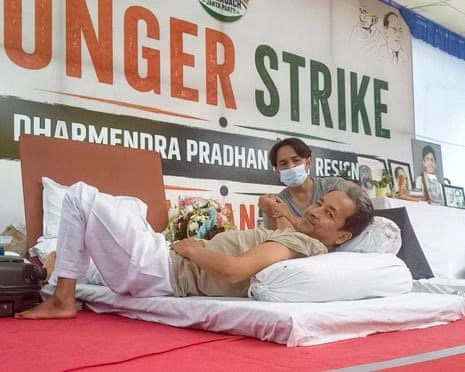
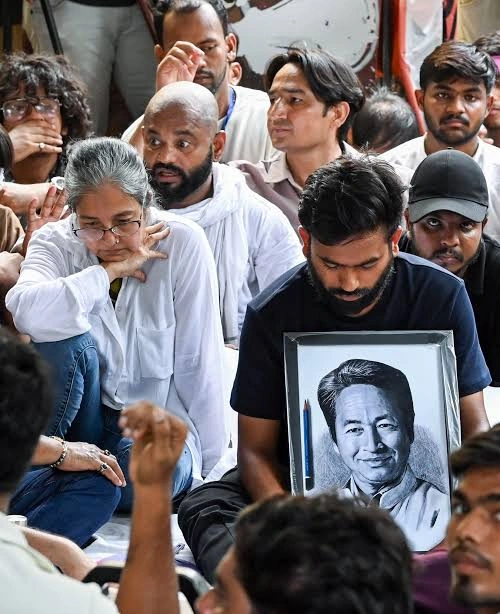
However, by mid-2026, the narrative surrounding Wangchuk shifted from environmentalism to hardcore political agitation. Descending from the mountains to the streets of New Delhi, Wangchuk became a fierce anti-government protestor, leading prolonged hunger strikes at Jantar Mantar alongside youth movements like the Cockroach Janta Party to protest national exam irregularities. He has also relentlessly demanded Sixth Schedule constitutional protections and statehood for Ladakh, leading to clashes with law enforcement.
But as Wangchuk’s political footprint has expanded, so too has the scrutiny on his international backing. A dive into his financial lifelines, his institutional awards, and his personal network reveals a complex web of foreign influence that has critics and national security analysts asking a dangerous question: Is the hero of the Himalayas acting independently, or is he a well-funded pawn in a larger geopolitical chess match?
The Magsaysay Glow and the Rockefeller-Ford Nexus
Wangchuk’s ascension from a local educator to a global icon was permanently cemented in 2018 when he was awarded the Ramon Magsaysay Award. Often heralded as "Asia's Nobel Prize," the award gave Wangchuk an armor of international legitimacy. But a closer look at the foundation funding this prestige reveals deep roots in American soft power.
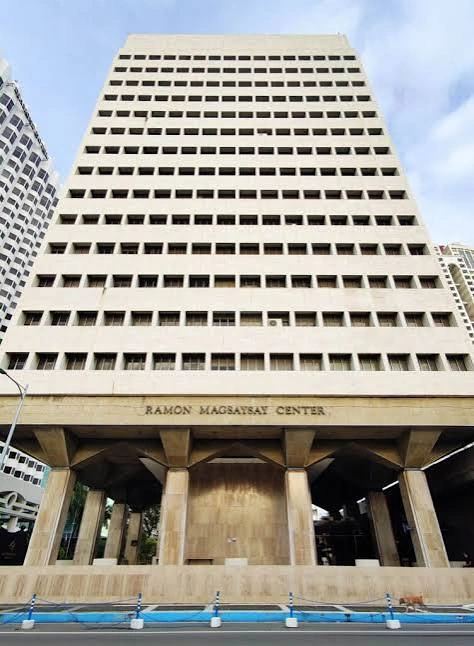
The Ramon Magsaysay Award was established in 1957 by the trustees of the New York-based Rockefeller Brothers Fund (RBF), in concurrence with the Philippine government. Furthermore, specific categories within the foundation, such as the "Emergent Leadership" award, have historically been heavily supported by grants from the Ford Foundation.
In geopolitical intelligence circles, the Rockefeller and Ford foundations have long been viewed with deep suspicion by developing nations. Critics and proponents of the "Deep State" theory frequently point out that during the Cold War, these philanthropic giants occasionally operated in tandem with US foreign policy objectives, sometimes functioning as conduits or soft-power fronts for the Central Intelligence Agency (CIA). By elevating and funding activists in sensitive regions across the Global South, these American institutions possess the immense power to inadvertently or intentionally to shape domestic political narratives in sovereign nations. For Wangchuk, the Magsaysay award wasn't just a trophy; it was an induction into an elite, western-backed network of influence.
The American Ex-Wife and the SIT Connection
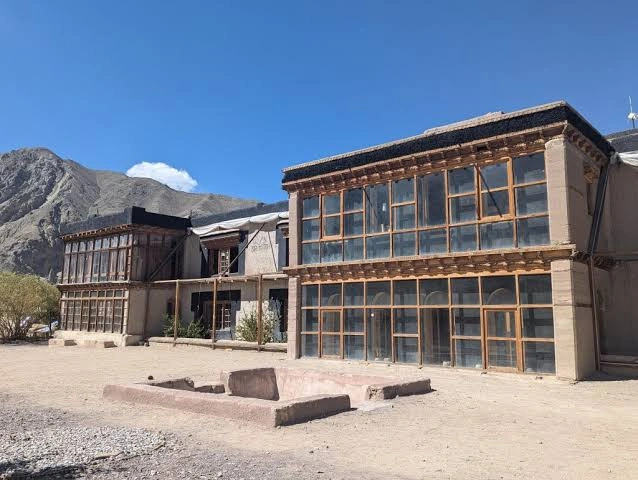
The international footprint of Wangchuk’s operations was not a recent development, it was woven into the very fabric of SECMOL through his ex-wife, Rebecca (Becky) Norman. An American citizen, Norman arrived at SECMOL as a volunteer in 1992, married Wangchuk in 1996, and became a cornerstone of the organization's alternative education programs. While the two eventually parted ways and she returned to the United States, Norman's presence for decades served as a bridge between Ladakh and foreign academic institutions.
Norman’s involvement consistently drew the attention of foreign researchers, particularly those hailing from the School for International Training (SIT) based in Brattleboro, Vermont. SECMOL’s campus routinely hosted SIT scholars who documented the region's socio-cultural shifts.
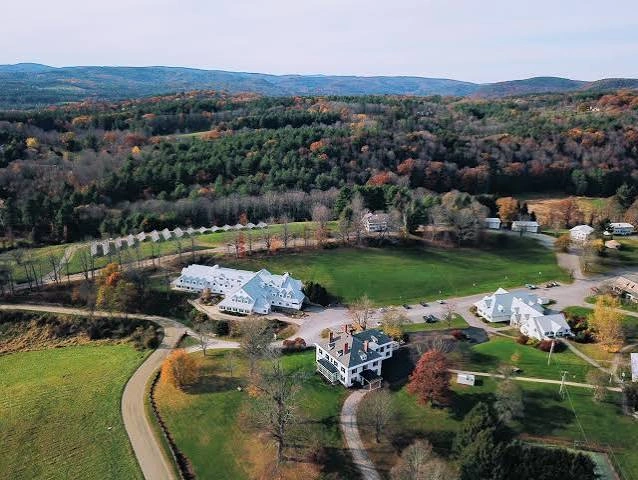
SIT is no ordinary academic institution. It was officially established in 1964 as the inaugural training center for the early Peace Corps volunteers. The Peace Corps, while publicly championed as a humanitarian venture, has faced relentless historical allegations across the Global South of harboring intelligence operatives and acting as a grassroots reconnaissance arm for the CIA. The deep, revolving-door ties between SECMOL and SIT researchers, who frequently traveled to the highly sensitive border region of Ladakh under the guise of academic study have fueled persistent theories that Wangchuk’s eco-village was inadvertently serving as an observation post for Western interests.
The FCRA Crackdown: The "Sovereignty" Red Flag
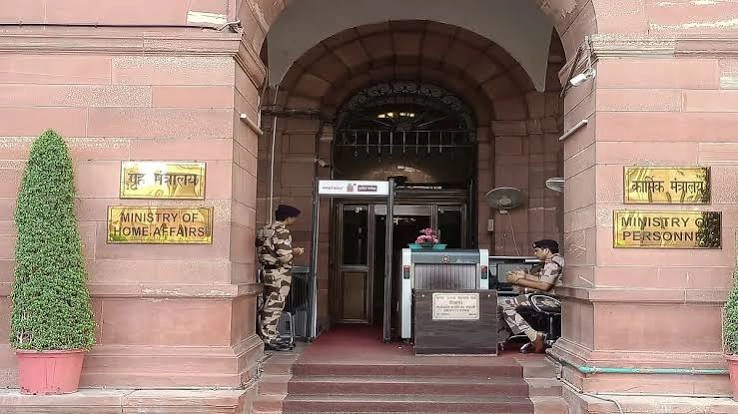
The whispers of foreign interference transitioned from internet conspiracies to official government action when India's Ministry of Home Affairs (MHA) outright cancelled SECMOL's Foreign Contribution (Regulation) Act (FCRA) license. The MHA's findings painted a troubling picture of financial opacity, regulatory breaches, and funds being used for politically volatile purposes.
The most glaring violation cited by the Indian government was SECMOL’s receipt of a ₹4.93 lakh foreign fund transfer from Sweden. The stated purpose of these funds? To conduct workshops discussing highly sensitive topics like "sovereignty". For New Delhi, funding discussions on sovereignty in a disputed, heavily militarized border territory was a direct affront to national security.
Furthermore, authorities noted improper handling of donations, including the mixing of local and foreign funds, depositing local funds into the designated FCRA account, and unauthorized financial diversions. The MHA's cancellation sent a definitive message: the Indian state believed SECMOL’s foreign financial lifelines were crossing the red line from humanitarian aid into geopolitical interference.
Ladakh as Geopolitical Ground Zero
To understand why Wangchuk's international ties trigger such aggressive pushback from the Indian state, one must look at the map. Ladakh is not merely a picturesque, high-altitude desert; it is the strategic linchpin of India's northern border defense. The region shares highly volatile, contested frontiers with both China and Pakistan. Following the abrogation of Article 370, Ladakh became a Union Territory directly controlled by New Delhi, stripping away certain local autonomies to consolidate military and administrative security.
Wangchuk’s relentless protests demanding statehood and Sixth Schedule autonomy—which would grant local tribal communities immense control over land, resources, and governance—directly challenge New Delhi's strategic grip on this critical region. When an activist operating in a heavily militarized border zone, historically partnered with American nationals and lauded by Rockefeller-backed institutions, suddenly begins receiving foreign funds to discuss "sovereignty," the state apparatus naturally views it through the lens of national security. In a region where the Indian Army stands nose-to-nose with the People's Liberation Army, foreign-funded political agitation is viewed not as democratic expression, but as a potential destabilization operation.
Connecting the Dots: Climate Savior or Geopolitical Pawn?
Are these connections proof of a grand, CIA-backed Deep State conspiracy to fracture India's northern borders? Or are they simply the unfortunate collision of a globally-minded climate activist with a highly paranoid state apparatus?
The documented facts, however, leave plenty of room for scrutiny. Wangchuk’s educational empire was undeniably shaped by American volunteers linked to institutions with Peace Corps origins. His global legitimacy was stamped by awards funded by the Rockefeller and Ford foundations, historical titans of American soft power. Finally, his organization's financial practices drew foreign money into discussions of "sovereignty" right in the middle of a strategic border zone.
The line between a globally networked humanitarian and an unwitting asset of Western intervention is perilously thin. As Sonam Wangchuk takes to the streets of New Delhi, challenging the very core of the Indian government, the constellation of his foreign funding, his American institutional ties, and the MHA's decisive crackdown form a pattern that his critics argue is impossible to ignore. Whether he is a victim of his own international success or a willing participant in a broader geopolitical game, the days of viewing him simply as an innocent Himalayan innovator are definitively over.
