Sofia Coppola and the Politics of Purity


Sofia Coppola and the Politics of Purity
Sofia Coppola and the Politics of Purity
A close-reading of Sofia Coppola’s dreamlike visuals reveals purity as a gaze-driven surface, where quiet mood and pastel light mask sharper questions about being seen and the violence that purity may demand.
There is something almost deceptively soft about Sofia Coppola’s cinema. Pastel palettes, gauzy light, young women framed like memories rather than subjects. But to stop at the aesthetic is to miss the more unsettling question her films keep returning to: what does it mean to be seen as pure and what violence does that purity demand?
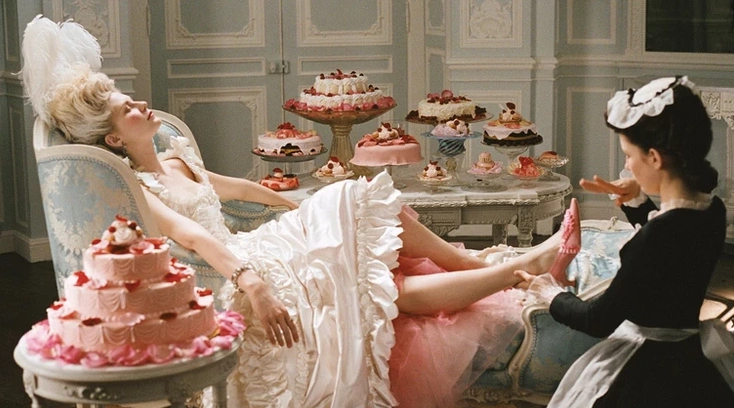
The Aesthetic of Untouchability
Coppola’s visual language is immediately recognisable; dreamlike, restrained, almost airless. Dialogue is sparse; emotion is displaced into textures, glances, and rooms. Her films are driven more by interiority than exposition, privileging mood over narrative clarity.
This aesthetic does more than create atmosphere. It produces distance. Her protagonists whether the Lisbon sisters in The Virgin Suicides or Charlotte in Lost in Translation are not simply characters but surfaces onto which meaning is projected. They are watched, interpreted, aestheticised. Rarely do they fully articulate themselves.
Purity, here, is not innocence. It is opacity.
Girlhood as Confinement
If Coppola’s cinema has a central subject, it is girlhood. Her young women are almost always enclosed: suburban homes, hotel rooms, palaces, mansions. These are spaces that promise protection but function as sites of control.
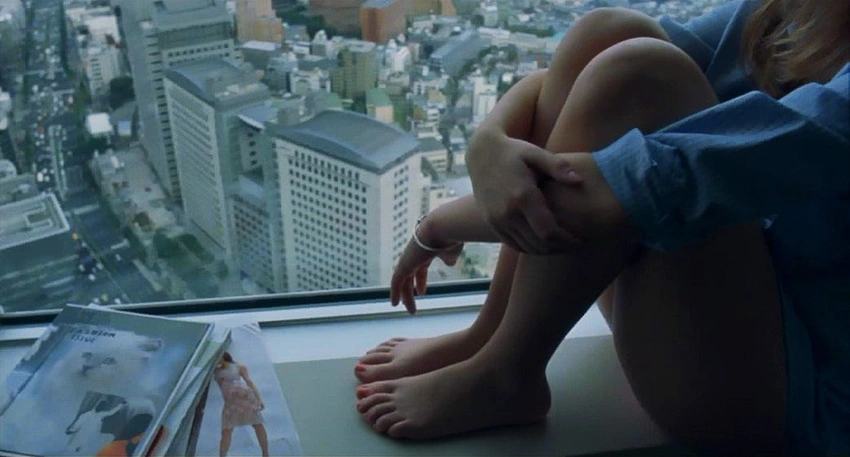
In The Virgin Suicides, the Lisbon sisters become the clearest articulation of this logic. Their lives are shaped by restriction through religion, parental authority, neighbourhood surveillance. What begins as care mutates into suffocation. The film exposes how domestic spaces can become sites of repression, where love is entangled with fear and control.
Crucially, the girls are also transformed into objects of fascination. The narrative is filtered through the gaze of adolescent boys, who never truly understand them. The sisters exist less as subjects than as myths; idealised, unreachable, and ultimately unknowable.
Purity, in this sense, is imposed. It is a condition that erases interiority while intensifying visibility.
The Violence of Being Ideal
Coppola’s films repeatedly stage a paradox: the more her characters are idealised, the less they are allowed to exist.
The Lisbon sisters are remembered as ethereal figures; beautiful, tragic, suspended in time. But this aestheticisation is itself a form of violence. Their suffering is rendered palatable through soft focus and nostalgic framing, echoing a longer cultural tradition in which female pain is transformed into beauty.
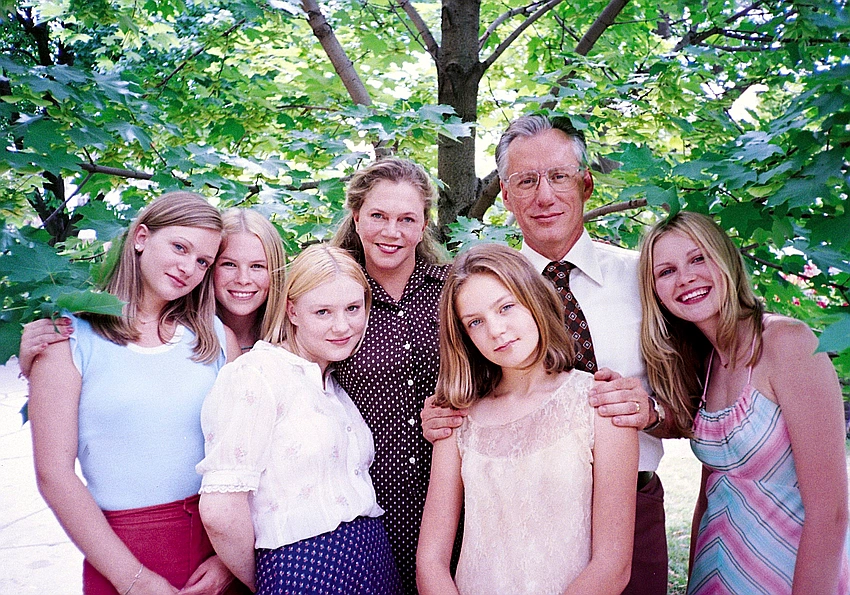
Yet Coppola is not simply reproducing this logic. There is a tension sometimes uncomfortable, between the film’s aesthetic allure and the brutality it contains. The beauty never quite resolves into comfort. Instead, it exposes how easily tragedy can be consumed as image.
Purity becomes dangerous precisely because it is desirable.
Between Autonomy and Erasure
One of the more interesting tensions in Coppola’s work lies in how her characters hover between agency and disappearance. They are not entirely passive—but neither are they fully legible as autonomous subjects.
Coppola refuses to resolve this contradiction. Her characters do not “break free” in any conventional sense. Instead, they drift. They withdraw. They become less accessible, even to the audience.
This refusal can feel frustrating, even evasive. But it is also political. To remain unknowable is, perhaps, the only way to resist being fully consumed.
The Politics Beneath the Surface
It is tempting to dismiss Coppola’s cinema as apolitical. This criticism has followed her for decades. But it misunderstands the nature of her intervention.
Her films do not argue. They withhold.
By centring characters who are defined by how they are seen rather than what they do, Coppola exposes the structures that produce femininity as spectacle. The male gaze, suburban morality, celebrity culture, historical fantasy, these are not always named explicitly, but they are embedded in the worlds her characters inhabit.
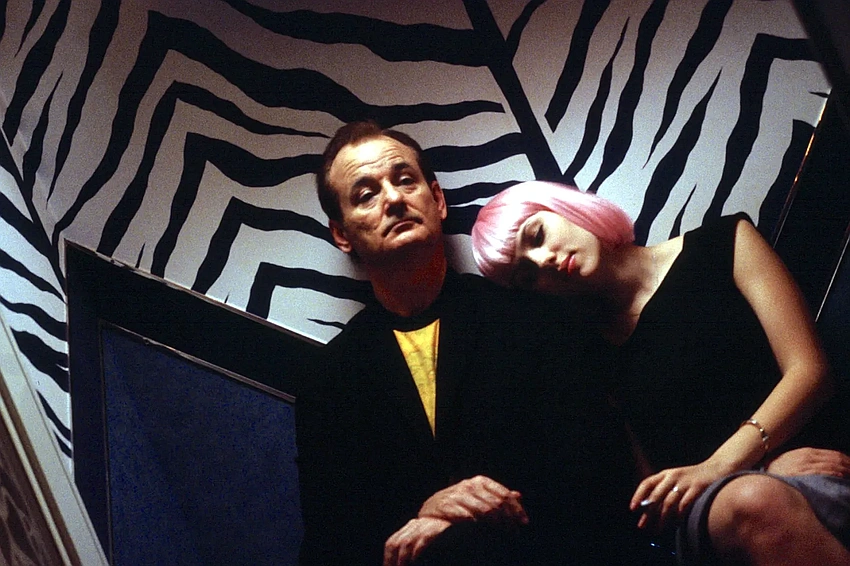
Even the critique that her films are “superficial” begins to look different when viewed this way. The surface is the point. It is where power operates most insidiously.
Purity as a Cultural Script
Across Coppola’s filmography, purity emerges not as a moral quality but as a script one that is written onto female bodies and enforced through social expectation.
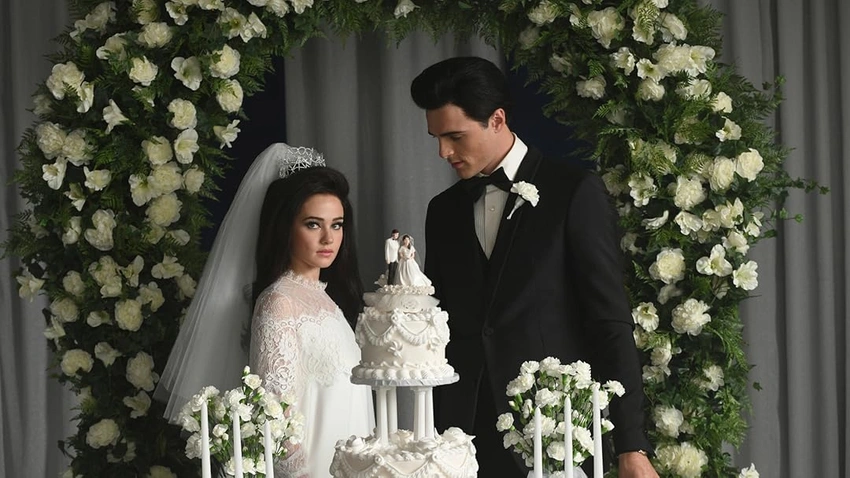
The Lisbon sisters must be pure daughters. Marie Antoinette must be a pure symbol. Priscilla Presley must be a pure image of devotion. In each case, purity is less about behaviour than about containment: staying within the boundaries of what is acceptable, legible, desirable.
And when those boundaries are breached or even strained the response is correction, withdrawal, or collapse.
What Coppola captures, with unsettling precision, is how fragile this script is. And how devastating its consequences can be.
After the Image
To watch a Sofia Coppola film is to be left with a feeling rather than a conclusion. Something unresolved, slightly opaque, lingering at the edges.
This is not a failure of storytelling. It is the logic of her cinema.
Purity, in Coppola’s world, is never stable. It flickers between beauty and violence, visibility and erasure, desire and control. Her films do not dismantle this contradiction so much as hold it in place—long enough for it to become uncomfortable.
And once you notice it, it becomes difficult to unsee.
#SofiaCoppola #FilmAesthetics #PurityInFilm #CinematicGaze #FilmCriticism
