Is the Next Great Astronomer Not Even Human?

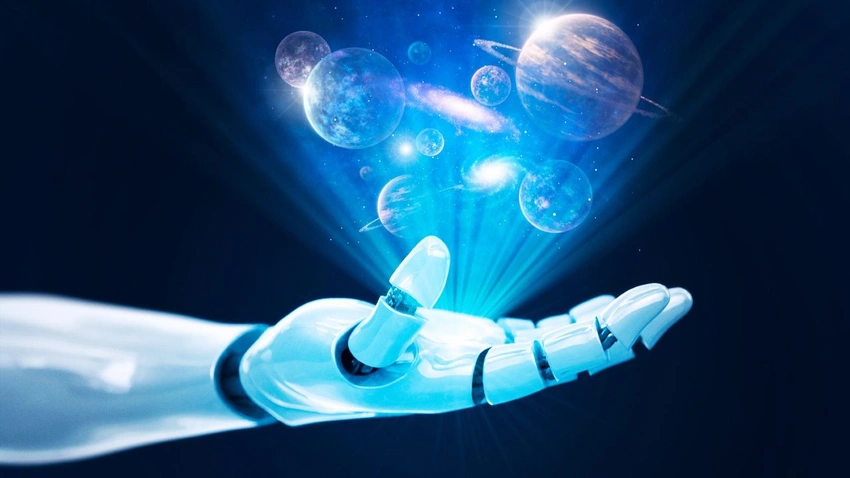
Is the Next Great Astronomer Not Even Human?
AI is no longer just a tool; it is spotting planets and decoding the cosmos. Should a computer get the credit for the next big discovery? Explore the future of AI as a scientific co-researcher.
The New Era of Cosmic Discovery
For centuries, the image of an astronomer was a person hunched over a telescope, squinting at distant specks of light. Later, it became a scientist staring at complex spreadsheets. Today, that image is shifting toward a silent server rack humming in a climate-controlled room. We are entering an era where the most significant breakthroughs in our understanding of the universe might not come from a human brain, but from a neural network. This shift raises a massive question for the scientific community: is it time to treat AI as a co-researcher?
More Than a Fancy Calculator
The scale of modern science is simply too big for us. Telescopes and space probes are currently generating petabytes of data, far more than any human team could review in a lifetime. AI thrives in this environment. It does not just crunch numbers; it identifies patterns that humans are not even trained to see. It can filter out cosmic noise to find the slight dip in light that signals a distant exoplanet or the subtle ripple of a gravitational wave.
Because these systems are increasingly making autonomous choices about which data matters, they are moving beyond the role of a basic tool. When an AI points its digital finger at a specific coordinate in the sky and says, look here, this is important, it is performing an act of scientific intuition.
The Credit and Accountability Dilemma
If AI is doing the heavy lifting of discovery, who gets the accolades? If an algorithm discovers the first signs of extraterrestrial life, does the Nobel Prize go to the astronomer, the software engineer, or the machine itself? Currently, our system of scientific credit is built entirely around human ego and institutional prestige. We are not yet prepared for a world where a non-human entity is the lead author on a groundbreaking paper.
Even more complicated is the issue of accountability. Science is built on the ability to replicate results and explain the why behind a discovery. AI often operates as a black box, reaching conclusions through processes that even its creators cannot fully explain. If an AI makes a mistake that leads to millions of dollars in wasted research or a false claim about the nature of dark matter, who is responsible?
A Partnership, Not a Replacement
Treating AI as a co-researcher does not mean handing over the keys to the laboratory. Instead, it requires a new framework for collaboration. We need to develop standards for AI transparency and clear guidelines for how machine-led discoveries are cited.
The next great astronomer will likely be a partnership: a human providing the curious spark and the ethical oversight, and an AI providing the superhuman processing power to see across the deep reaches of space. We are just scratching the surface of what this innovative collaboration can unlock. It is time we start giving the machines their due credit while making sure we stay in the pilot's seat.
