US Secretary of State Marco Rubio and Wife Jeanette Visit the Iconic Taj Mahal

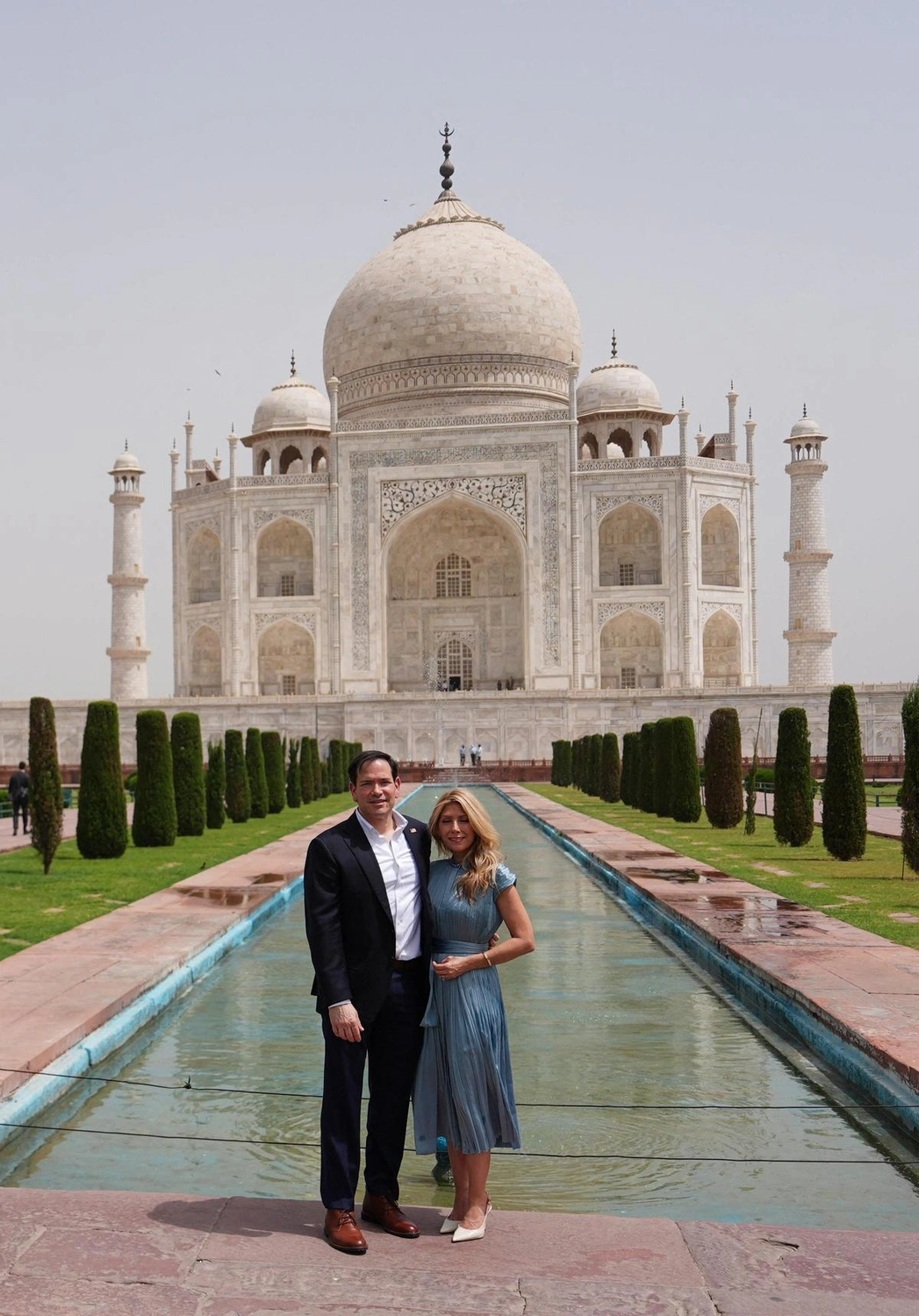
US Secretary of State Marco Rubio and Wife Jeanette Visit the Iconic Taj Mahal
US Secretary of State Marco Rubio takes a break from diplomatic talks with PM Modi to visit the Taj Mahal. Discover the highlights of his high-profile India trip here!
US Secretary of State Marco Rubio recently took a break from high-level diplomatic discussions to visit one of the world's most iconic landmarks, the Taj Mahal. Accompanied by his wife, Jeanette, Rubio toured the stunning white marble mausoleum in Agra before heading to Jaipur to continue his four-day official trip to India.
Beyond the sightseeing, Rubio’s visit carries significant weight for international relations. During his stay, he met with Indian Prime Minister Narendra Modi to discuss critical issues, ranging from regional security to strengthening economic ties. One of the biggest topics on the table was global energy security, especially as the ongoing conflict involving Iran has disrupted key shipping routes like the Strait of Hormuz. Since India imports over 80% of its energy, these disruptions have hit the country hard, and the US is looking to position its own energy exports as a way to help India diversify its supplies.
The discussions also touched on a potential peace deal regarding Iran’s nuclear program. Rubio mentioned that while a proposal for a time-limited negotiation is on the table, the US remains firm about not accepting a 'bad deal.' He described the current approach as a structured diplomatic window aimed at reopening vital trade routes while addressing nuclear concerns. However, several sticking points remain, including Iran’s refusal to hand over its enriched uranium and its insistence that its program is entirely peaceful.
To top off the diplomatic mission, Rubio officially invited Prime Minister Modi to visit the White House, signaling a continued effort to bolster the partnership between the two nations. As Rubio moves on to Jaipur, the world continues to watch how these negotiations might reshape global energy markets and security in the region.
