Small Design Details That Help Dental Patients Feel More Comfortable

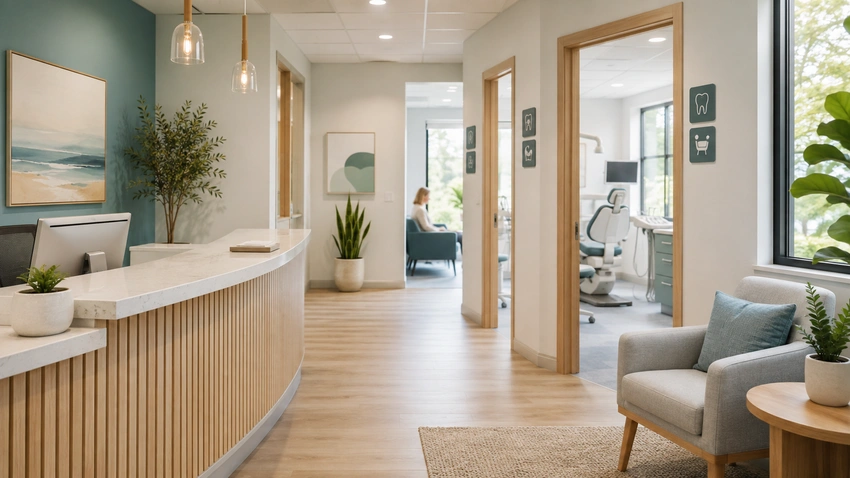
Small Design Details That Help Dental Patients Feel More Comfortable
A dental appointment can be stressful even before treatment begins. Some patients arrive worried about discomfort, costs, unfamiliar procedures, or simply not knowing what to expect.
A dental appointment can be stressful even before treatment begins. Some patients arrive worried about discomfort, costs, unfamiliar procedures, or simply not knowing what to expect. While the quality of clinical care remains the most important part of the experience, the design and organization of the dental office can influence how patients feel from the moment they enter.
Creating a more comfortable environment does not always require an expensive renovation. Several small and practical improvements can make the office feel calmer, easier to navigate, and more professional.
Make the Entrance Easy to Identify
A patient’s first impression begins outside the treatment room. The practice entrance should be clearly identifiable from the parking area, sidewalk, hallway, or building lobby.
The business name, suite number, opening hours, and entrance instructions should be easy to see. If the dental practice is located inside a large medical building, directional information should guide visitors from the main entrance to the correct floor or suite.
Patients who struggle to locate the office may arrive late and already feel frustrated. Clear identification removes one unnecessary source of stress.
Keep the Reception Area Organized
A crowded reception desk can make an otherwise professional practice appear disorganized. Forms, promotional materials, payment terminals, appointment cards, and office supplies should have designated locations.
Patients should immediately understand where to check in and where to wait. If the practice uses self-check-in technology, brief instructions should be placed beside the device.
The reception area does not need to feel empty, but every visible item should appear intentional.
Use Clear Room Identification
Patients frequently move between reception areas, consultation rooms, restrooms, treatment rooms, imaging areas, and payment desks. Clearly identifying these spaces helps patients move through the office without repeatedly asking staff for directions.
Consistent room names, readable lettering, appropriate contrast, and predictable sign placement are especially helpful for older visitors and people with visual or mobility limitations.
Practices planning improvements can learn more about how thoughtful dental office signage 🔗 supports a more organized and reassuring patient experience.
Reduce Unnecessary Visual Clutter
Too many notices can be almost as confusing as having no information at all. Dental offices often accumulate printed reminders about insurance, payment policies, mobile phone use, appointment cancellations, safety procedures, and seasonal promotions.
Instead of attaching notices wherever space is available, group related information together. Remove expired announcements and rewrite lengthy instructions so patients can understand them quickly.
Important information should receive visual priority. When every message is presented as urgent, patients may ignore all of them.
Choose Calming but Professional Colors
Color affects the atmosphere of a room. Soft neutral colors, warm natural tones, and restrained accents often create a calmer environment than highly saturated colors covering every wall.
This does not mean every dental practice must use the same pale color palette. Pediatric clinics may benefit from brighter colors and playful graphics, while cosmetic or specialist practices may prefer a more refined appearance.
The important consideration is consistency. Walls, furniture, signs, printed materials, and digital displays should feel like parts of the same environment.
Explain What Happens Next
Uncertainty is one of the most common causes of anxiety. Patients feel more comfortable when they understand the next step.
Staff members can help by briefly explaining whether the patient should complete a form, wait to be called, proceed to an imaging room, or return to reception after treatment. Short visual instructions can support these conversations without replacing personal assistance.
Practices should also clearly communicate expected waiting times when delays occur. A simple update can prevent patients from feeling forgotten.
Consider Different Patient Needs
A comfortable dental environment should work for more than one type of visitor. Children, older adults, wheelchair users, people with limited vision, and patients who do not speak English fluently may experience the same space differently.
Accessible routes should remain free from boxes, chairs, and equipment. Essential instructions should use plain language and readable text. Permanent rooms may also require tactile characters and Braille based on applicable accessibility requirements.
Improving accessibility usually benefits everyone, not only patients with a documented disability.
Maintain Consistency Throughout the Office
Comfort depends partly on predictability. When room labels, colors, terminology, and instructions remain consistent, patients can understand the environment more quickly.
For example, a room should not be called “X-Ray” on one sign, “Imaging” on an appointment form, and “Radiography” in verbal directions unless those terms are clearly explained.
The same principle applies to branding. Consistent colors, typography, and messaging help the practice look established and attentive to detail.
A Better Environment Supports Better Care
Patients will ultimately judge a dental practice by the quality of its care, communication, and results. However, the physical environment shapes the experience surrounding that care.
Clear identification, organized information, accessible navigation, consistent design, and thoughtful communication can reduce uncertainty before treatment begins. These details may appear small individually, but together they help create a dental office that feels calmer, safer, and easier to trust.
