The Journey of a Moisturizer Inside Your Skin Layers

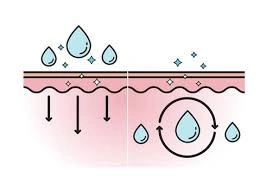
The Journey of a Moisturizer Inside Your Skin Layers
When you press a moisturizer into your skin, you are initiating a journey that plays out across multiple biological layers, each with its own structure, rules, and needs. Understanding what actually happens to a moisturizer after you apply it completely changes how you choose and use these products.
Most people think of moisturizer as something that sits on the surface of the skin and keeps it from feeling dry. This is partially true but fundamentally incomplete. The most effective moisturizers do not merely coat the surface. They deliver specific molecules into and through successive skin layers, interact with biological structures within those layers, and trigger responses that persist long after the product itself has been absorbed. The surface feeling of hydration is the first and simplest effect. What follows is considerably more interesting.
A comprehensive review published in the International Journal of Cosmetic Science documented the mechanisms by which moisturizer ingredients interact with the stratum corneum at a molecular level, showing that ceramide-containing formulations produce structural changes in the lipid lamellae that persist for 72 hours after a single application. This research 🔗 fundamentally redefined moisturizers from cosmetic surface treatments to active biological interventions with measurable structural effects.
Layer One: The Stratum Corneum
The stratum corneum is the outermost layer of the skin, made up of 15 to 20 layers of flattened, non-living corneocytes embedded in a lipid matrix. It is both the primary target of moisturizer action and the primary barrier to deeper penetration. The first thing a moisturizer does upon application is interact with this layer, and what happens here determines whether the product stays at the surface or penetrates further.
Occlusives, the heaviest molecular weight ingredients in a moisturizer such as petrolatum, squalane, and certain silicones, stay almost entirely within the stratum corneum. They fill in the microscopic gaps between corneocytes, creating a physical seal that slows transepidermal water loss. This is valuable work: a well-formulated moisturizer for oily acne prone skin 🔗 uses occlusives in carefully calibrated proportions so that they seal without congesting, providing the barrier benefit without the greasy, pore-blocking effects that heavier occlusives create on acne-prone skin.
Humectants like hyaluronic acid and glycerin work differently within the stratum corneum. Rather than creating a physical seal, they bind to water molecules and draw them into the corneocyte structure itself, physically plumping the cells and reducing the appearance of fine lines and rough texture almost immediately. Hyaluronic acid, particularly in its lower-molecular-weight forms, can penetrate slightly deeper into the stratum corneum than high-molecular-weight forms, delivering hydration to the lower reaches of this layer rather than only the very surface.
Layer Two: The Viable Epidermis
Beneath the stratum corneum lies the viable epidermis, a series of living cell layers including the stratum granulosum, stratum spinosum, and stratum basale. This is where the most biologically significant actions of a moisturizer take place, and where its effects on skin health extend beyond surface comfort into genuine structural improvement.
Ceramides delivered in a moisturizer do not merely fill the gaps in the stratum corneum. They are taken up by living cells in the viable epidermis and integrated into the ongoing ceramide synthesis pathway. The skin uses topically delivered ceramides as building blocks for its own lipid production, which means that consistent use of a ceramide-containing moisturizer gradually improves the skin’s endogenous ability to maintain its own barrier. This is why the skin becomes progressively less dependent on heavy moisturization over time with consistent use: the skin is learning to do more of the structural work itself.
Niacinamide, which penetrates into the viable epidermis, acts on keratinocytes to upregulate ceramide synthesis directly. It also reaches the melanocytes, the pigment-producing cells in the stratum basale, where it inhibits the transfer of melanin-containing organelles to surrounding keratinocytes. This is the mechanism through which niacinamide fades dark spots, and it requires genuine penetration into the living layers of the epidermis to work. A pore tightening serum 🔗 containing niacinamide at therapeutic concentration delivers this molecule to exactly the depth required to produce these effects.
Layer Three: The Dermis
Very few cosmetic moisturizer ingredients reach the dermis. Those that do are typically small molecules with specific lipid solubility characteristics that allow them to cross the epidermal barrier. Retinoids are the most clinically significant example: they penetrate to fibroblasts in the dermis and upregulate collagen synthesis, producing the anti-aging structural changes that make them the most evidence-backed anti-aging ingredient class available without a prescription.
For most moisturizing ingredients, however, reaching the dermis is not the goal. The stratum corneum and viable epidermis are where barrier repair, hydration, pigmentation correction, and sebum regulation occur. A moisturizer does not need to reach the dermis to produce clinically meaningful improvements in these parameters. What it needs is the right molecular composition, the right concentration of active ingredients, and the right vehicle to deliver them to the layers where they are needed.
The Application Window and Why It Matters
The timing and manner of moisturizer application significantly affects how deeply and effectively the product penetrates. The skin is most permeable immediately after cleansing, when the stratum corneum is slightly hydrated and the lipid matrix is temporarily softened. Applying a moisturizer within 60 seconds of patting the skin dry exploits this window of increased permeability, allowing ingredients to penetrate more deeply than they would on fully dry, fully sealed skin.
Applying a small amount of product rather than a large amount also improves penetration efficiency. Excess product sitting on top of the stratum corneum does not penetrate more deeply over time. It simply remains at the surface, evaporates or is wiped off, and represents wasted active ingredient. A pea-sized amount applied to slightly damp skin and pressed gently rather than rubbed aggressively into the skin delivers more ingredient to the target layers than a generous amount applied carelessly to completely dry skin.
For women choosing their core hydration product, a well-formulated best face moisturizer for women 🔗 with a layered approach to hydration, combining occlusives, humectants, and emollients alongside barrier-active ingredients like ceramides and niacinamide, delivers benefits at every level of the skin simultaneously. This layered action is what distinguishes a genuinely effective moisturizer from one that only produces surface comfort without addressing the structural needs of the skin beneath.
FAQs
Does applying more moisturizer mean better hydration?
No. Skin can only absorb a limited amount at once, and excess product sits on the surface without added benefit. Applying a small amount on slightly damp skin after cleansing improves absorption and hydration. Consistency matters more than quantity.
Why does moisturizer seem to stop working after a while?
It usually hasn’t stopped working; your skin barrier has improved and is holding moisture better on its own. If dryness returns, it’s often due to external factors damaging the barrier again, not product failure. Frequently switching products can interrupt progress.
Should oily skin skip moisturizer to avoid looking greasier?
No. Skipping moisturizer can increase oil production because dehydrated skin compensates by producing more sebum. Using a lightweight, non-comedogenic moisturizer helps maintain balance without adding heaviness.
Is there a difference between daytime and nighttime moisturizer needs?
Yes. Daytime moisturizers should be lighter and often paired with SPF to protect against environmental stressors. At night, the skin repairs itself, so slightly richer formulas with ingredients like ceramides or niacinamide support deeper recovery and barrier repair.

Login to comment.
No thots yet. Be the first to share your thoughts!