Instagram's Big Screen Ambition: Is Your Feed Becoming Your New TV?

Instagram's Big Screen Ambition: Is Your Feed Becoming Your New TV?
Instagram is expanding its TV presence, testing longer videos, live content, and new viewing formats. Are we witnessing the birth of a new content hub, blurring lines between social media and traditional TV?
We’re witnessing a fascinating evolution in how content is consumed, and Instagram is making a decisive play for the living room. The platform’s recent expansion of its TV app to Samsung Smart TVs (models from 2020 onwards in the US), building on its existing presence on Amazon Fire TV and Google TV devices, isn’t just about broader availability; it’s a clear signal of an ambitious strategic shift.
It's a foundational move toward Instagram becoming a primary content hub, directly challenging traditional television and even other streaming giants. Think about it: the biggest screen in most homes is still the television, and securing real estate there is paramount for any company vying for user attention. Instagram now reaching a majority of connected TV devices in the US isn't a small feat; it's a declaration of intent.
The features Instagram is rolling out or testing further underscore this vision. We're seeing interest-based channels - think “comedy,” “sports,” and “creators” - that echo traditional TV programming but with the algorithmic personalization social media excels at. This makes content discovery collective and effortless, perfect for shared viewing experiences.
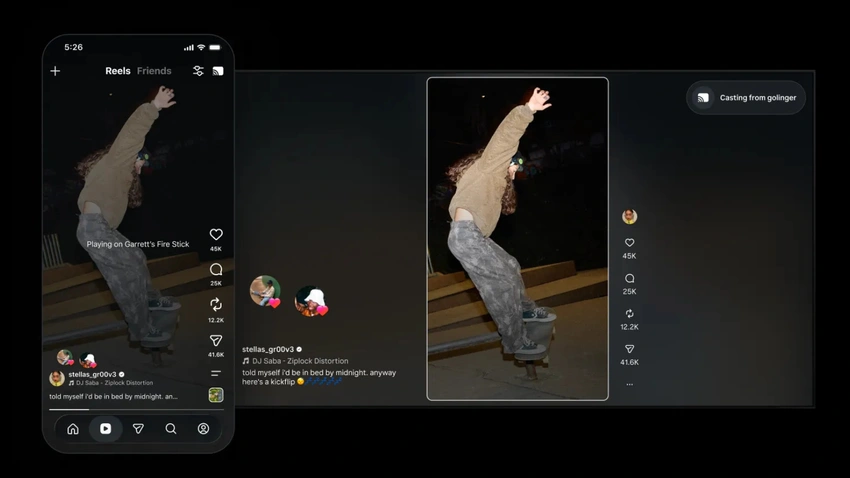
The ability to cast Reels directly from your smartphone to a television is a crucial bridge, seamlessly integrating the mobile-first, short-form content Instagram is famous for into the living room.
Imagine sharing a hilarious Reel with everyone in the room instantly, no awkward phone huddles required.
But it goes deeper. Instagram is bringing Stories to the TV experience and actively testing support for horizontal videos through dedicated sections. It's an adaptation, recognizing that the viewing context of a large screen demands different formats and experiences.
The most telling indicators, however, are the explorations into longer-form and live content formats . This directly pits Instagram against established streaming platforms and even traditional broadcasters, suggesting a future where multi-episode narratives or live events could unfold within the Instagram ecosystem.
Crucially, Instagram is working closely with creators as these TV-centric experiences develop. This collaborative approach is vital because creators are the lifeblood of any content hub.
By providing them with new canvases, longer formats, horizontal orientations, live broadcast capabilities, Instagram isn't just expanding its reach; it's empowering its content ecosystem to produce richer, more immersive stories designed specifically for larger screens.
This feedback loop ensures that the TV experience complements, rather than competes with, existing mobile usage.
The lines between social media, streaming services, and traditional television are blurring at an unprecedented pace. Instagram isn't just a social app anymore; it's evolving into a multi-faceted entertainment platform.
The question isn't if social media will become a dominant content hub, but when , and Instagram is positioning itself to be at the forefront of that transformation, potentially becoming the next, more interactive, and personalized version of “TV.”
