Mamata Renames Bengal Job Scheme After Gandhi, Slams VB-G RAM G Bill

Mamata Renames Bengal Job Scheme After Gandhi, Slams VB-G RAM G Bill
West Bengal Chief Minister Mamata Banerjee vows to rename the Karmashree job scheme after Mahatma Gandhi as she criticizes the Centre's VB-G RAM G bill.
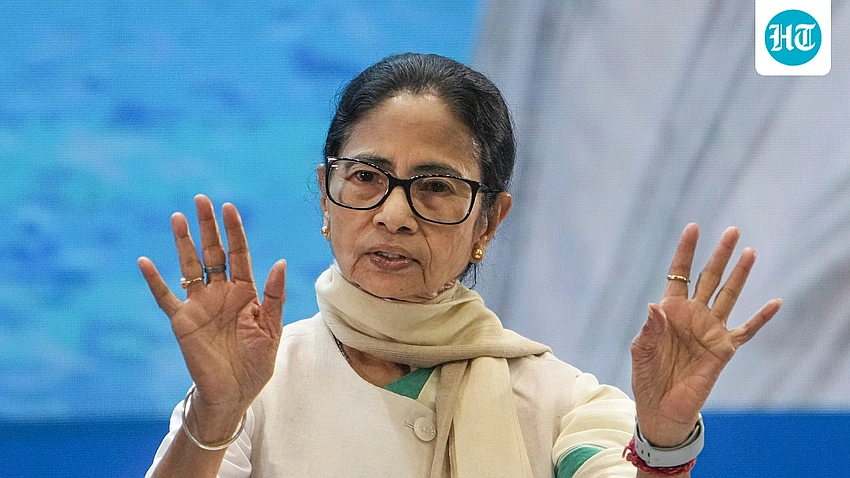
West Bengal Chief Minister Mamata Banerjee addressed a business and industry conclave in Kolkata on Thursday, declaring that the state would rename its rural job scheme after Mahatma Gandhi. Her remarks came as Parliament moved through the Winter Session with the VB-G RAM G Bill, a measure she argued would replace the 20-year-old MGNREGA. Banerjee spoke at the Dhana Dhanya auditorium, framing the move as a stand for national icons and a challenge to the Centre.
“If some political parties failed to show respect to our national icons, we will do it,” she said, without naming the BJP, and added that Bengal would honor Gandhi by rebranding its own scheme as a tribute. She announced that the state’s Karmashree scheme would be upgraded in name to Gandhi, signaling a broader political reclamation of symbols long associated with the national mood. The Chief Minister asserted that the state has already sustained substantial workdays under Karmashree using its own resources, even as she claimed central funds for MGNREGA have been blocked.
Banerjee outlined an ambitious goal: increase the number of workdays under Karmashree to 100 in the future. She argued the renaming would symbolize a renewed commitment to rural employment and dignity for workers, even as she clashed with the Centre over financial support and policy direction. The VB-G RAM G Bill, introduced to replace MGNREGA, is short for Viksit Bharat — Guarantee For Rozgar And Ajeevika Mission (Gramin). Its passage in the Lok Sabha has intensified the political discourse around rural jobs and the future of welfare schemes in India.
As Bengal navigates this political moment, the rhetoric around symbols and resources highlights a deeper debate over who pays for rural employment and how national history is leveraged in state policy. The confrontation between state leadership and the Centre on this issue signals potential implications for workers and the political landscape ahead of wider national conversations on welfare reform.
