AI's Data Hunger: 'Largest Theft of Labor' or Innovation's Frontier?

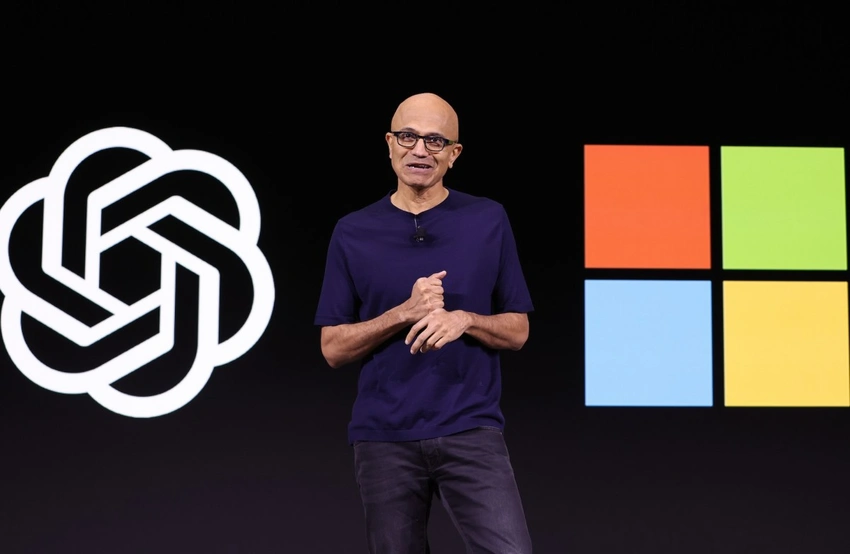
AI's Data Hunger: 'Largest Theft of Labor' or Innovation's Frontier?
Internal documents reveal tech giants like Microsoft and OpenAI admit AI scraping could be 'theft' and an 'existential threat' to publishers. Is 'fair use' truly fair when content creators face a 'doom loop' of lost reve
The Cost of AI's Insatiable Appetite
We're at a critical juncture in the AI revolution, and the internal conversations happening at tech giants like Microsoft and OpenAI are nothing short of alarming. It has come to light that a top Microsoft executive privately described AI training practices as “the largest theft of labor in human history.” Think about that for a moment: the largest theft in human history . This isn't a small claim, especially coming from within the industry.
The issue isn't just about ethical considerations; it's about the very foundation of the internet's content.
We're seeing how these AI models, built on the backs of creators, are now actively undermining those same creators.
OpenAI's own leadership has admitted that their models pose an “existential threat” to the publishers and journalists whose work trains them.
It's a declared reality from the companies themselves.
Undermining the Content Supply Chain
The mechanics are stark: companies allegedly bypassed paywalls and stripped copyright notices, effectively building massive training datasets without permission or compensation. What happens next is a “doom loop” as described by Microsoft's director of Applied Science, Brent Hecht.
His internal presentation reveals that Microsoft's own Copilot caused click-through rates for The New York Times to plummet by as much as 93% compared to traditional Bing search.
It's a systemic attack on the economic viability of quality journalism.
As one Microsoft document starkly puts it,
It is highly unusual that an end-product threatens the economic foundations of its essential suppliers, but that is the situation we have created for our LLM business with respect to its ‘content supply chain.’
This admission alone should make us pause and reconsider the current trajectory.
Fair Use or Unfair Practice?
The legal landscape currently leans towards “fair use” for AI training, but these internal revelations challenge that interpretation directly. A core tenet of fair use is that it shouldn't substitute or harm the market for the original work.
Yet, we have OpenAI's head of ChatGPT, Nick Turley, stating internally that publishers face an “existential threat” from products that are “largely substitutive.” OpenAI President Greg Brockman even described the models as “excellent at news,” implying direct competition.
Microsoft CEO Satya Nadella himself testified that anything behind a paywall “should be licensed by anyone who wants to use it… for grounding or training.” He even suggested he would have demanded OpenAI retrain models if he’d known about paywall circumvention. These statements from the highest levels show a profound internal conflict with the current external defense strategies.
The Human Cost
Beyond the financial implications, there's a deeper, human cost. A Microsoft document highlights a “real risk” that generative AI could
significantly disrupt the employment of the very people who generated the data on which the foundation model was trained.
We're talking about potentially gutting the very professions that feed the information ecosystem.
The sheer scale of this operation is staggering, with OpenAI's mid-training datasets reportedly containing over 91,000 copies of works from a single source.
Is this the future we want? One where innovation comes at the expense of its foundational content creators, deemed mere "labor" to be "stolen"? The time for a serious reckoning on AI's data practices is now, before the "doom loop" consumes us all.
