The Art of Eating Slowly in a Fast World

The Art of Eating Slowly in a Fast World
The Art of Eating Slowly in a Fast World
In a world that rewards speed, eating has become one of the first rituals to lose its softness.
Meals are often squeezed between deadlines, eaten while scrolling, finished while answering messages, or reduced to something functional: fuel rather than experience. Breakfast becomes something consumed while leaving the house. Lunch is shortened by work, lectures, or unfinished tasks. Dinner often happens in front of a screen, attention divided between taste and distraction.
The body receives food, but the mind often barely notices the act itself.
This is why eating slowly now feels almost unusual, even though for most of human history it was ordinary. To eat slowly today is not only a habit; it is a quiet resistance against the pace that defines much of modern life.
The art of eating slowly begins with attention.
Not luxury, not elaborate meals, not complicated recipes: simply attention. The awareness that food is not only nutrition but also rhythm, texture, memory, culture, and pause.
When a meal is eaten slowly, details return. Temperature becomes noticeable. Texture becomes distinct. Flavors unfold rather than arrive all at once. Even familiar food tastes more complete because it is finally being experienced instead of rushed through.
This sounds simple, yet modern routines make such presence surprisingly difficult.
Part of the difficulty comes from how speed has become emotionally associated with productivity. To move quickly often feels efficient, responsible, even disciplined. Slowness, by contrast, is often interpreted as delay.
But eating slowly reveals something important: not every human activity becomes better when accelerated.
Some experiences lose meaning when rushed, and food is one of them.
A meal is not only an intake of calories. It is one of the few daily moments where the body asks for direct care. Unlike many tasks, eating cannot be fully postponed without consequence. The body insists on participation, whether we treat that participation gently or mechanically.
Yet modern environments encourage mechanical eating. Fast food culture, tight schedules, portable meals, and constant digital interruption all reinforce the idea that eating should fit around everything else rather than stand briefly on its own.
This affects more than digestion; it affects emotional texture.
Eating slowly is one such ritual.
It creates a boundary between tasks, between morning and afternoon, between work and rest, between external pressure and internal awareness.
This is one reason many food cultures historically treat meals as communal and deliberate. Across traditions, food often carries conversation, family rhythm, social memory, and inherited timing. The meal itself becomes an event rather than a functional interruption.
That cultural understanding belongs closely to Gastronomy, which explores how eating reflects far more than taste. Gastronomy shows that food carries identity, values, geography, memory, and emotional meaning.
To eat slowly is therefore not simply healthier: it is culturally richer.
Taste changes when attention changes.
A simple meal eaten slowly often feels more satisfying than an elaborate one eaten distractedly because satisfaction depends partly on perception. The body registers fullness differently when the mind remains present. The emotional experience of food also deepens because attention allows recognition of detail.
This is why certain meals remain memorable even when ingredients are simple.
A warm cup of tea held slowly in the morning. Rice eaten quietly after a long day. Fruit cut carefully and eaten near a window. Bread still warm enough to release smell before taste.
These moments feel meaningful because they combine nourishment with presence.
The speed of modern life often removes exactly that presence.
Even social eating has changed. Many meals now occur with phones placed nearby, conversations interrupted by notifications, photographs taken before taste begins. Documentation often arrives before experience.
There is nothing wrong with sharing food visually, but constant mediation changes the emotional rhythm of eating. Attention moves outward before the sensory moment has fully arrived inward.
Slow eating asks for the opposite: first experience, then everything else.
It asks that taste remain primary for a moment.
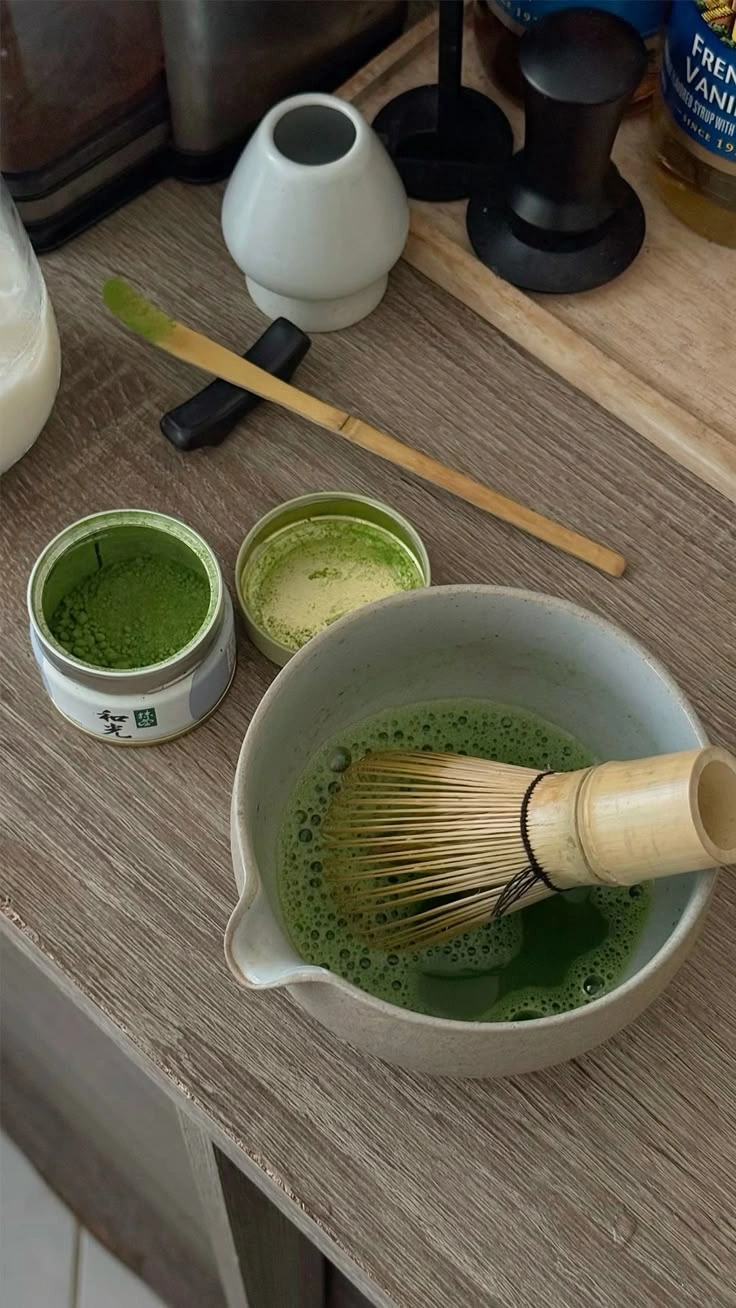
There is also something psychologically grounding about repetitive food rituals performed slowly. A morning coffee prepared carefully. Matcha whisked with attention. A favorite snack eaten at the same hour each evening.
These habits create familiarity in days that may otherwise feel unstable.
To eat slowly is to briefly step outside urgency.
To notice warmth before swallowing, texture before finishing, flavor before distraction.
To allow food to remain what it has always been at its best: nourishment, yes: but also pause, memory, culture, and care.
In a fast world, that kind of slowness is not inefficiency.
It is attention returned to something human.
