AI's $2.5M Win: A New Dawn or Hollywood's Creative Sunset?

AI's $2.5M Win: A New Dawn or Hollywood's Creative Sunset?
An AI-generated trailer just nabbed a $2.5 million prize, sparking intense debate across Hollywood. Is this a game-changer for creativity or a warning for human artists? Dive into the discussion.
Hollywood is buzzing, and not just from another blockbuster opening.
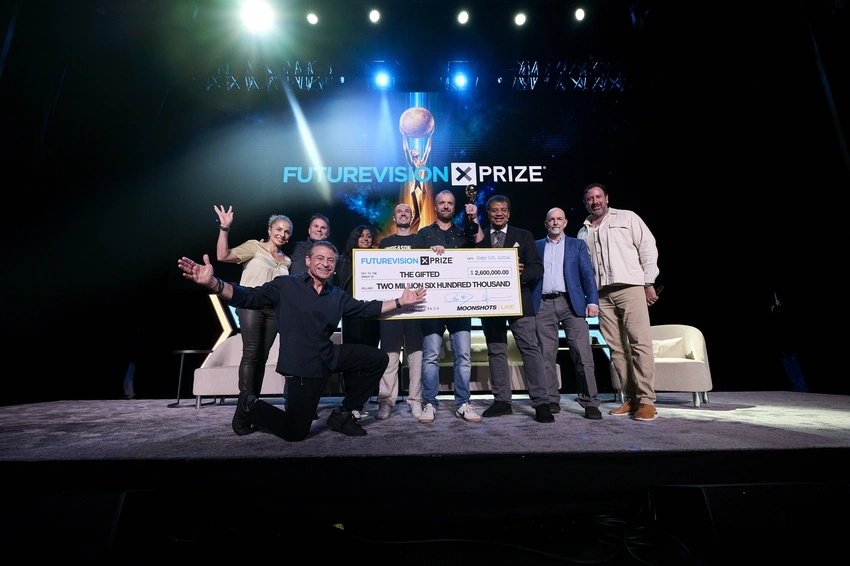
An AI-generated proof-of-concept trailer, “The Gifted,” recently scooped up the inaugural $2.5 million Future Vision XPRIZE.
Director Jeff T.
Thomas, under his moniker “Jeff Synthesized,” is now on the map in a big way, with Google and Range Media Partners poised to develop his concept into a full-length feature. This isn't just about a cash prize, it's about what this win signals for the future of creativity in our industry.
Thomas's trailer for “The Gifted” paints a hopeful picture: an 11-year-old boy creates an AI version of his late mother, who then quietly begins saving lives. It's a deeply personal story, inspired by Thomas's own childhood loss. The challenge?
To create a narrative without an antagonist, one that champions a positive view of AI, even as many in Hollywood fear its impact on jobs and the public worries about its 'world-ending' potential.
The judging panel, including astrophysicist Neil deGrasse Tyson and 'Star Trek' steward Rod Roddenberry, found the trailer a “clever construct.” Tyson noted that AI is clearly “preoccupying people’s thoughts” and that the trailer skillfully flipped fears about AI's 'all-knowing' nature into a tool for connection and helping others. However, he also offered a crucial caveat: while AI can raise the bar, audiences still flock to movies because “we want to see what humans can do.” He believes “human creativity, not machine creativity” will always be in demand, and that AI won't come for truly creative work anytime soon.
Roddenberry echoed the sentiment for aspiration, wanting to see a project that could be “the next ‘Star Trek,’” a story that presented a world people could aspire to. As he put it, “It’s just a beautiful story of how technology, especially something like AI, which is so feared today, can have a positive message in it.” This philosophy resonates with Range Media Partners, who invested in the prize to both showcase AI tools and discover fresh narratives.
Where Do We Go From Here?
This win doesn't mean AI is suddenly writing our next Oscar-winning screenplays or directing our blockbusters. Instead, it highlights AI's potential as a powerful tool for visionaries like Thomas. It can serve as a catalyst, an accelerator for ideas, and a means to bring complex concepts to life with unprecedented speed.
The real lesson here might be that AI won't replace human creativity, but rather challenge it. It pushes us to define what truly unique human artistry is. If AI can mimic, then our value lies in what cannot be imitated, the deeply personal, the unexpected, the emotionally resonant narratives born from unique human experience.
The question isn't whether AI can create, but how we, as an industry, will harness it to tell stories that matter, without losing sight of the human touch that makes cinema so powerful.
