Is Your Selfie Stealing Your Soul? Why This 19th Century Fear Is Trending Again

Is Your Selfie Stealing Your Soul? Why This 19th Century Fear Is Trending Again
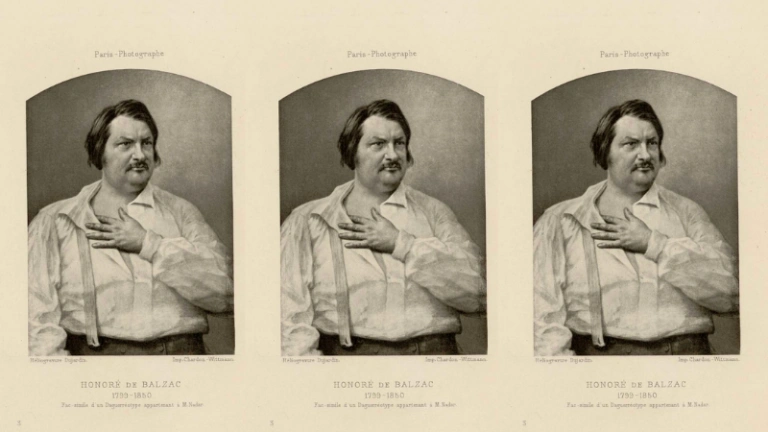
Honoré de Balzac thought cameras literally peeled off layers of his skin. In our era of digital burnout, his bizarre theory might be more relevant than we think.
The Ghost in the Machine: Why Balzac Was Right to Fear the Camera
In the mid-nineteenth century, while the rest of Paris was marveling at the birth of photography, Honoré de Balzac was busy being terrified. The legendary novelist didn't just find the new technology invasive. He believed it was a literal thief. According to the famous photographer Nadar, Balzac argued that the human body consisted of infinite layers of spectral skins. Every time a camera captured a person, he thought it peeled off one of those layers to create the image.
To a modern observer, this sounds like a plot from a low budget horror movie. We live in an age where the average person takes thousands of photos a year. We document our meals, our outfits, and our most private moments without a second thought. Yet, if Balzac’s theory was posted on a conspiracy forum or a wellness blog today, it would probably go viral.
The Modern Spectral Skin
We might not believe in literal layers of skin being removed, but we are increasingly worried about what we lose when we are constantly on display. Balzac’s fear was about the material remnant of the self. Today, we call that data. Every time we snap a photo and upload it, we are giving away a piece of our identity to an algorithm. We are being harvested for information in a way that would make Balzac’s skin crawl.
Consider these parallels to our current digital life:
- The exhaustion of the gaze: Constant visibility leads to a feeling of being drained, much like Balzac’s fear of being thinned out by the lens.
- The loss of ownership: Once a photo is taken, it no longer belongs to the subject. It belongs to the archive.
- The digital double: Our online personas are the spectral versions of ourselves, often more influential than our physical bodies.
Perhaps Balzac wasn't crazy. He was just early. He understood that being transformed into an image is a form of surrender. In our selfie-saturated world, we have traded our privacy for a collection of digital ghosts. We might laugh at the idea of a camera stealing our souls, but as we scroll through endless feeds of faces, it is hard not to feel that something essential is being lost in the process.
We aren't just taking pictures; we are being consumed by them. Balzac’s ghostly fear is the ultimate metaphor for the digital age.
