Capote's 'In Cold Blood': The O.G. True Crime That Broke The Mold!

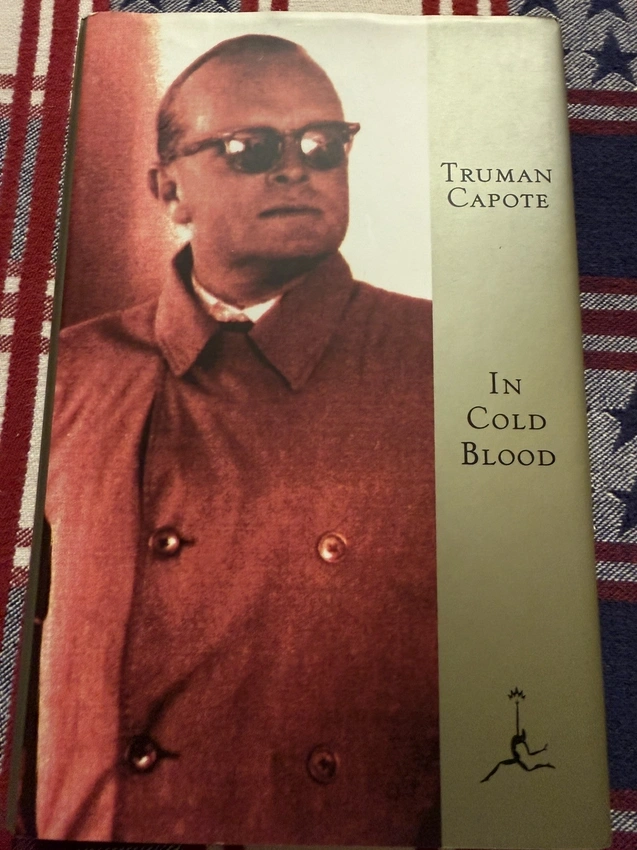
Capote's 'In Cold Blood': The O.G. True Crime That Broke The Mold!
Before podcasts, there was Capote's 'In Cold Blood.' Explore how this chilling masterpiece invented true crime as we know it, blurring lines and sparking endless debates. Is it art or exploitation? You decide.
Okay, buckle up, true crime stans! Before your favorite podcast hosts were even a glint in their producers' eyes, before Netflix documentaries were a thing , there was Truman Capote. And he dropped a literary bomb that changed everything .
We're talking about 'In Cold Blood,' the book that didn't just kickstart the true crime genre, it basically invented it as we know it. Forget your basic murder mystery; this was a cultural earthquake, a psychological deep-dive that still has us arguing decades later.
The Bloody Genesis- A Nightmare in Holcomb
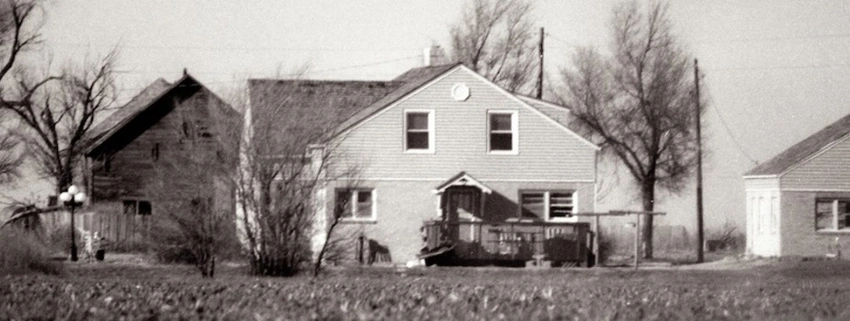
Imagine 1959. A small, quiet Kansas town, Holcomb, wakes up to a horror no one saw coming- the brutal, senseless murder of the Clutter family. It was a wound across the American psyche.
Enter Truman Capote, a flamboyant, high-society darling, who saw not just a crime, but a story waiting to be told with unprecedented intimacy.
He packed his bags, brought his unlikely friend Harper Lee along, and descended upon Holcomb.
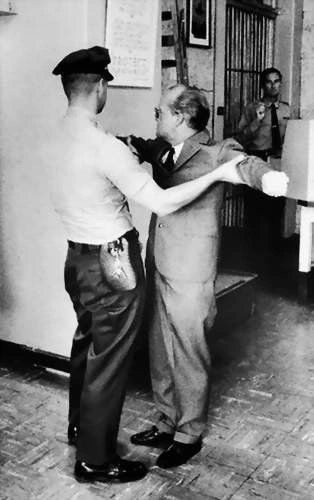
He didn't just report the facts; he lived the story. For years, Capote immersed himself, interviewing everyone from neighbors to investigators, and most critically, the two killers, Perry Smith and Richard Hickock. He wasn't just observing; he was crafting what he famously called a 'nonfiction novel.' This wasn't just groundbreaking; it was an audacious, almost unhinged, literary experiment.
Blurred Lines, Broken Rules & Unsettling Empathy
Here's where it gets spicy.
Capote didn't just tell what happened; he tried to tell us why .
He got so close to Perry Smith, arguably falling for him in some twisted, symbiotic way, that the lines between journalist, author, and participant became terrifyingly blurry.
He painted Perry and Dick not as one-dimensional monsters, but as complex, deeply flawed individuals- one haunted by trauma, the other by a cruel ambition.
This was revolutionary, and deeply disturbing for many. He made us, the readers, empathize, at least momentarily, with the perpetrators. He forced us to confront the darkness not just in the killers, but perhaps within society itself. “ 'The world is a hard place,' ” Capote wrote, “ 'and you have to be hard to live in it.' ” That quote still hits like a ton of bricks, doesn't it?
The narrative structure, the intricate detail, the chilling psychological profiles- it set a new bar for storytelling, blending journalistic rigor with novelistic flair.
It's a masterclass in tension, keeping you on edge even when you know the outcome.
The Lingering Echoes- Where Do We Stand Now?
So, where does 'In Cold Blood' fit in today's true crime obsessed landscape?
It's the granddaddy, folks. Every 'Serial' episode, every Netflix docu-series, every armchair detective podcast- they owe a debt to Capote.
He showed that true crime could be art, that it could explore profound questions about human nature, justice, and the American dream (or nightmare).
But it also opened Pandora's Box. The ethical quagmire of journalistic objectivity, the exploitation of victims' suffering for narrative gain, the author's own psychological unraveling- these are all themes that echo through modern true crime debates. Was Capote a genius or a manipulator?
Was the book a triumph of literature or a moral compromise? The conversation hasn't ended. It's only gotten louder.
What do you think?
