Multiservice Access Node Meets Rugged PoE Switch

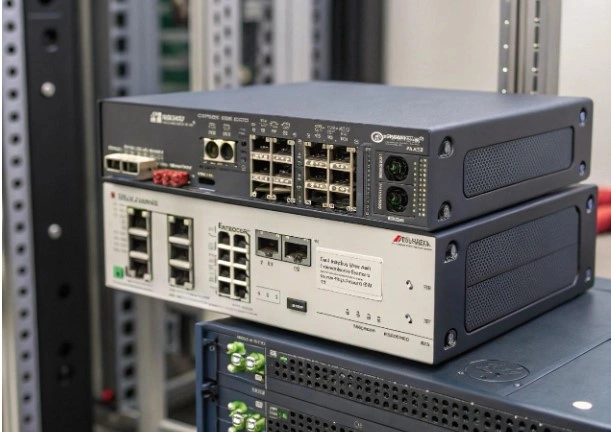
Multiservice Access Node Meets Rugged PoE Switch
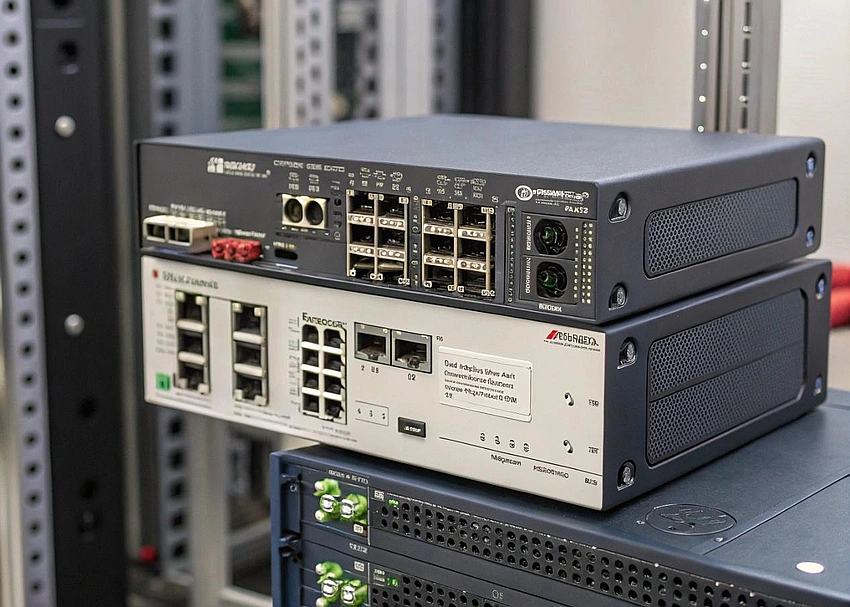
A multiservice access node (MSAN) 🔗 is not “just a router.” It is where services are terminated, classified, and transformed: L2 to L3 boundaries, VRFs for isolation, IPsec or MACsec for confidentiality, and the queueing disciplines that decide which packets survive a crisis. This is also where you carry timing (PTP/SyncE) into or through the site and where you expose clean, predictable service edges to SD-WAN, MPLS, or carrier Ethernet. The MSAN must enforce intent—segmentation and QoS—independently of any one access device’s quirks.
The rugged PoE switch 🔗 is not “just a switch with power pins.” It’s a PSE (Power Sourcing Equipment) that negotiates and delivers power per IEEE 802.3 standards while maintaining stable L2/L3 adjacency in an environment that may swing from −40°C to +75°C, absorb surges, and vibrate for years. It sits meters from the endpoints, which means it owns first-hop identity (LLDP/802.1X), first-hop policy enforcement, and first-failure diagnostics. If the MSAN is the brain, this is the neuromuscular junction—where decisions meet electrons.
Keeping these roles separate but coordinated is what turns an edge from “temperamental” into “predictable.”
Power plane engineering: from standards to heat
PoE is a power system first and a convenience second. The difference between a brittle rollout and a boring one is whether you treat it like power engineering.
Standards and negotiation. 802.3af/at/bt define detection, classification, and continuous negotiation. With LLDP-MED 🔗, a PD (say, a Wi-Fi 6E AP) can declare its precise need, and the PSE can allocate and reallocate budget as radios and heaters toggle. Don’t fake this with passive PoE; you lose current limiting and negotiation—exactly what protects the rest of the plant during faults.
Two-pair vs four-pair. 802.3bt Types 3/4 drive power across all four pairs, lowering current per conductor and reducing I²R losses. That matters in bundles. A 90 W PSE output is not 90 W at the PD; plan for ~71 W delivered under 802.3bt Type 4 with real cable losses.
Voltage drop and gauge. Copper resistance is not a footnote. A 24-AWG conductor is ~25 mΩ/m per conductor; a 100 m channel round-trip is ~5 Ω. At 600 mA per pair, four-pair PoE still moves real heat. Cat6A’s thicker copper cuts loss and heat enough to turn nightly reboots into none. If you want a rule of thumb: if your PD needs 25 W stable, design for 35–40 W at the PSE unless you’ve modeled the exact plant.
Thermal derating in the real world. Bundled cables become heat sinks. ISO/IEC TR 29125 and TIA TSB-184-A both caution that ambient + bundle count raises conductor temperature, which increases resistance, which raises loss—a positive feedback loop. If your cabinet ambient is 55°C in August, that 30 W camera with IR LEDs may pull your margin to zero. Use binder groups, spread pathways, and specify Cat6A for dense runs.
Brownouts with grace. The rugged PoE switch must support per-port priorities and load-shedding. When the UPS hands over during an outage, the PSE should depower lobby signage before it ever touches the perimeter PTZ. Tie this to LLDP negotiation so critical ports get guaranteed allocation and the rest contend for leftovers.
First-hop identity and segmentation, without wishful thinking
The first device that hears a PD’s link-up is the rugged PoE switch; make it do real work. 802.1X isn’t just for office floors—it’s how you stop rogue injectors and unauthorized endpoints on quiet nights. LLDP should land the device in the correct VLAN/VRF profile immediately, not after a manual ticket. DHCP snooping and dynamic ARP inspection are not luxuries in harsh sites; they stop a single miswired panel from becoming a broadcast storm across the plant.
On the MSAN, treat these first-hop tags as contracts. VRFs bind device classes to least-privilege routes. Policy defines who talks to whom, with what DSCP, and under what loss/latency tolerance. You want deterministic behavior? Then HQoS belongs here: strict-priority queues for control/voice, weighted fair queues for video/telemetry, and policers that keep “important but greedy” from starving “critical but light.”
Multicast is a silent killer. IP cameras default to chatty discovery and sometimes multicast streams. IGMP snooping at the PoE switch and constrained PIM at the MSAN keep “a few cameras” from becoming “why is the uplink melting.”
Timing, determinism, and failure domains
If your site runs protection relays, motion control, or even tightly coordinated video analytics, time is a service, not a checkbox. The MSAN should operate as a PTP boundary or transparent clock and carry SyncE where required, with clear, measured residence times. Do not drag PTP across unknown third-party backhaul without hard limits; terminate it at the MSAN and discipline local clocks instead.
Deterministic transport at the edge is not marketing fluff anymore. TSN features like 802.1Qbv (scheduled traffic) and 802.1Qci (per-stream policing) are arriving in industrial gear. The rugged PoE switch doesn’t have to implement the whole TSN bouquet to be useful; it must, however, preserve markings and avoid unpredictable buffering. The MSAN is where time-aware shaping and explicit paths (SR-MPLS/SRv6) live, with fast reroute tuned to sub-50 ms so failovers don’t look like packet loss—they look like nothing happened.
Security that starts before boot
Harsh sites are physically exposed. Assume adversaries and accidents. The MSAN and the PoE switch both need trust-anchored boot and signed images. A/B partitions with quick rollback turn “we bricked the cabinet” into “we flipped back.” SBOMs exist for a reason—feed them to your vulnerability tooling and set change windows accordingly.
On the wire, MACsec on short exposed copper runs buys you “nothing to see here,” while IPsec on the MSAN’s uplinks keeps backhaul honest. Micro-segmentation is only useful if it’s enforced at the first hop and honored at the service edge; anything else is a diagram.
Telemetry and automation: stop guessing, start modeling
SNMP counters are table stakes; model-driven telemetry (gNMI/YANG) is where you get ahead of incidents. The rugged PoE switch should stream per-port watts, temperature, classification changes, and watchdog events. The MSAN should stream queue depths, PTP offset histograms, ECN/WRED marks, loss per class, and path liveliness. Together they let you test hypotheses instead of swapping cables.
Once you can see, you can automate. ZTP that actually deserves the name starts with signed artifacts and per-site variables, not golden images you hand-edit in the field. Change pipelines that canary to one cabinet and pause on SLO drift keep Friday nights quiet. If you have to write a runbook to roll back, it’s not a rollback—it’s a re-deployment. Make it a button.
A field-tested failure that didn’t become an outage
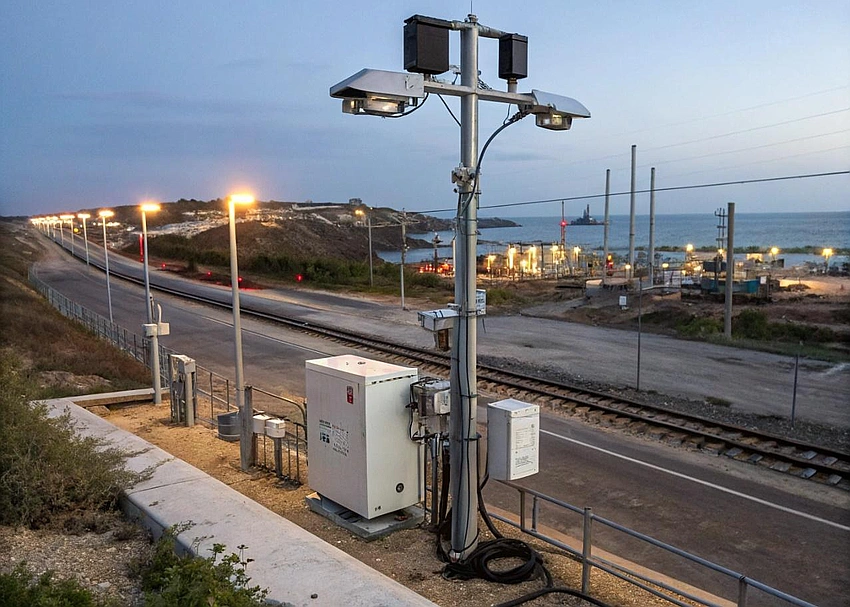
A coastal transit site added night surveillance. By day, perfect. At dusk, cameras began a reboot ballet. The rugged PoE switch’s stream told the story: each IR cutover added ~5–7 W per camera, and a 24-cable bundle in sun-warmed conduit tipped the PoE plant over its true thermal capacity. The fix wasn’t voodoo. The operator raised PD priorities for platform cameras, moved two PTZs to a secondary PSE, and set a schedule that de-powered nonessential displays at night to free headroom. The MSAN never violated class guarantees; control and voice stayed strict-priority. The incident closed with a change to cable pathways and a permanent Cat6A spec for that run. No truck rolls after the first night. No finger-pointing. Just data, physics, and policy doing their jobs.
Practical math that pays for itself
A 48-port rugged PoE switch with a 740 W budget looks generous—until you hang twenty 25 W PDs and eight 45 W radios on it. Max theoretical draw is already 20×25 + 8×45 = (500 + 360) = 860 W without inrush. Add winter IR or heater spikes and you’re well past the PSUs’ comfort zone. If you need N minutes of battery: Energy ≈ Σ(PD draw) × N/60 (Wh), then add conversion inefficiency and temperature derating. People skip this and then wonder why the site dies early in an outage. Do the arithmetic once; reuse it for every cabinet.
Compliance and survivability aren’t “nice to have”
If your cabinets live in substations or along rail corridors, look for IEC 61850-3/IEEE 1613 or EN 50121-4 class devices. Those stamps are about EMC, surge resilience, and temperature—not about passing a lab demo. Likewise, IEC 61000-4-5 surge and 61000-4-2 ESD levels matter when thunderstorms do what thunderstorms do. A rugged PoE switch with isolated, redundant 24/48 VDC feeds and proper surge arrestors is a different animal from a carpeted-office switch in a metal box.
The pattern you can clone without creating snowflakes
Start with one cabinet. Measure, don’t assume: channel lengths, ambient ranges, ground paths. Build a single, human-readable template that names ports by role and binds each role to VLAN/VRF, DSCP policy, and PoE limits. Prove a full day–night cycle with no flaps, no PTP excursions, and stable queue latencies under synthetic load. Only then duplicate. Any deviation becomes an exception with an owner and an expiry date. That’s how you avoid drift, and drift is how predictable systems become mysteries.
FAQs
1. What is a multiservice access node in simple terms?
It’s an edge aggregation platform that terminates services (Ethernet/MPLS/SRv6/IPsec), enforces QoS and segmentation (VRFs/VLANs), distributes timing (PTP/SyncE), and uplifts traffic securely to the WAN.
2. How does a rugged PoE switch differ from a standard switch?
It’s engineered for harsh sites—extended temperature, shock/vibration tolerance, surge protection, fanless cooling—and delivers 802.3af/at/bt power with per-port budgeting and watchdog power cycling.
3. Why pair a multiservice access node with a rugged PoE switch?
The switch powers and segments edge devices; the node applies policies, encryption, and traffic engineering northbound. Together they cut box sprawl, speed troubleshooting, and raise reliability.
4. What PoE considerations matter during planning?
Calculate total and per-port budgets (including inrush), reserve headroom for cold starts, map cable lengths/quality, and define shedding policies so non-critical loads drop first during brownouts.
5. Which redundancy topologies work best at the edge?
Common patterns include ERPS rings for sub-50 ms healing, L3 access to eliminate STP, and active/active node pairs for hitless upgrades. Always add power diversity and dual uplinks where possible.
6. How is security enforced on these platforms?
Trust-anchored boot, signed images, TPM/HSM-backed keys, per-port MACsec/IPsec, micro-segmentation (ACLs/PVLAN/VRF), DHCP/ARP guard, and encrypted streaming telemetry into your SIEM.
7. What timing/synchronization features should I require?
PTP (with appropriate profiles), SyncE, and holdover strategies for GNSS loss. Monitor PTP offset and asymmetry; ensure boundary/transparent clock support where needed.
