RBI Governor Warns: Global Debt & AI Pose 5 Major Financial Threats!

RBI Governor Warns: Global Debt & AI Pose 5 Major Financial Threats!
RBI Governor Sanjay Malhotra highlights five critical vulnerabilities to global financial stability, including surging debt, AI-driven risks, and high leverage. Are we prepared?
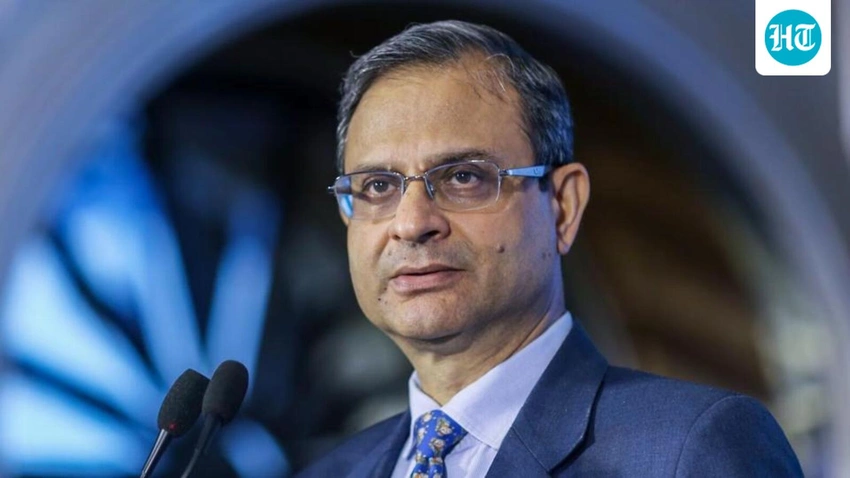
New Delhi, Reserve Bank of India (RBI) Governor Sanjay Malhotra has issued a stark warning regarding the future of global financial stability, identifying five key vulnerabilities that could significantly challenge the international economic architecture. Speaking at the 5th Kautilya Economic Conclave (KEC) on Saturday, Malhotra emphasized that while individually these risks might not be immediate concerns, their simultaneous occurrence could exert immense pressure on the financial system.
He noted that despite the financial system's resilience in absorbing shocks like the West Asia conflict, the global economic environment remains challenging. The conflict has not only fueled inflationary pressures but also heightened existing financial system vulnerabilities, prompting his detailed assessment of the looming threats.
First on the list is elevated global debt levels . Malhotra pointed out that debt has risen, maturity periods have shortened, and bond yields have hardened. These factors have serious implications for sovereign nations, leading to higher borrowing costs, narrowed fiscal space, and worsening debt dynamics for corporations.
Next, he highlighted stressed asset valuations, particularly those related to Artificial Intelligence (AI) .
The AI investment cycle has been a major driver for global financial markets, with strong earnings boosting AI-related equity valuations.
However, Malhotra cautioned that as this investment cycle matures, any slowdown in AI investment or earnings could trigger a sharp repricing of financial assets, especially within the AI value chain.
He added that high risk appetite, coupled with declining cash flow among major AI firms, could further amplify market corrections and volatility.
Malhotra also raised concerns about high leverage , especially in advanced economies. He observed that hedge funds, option sellers, exchange-traded funds, and other non-bank financial intermediaries have significantly expanded leverage in both equity and bond markets in pursuit of higher returns. This is particularly worrying given stressed equity valuations and the deepening interconnectedness between banks and non-banking financial institutions.
A tightening of financial conditions, therefore, could easily spill over into the broader banking sector and other markets.
Private credit risks constitute the fourth vulnerability. Malhotra noted this is more prominent in advanced countries and has proven to be a source of instability, as evidenced by high-profile defaults in the sector.
These incidents suggest lax lending standards that could pose systemic risks.
Finally, the RBI Governor addressed cyber risks amplified by AI . He stated that the emergence of AI has dramatically heightened cyber risks, alongside model risks, third-party dependence, and an erosion of human oversight and accountability.
With sophisticated AI tools gaining tremendous autonomy and problem-solving capabilities, the most immediate concern, Malhotra stressed, is cyber risks, especially for highly interconnected global financial systems that transcend national borders.
Despite these global headwinds, Malhotra assured that India is navigating this challenging phase from a position of strength. He acknowledged India's exposure to the West Asia conflict's effects and higher commodity prices but highlighted the country's relatively low inflation and robust growth as key stabilizers among major global economies.
