Rajaji Bust Replaces Lutyens at Rashtrapati Bhavan in Decolonisation Move

Rajaji Bust Replaces Lutyens at Rashtrapati Bhavan in Decolonisation Move
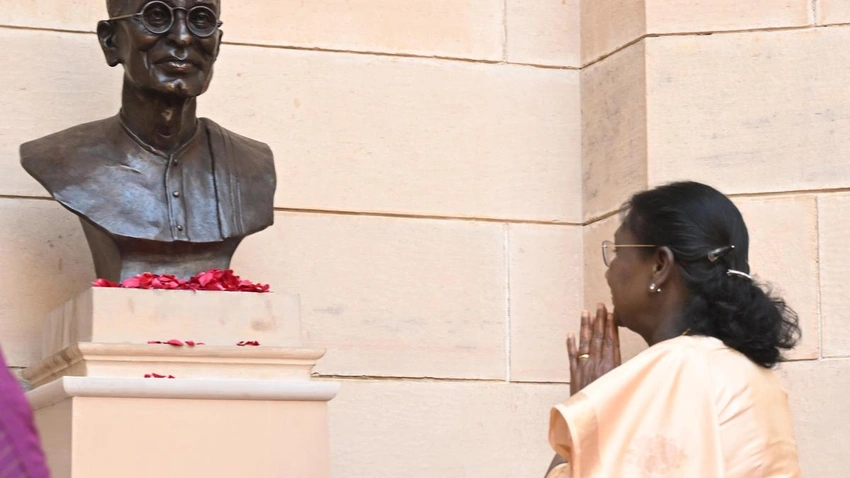
President Murmu unveils Rajagopalachari’s bust at Rashtrapati Bhavan, replacing Lutyens’ statue and signaling a shift away from colonial symbols in India.
At Rashtrapati Bhavan on a sunlit morning, President Droupadi Murmu unveiled a bust of Chakravarti Rajagopalachari at the Grand Open Staircase near Ashok Mandap, replacing the long-standing bust of Edwin Lutyens, the British architect behind much of New Delhi. The moment drew dignitaries, including Vice President CP Radhakrishnan, senior Union ministers, and members of Rajaji’s family. Prime Minister Narendra Modi had announced the unveiling and the forthcoming Rajaji Festival a day earlier, framing the moment as a symbolic step toward reconnecting with Indian history.
During his Mann ki Baat monthly address, Modi said the nation is leaving the symbols of slavery behind and beginning to relate to Indian culture, calling the move a commendable effort.
Rajagopalachari, known as Rajaji, was India’s first and only Indian Governor General, a statesman who wore multiple hats as a leader, writer, and public life figure whose decades of service spanned politics and letters.
Replacing Lutyens's bust with Rajaji's is a potent symbol of the postcolonial memory project. The Rajaji Festival will celebrate his public life and contributions, inviting reflection on how monuments shape national identity and how future generations remember history.
