Assam's Gateway to the World: A New Landmark for Indian Architecture


Assam's Gateway to the World: A New Landmark for Indian Architecture
Assam's Gateway to the World: A New Landmark for Indian Architecture
Discover how Guwahati's new Terminal 2 is setting global standards in architectural excellence and sustainability, earning a prestigious award in 2025.
India gained international recognition when Lokpriya Gopinath Bordoloi International Airport in Guwahati won the 2025 International Architecture Award in the Transport category. Inspired by Assamese culture and biodiversity, the recently built Terminal 2 (T2) has been recognized for its sustainable design and architectural excellence, joining only six other airports worldwide.
The award honors excellence in architecture and urban planning. It is given out annually by The Chicago Athenaeum: Museum of Architecture and Design in partnership with The European Centre for Architecture Art, Design and Urban Studies and Metropolitan Arts Press, Ltd.
Gateway to a New Northeast India
Northeast India's main aviation hub, Guwahati International Airport, links the area to important domestic and international locations. The ambitious redevelopment plan that includes the new T2 aims to meet the increasing travel demand, modernize infrastructure, and improve passenger comfort.
Architecture Inspired by Nature and Tradition
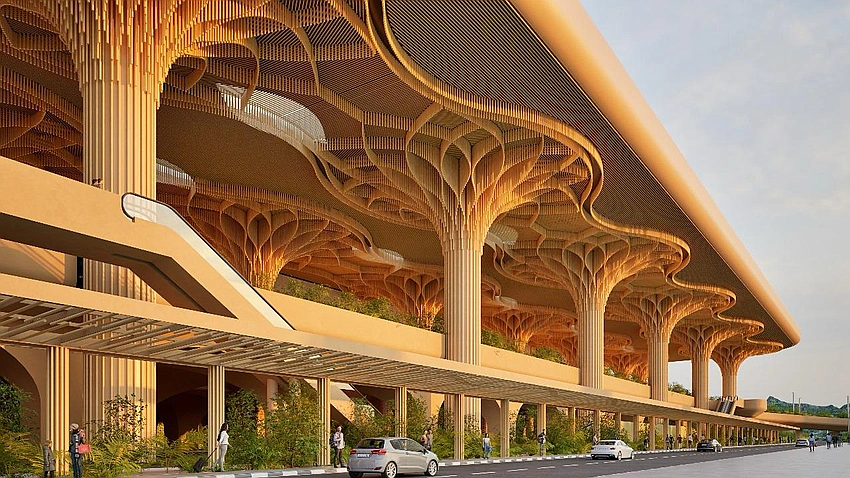
The elegant foxtail orchid and the hardiness of bamboo, two representations of the natural beauty of Northeast India, serve as inspiration for the award-winning design. The terminal has an earthy yet futuristic look thanks to its tea-trunk-like columns and curved rooftop, which create a layered, organic form.
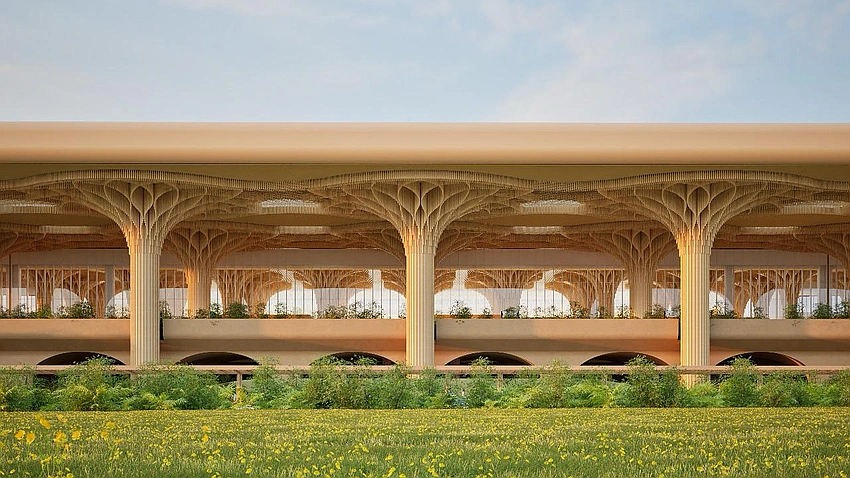
The terminal, created by the architectural firm NUDES under the direction of Nuru Karim and a gifted design team, combines sustainability and soul. It provides travelers with an immersive experience that resembles a biodiversity park rather than an airport, thanks to its open-air areas and abundant greenery.
T2’s Core Sustainable Features
Beyond aesthetics, the terminal's design philosophy includes:
- Skylights and open floor plans to maximize natural light and lower energy use
- Vertical green walls and indoor gardens to enhance air quality.
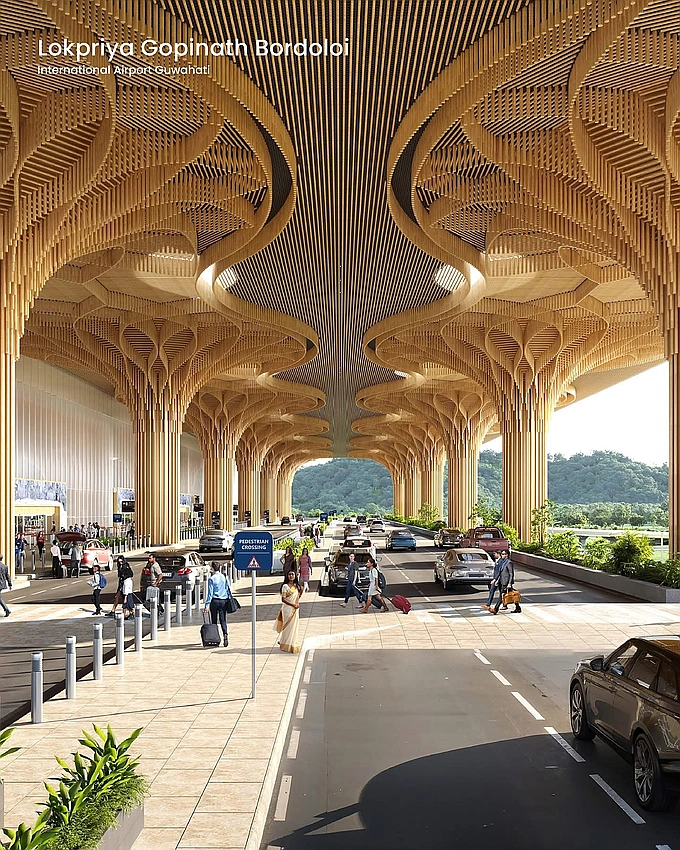
- A calm transition from the runway to the terminal is created by an "arrival forest" with ambient skylighting.
- Ability to manage passenger flow and improve baggage systems to accommodate 10 million passengers a year.
Where Tradition Meets Innovation
Travelers will find a peaceful, inviting atmosphere inside thanks to the wooden-style walkways, lots of open space, and abundant natural lighting. When paired with contemporary amenities, the open-air concept guarantees a comfortable journey with minimal environmental impact. Guwahati International Airport's international recognition not only solidifies its standing as a cutting-edge aviation hub, but it also establishes a standard for environmentally friendly airport architecture in India.
#GuwahatiAirport #ArchitectureAward #SustainableDesign #NortheastIndia #Travel
