It happens every day, in every comment section and group chat: another micro-cheating story. Maybe i

It happens every day, in every comment section and group chat: another micro-cheating story. Maybe i
It happens every day, in every comment section and group chat: another micro-cheating story. Maybe it's the partner who secretly follows an ex's new flame, or the one whose 'work spouse' gets more emotional bandwidth tha
It happens every day, in every comment section and group chat: another micro-cheating story. Maybe it's the partner who secretly follows an ex's new flame, or the one whose 'work spouse' gets more emotional bandwidth than their actual spouse. Whatever the flavor, these tales of subtle infidelity captivate us.
We read, we judge, we relate, and we invariably wonder, 'Is that micro-cheating?'
What Exactly Counts?
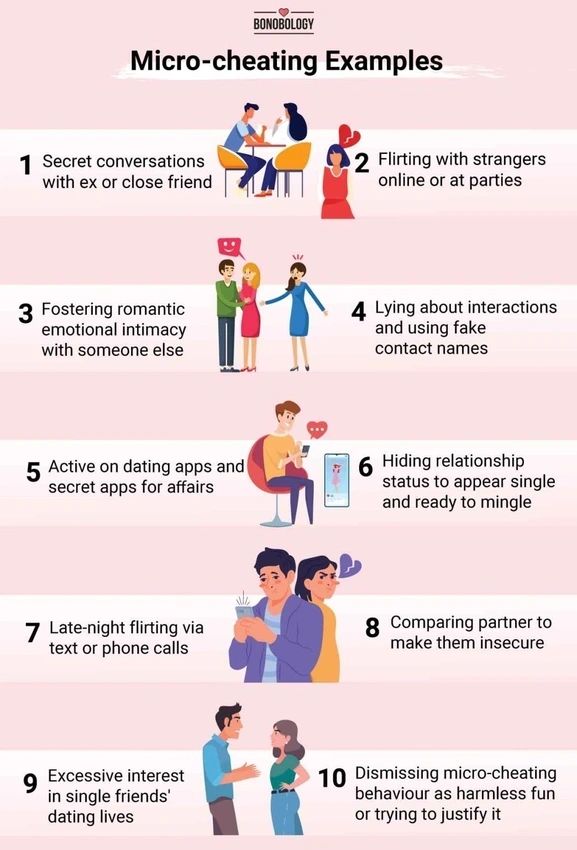
Micro-cheating isn't about grand, sweeping affairs; it's the quiet erosion of boundaries. Picture a colleague texting a little too intimately after hours, or someone consistently downplaying their relationship status to attractive strangers. It's behavior that falls short of full-blown infidelity but crosses an implicit line of emotional or relational exclusivity.
Think of it as a spectrum, where a harmless coffee with a platonic friend sits at one end, and a clandestine hotel room at the other.
Micro-cheating occupies that murky, unsettling middle ground.

The Psychological Hook
Why are we so drawn to these stories?
For one, they tap into our deepest anxieties about trust and commitment.
Psychologist Esther Perel often speaks about the tension between our need for security and our desire for adventure.
Micro-cheating, in a way, explores that tension, the thrill of the 'what if' without fully committing to the 'what is.' It offers a safe space to ponder the fragility of relationships without facing our own vulnerabilities directly.
Then there's the element of social comparison. We scrutinize these stories to calibrate our own relationship norms. 'Am I being too strict?
Too lax?' asks the collective subconscious. As Professor Brené Brown reminds us, “ True belonging only happens when we present our authentic, imperfect selves to the world. ” Micro-cheating stories, conversely, highlight the imperfect self trying to navigate expectations, often through deception or omission.

The Digital Echo Chamber
Social media has undoubtedly amplified our obsession.
Platforms make it incredibly easy to share, dissect, and pontificate on these minute transgressions.
A screenshot of a flirtatious DM can become global news in minutes.
This digital stage turns private relationship dynamics into public spectacles, inviting a chorus of opinions from strangers who feel perfectly qualified to weigh in.
It's voyeurism dressed up as relatable content.
The accessibility of these stories also makes them feel incredibly personal. We've all seen, or perhaps even been involved in, scenarios that brush up against the micro-cheating line. This relatability fosters a collective sense of understanding and frustration, making these narratives not just entertaining, but also a strange form of group therapy, albeit an uncredentialed one.

Navigating the Gray Areas
The real impact of micro-cheating, beyond the juicy gossip, lies in its insidious effect on trust.
While not as devastating as a full-blown affair, these small betrayals chip away at the foundation of a partnership.
They introduce doubt, foster insecurity, and can lead to a breakdown in communication, precisely because they're often too 'small' to confront directly without feeling overly sensitive or accusatory.
Open, honest conversations about boundaries are crucial. What one person considers harmless, another might find deeply disrespectful. It's about defining the 'rules of engagement' in your specific relationship, rather than relying on some universal, unspoken code.
It's a challenge, yes, but one that strengthens the bond when navigated with empathy and clear communication.

So, What Does It All Mean For Us?
Our fascination with micro-cheating stories isn't just about schadenfreude; it's a reflection of our evolving understanding of intimacy, boundaries, and commitment in a hyper-connected world. These narratives serve as cautionary tales, conversation starters, and perhaps even a bizarre form of self-reflection. They remind us that the 'small stuff' in relationships often isn't small at all, and that the gray areas require more light, not less.
Ultimately, they hold up a mirror, showing us the complex, often messy, landscape of human connection.
Perhaps by scrutinizing these subtle betrayals, we are, in a strange way, trying to figure out how to be better partners ourselves.