Nicki Minaj's White House Era Is Getting Harder to Call Just a Phase
Nicki Minaj's White House Era Is Getting Harder to Call Just a Phase
Nicki Minaj's White House Era Is Getting Harder to Call Just a Phase
The rapper's repeated White House appearances mark a striking new chapter in her celebrity and show how her political alliance with Trump is becoming part of her public identity.
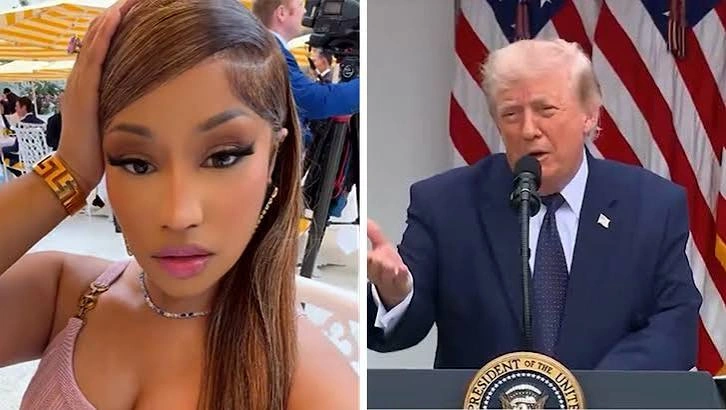
Nicki Minaj was in the White House Rose Garden for lunch. That sentence sounds like the beginning of a joke, except there is photographic evidence, a presidential introduction and a surprisingly long trail of political appearances behind it.
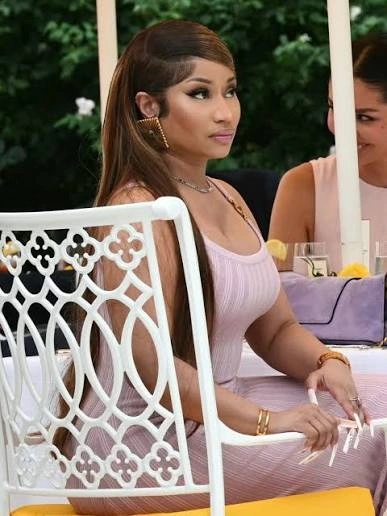
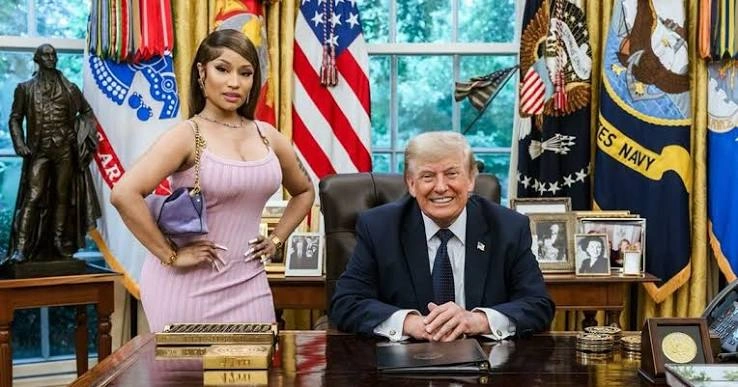
On 6 July, Minaj attended a White House luncheon where Donald Trump singled her out in front of the crowd. He praised her as a respected figure and a supporter of what he called “common sense”, before asking her to stand. Minaj later posted photographs from the visit, including one with Trump in the Oval Office and another beside the presidential display installed in place of Joe Biden's portrait. Her caption called Trump her favourite president of all time and herself “#WhiteHouseBarbie”. That would already be a fairly extraordinary celebrity endorsement. But the Rose Garden appearance makes more sense when you look at what Minaj had been doing with the administration before it.
She Was There for Trump Accounts
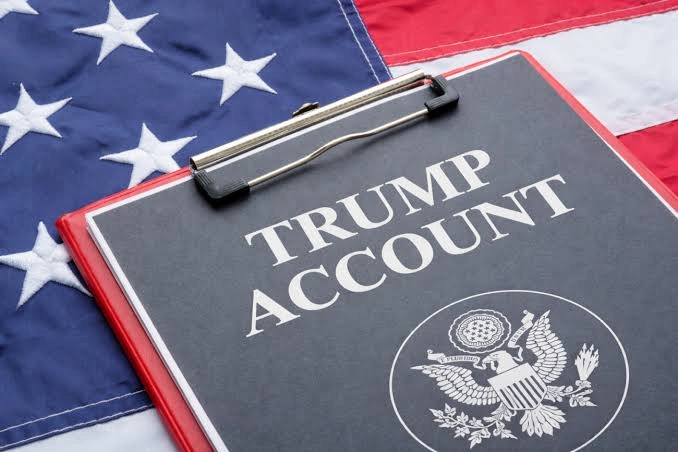
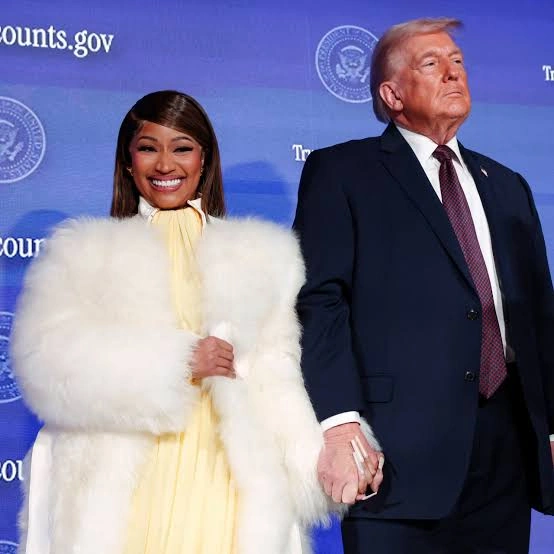
The event was connected to Trump Accounts, the administration's programme establishing investment accounts for American children. Minaj had already visited the White House in January to promote the initiative, and Trump subsequently spoke publicly about her support for it. According to The Independent, he said she had been investing hundreds of thousands of dollars into Trump Accounts for children, including the children of her fans.
That January appearance was not just a quick photograph. Minaj was brought into the administration's promotional orbit at an event specifically centred on the programme. She subsequently appeared with Trump again and described herself as his number one fan, while saying criticism of her support only encouraged her to support him more. There is another bizarre detail attached to that visit. Minaj displayed what she described as a Trump Gold Card. The White House later clarified that it was only a gold-coloured memento rather than an immigration document. Minaj already held a green card and had been a legal permanent resident for around two decades, so she did not need the immigration fast-track the actual Gold Card programme was designed to provide. So when she returned to the White House in July, the political association was already established.
From Rap Superstar to Republican Celebrity Guest
This is where Minaj's transformation becomes difficult to treat as another eccentric chapter in her career. She has increasingly appeared in spaces associated with the Trump administration and its political movement. She attended Turning Point USA's AmericaFest, publicly embraced Trump and has repeatedly defended him against criticism. The Independent reports that this support has alienated many of her fans, which is hardly surprising given how dramatically her public politics have shifted from where much of her earlier cultural image was situated.
Minaj has explained her support in personal terms. She has said that watching Trump face what she regarded as bullying and smear campaigns reminded her of experiences she had faced herself. That explanation tells us something important about how she understands the relationship. She is not presenting herself as a reluctant celebrity who happened to end up in Trump's orbit. She appears to see a personal connection between her own experiences and Trump's treatment in public life, which that makes the Rose Garden photograph more revealing than the “White House Barbie” caption suggests.
The Photograph Is the Point
Nicki has always understood the power of an image. Her career was built partly through the creation of characters, costumes and visual worlds that made her recognisable before a song even started. The White House gives her another enormous piece of visual mythology, except this time the backdrop belongs to an American political administration.
Trump seems equally aware of the celebrity value of the encounter. At the July lunch, he did not introduce Minaj simply as someone supporting a government programme. He spent part of his remarks praising her looks, calling her “so hot”, before emphasising her talent and reputation. It produces an uncomfortable collision between celebrity worship and political loyalty. Minaj brings the language of fandom into the White House. Trump gives that fandom an official political stage.
The Barbz Are Part of the Story
This is probably the part that deserves more attention than another round of jokes about Trump calling Nicki hot. Minaj's audience helped turn her into one of the defining pop stars of her generation. Her fandom was built around identification with someone who seemed to operate outside the rules of respectable celebrity. Now that same star is willingly associating herself with a Republican administration and defending its president.
The alienation reported among her fans therefore has a cultural dimension. People are not simply discovering that their favourite rapper votes differently from them. They are watching her repeatedly lend her celebrity to the administration, attend its events and publicly describe Trump in deeply enthusiastic terms.
The Rose Garden visit is significant because it makes that shift impossible to separate from her celebrity anymore. Nicki Minaj did not merely visit the White House. She returned to it after already becoming part of Trump's political spectacle. And perhaps that is the most revealing thing about the whole episode. For years, Nicki's greatest trick was making the world bend around the mythology of Nicki Minaj. Now she is helping another mythology grow around her: the Republican president's celebrity coalition.
