On Writing Notes Like Joan Didion

On Writing Notes Like Joan Didion
On Writing Notes Like Joan Didion
Explore how Joan Didion's notebooks teach writers to observe details before drawing conclusions. A concise guide to clear prose: begin with attention, let perception lead, and resist ornament.
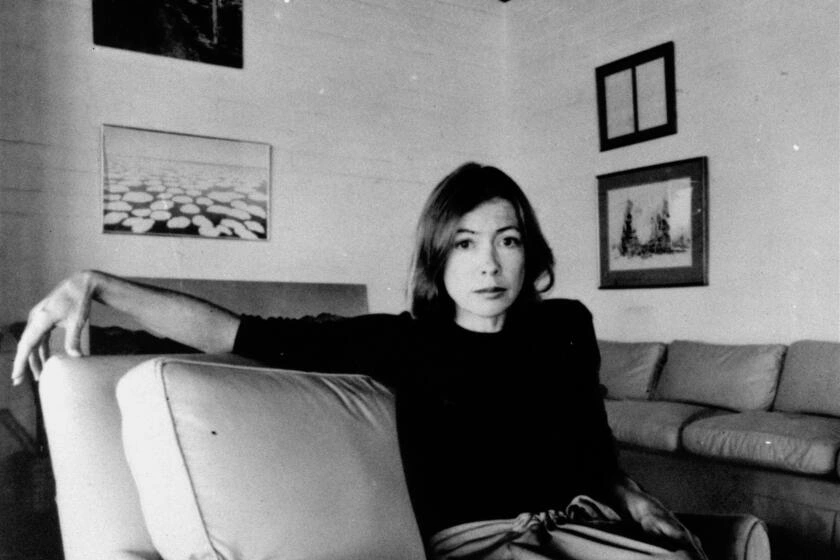
Joan Didion’s prose has always felt like a mind thinking on the page; exacting, lucid, and faintly dangerous. Her sentences do not wander; they tighten. Her observations do not decorate; they disclose. To write notes “like Didion” is not to imitate a style, but to practise a way of seeing: rigorous, unsentimental, and attentive to the tremors beneath the ordinary.
This is not a guide to mimicry. It is an invitation to adopt a posture; one that values clarity over flourish, structure over sprawl, and perception over performance.
Begin with Attention, Not Opinion
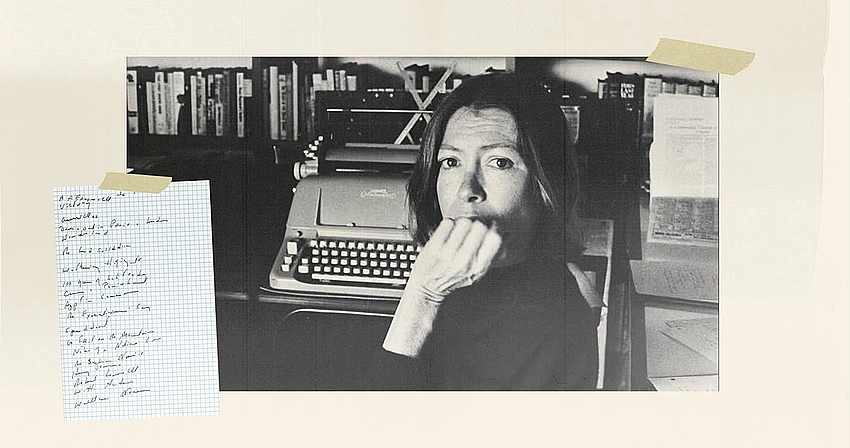
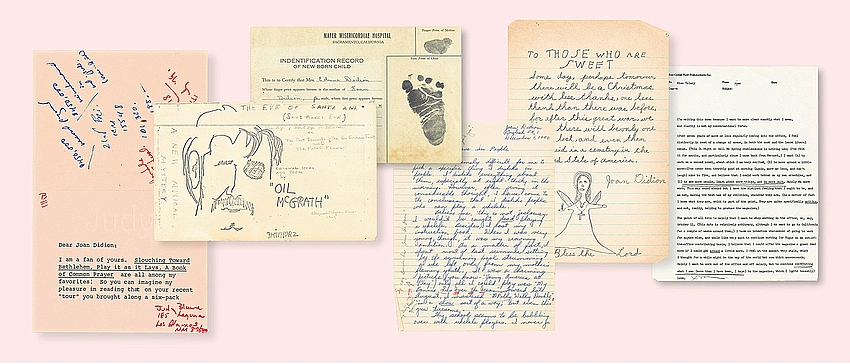
Didion’s notebooks — glimpsed through essays like On Keeping a Notebook — were not diaries of feeling but archives of perception. She collected details that might later reveal a pattern: a gesture, a phrase overheard, the colour of light in a motel room.
The lesson is simple and difficult: Record what is there before deciding what it means.
Instead of writing:
“The café felt nostalgic.”
Write:
“The chrome counter reflected a yellowed strip light. A waitress hummed along to a 1980s ballad. Two men argued quietly about a property dispute.”
Meaning emerges from accumulation. Interpretation follows observation, not the other way around.
Treat Notes as Fragments of Thought
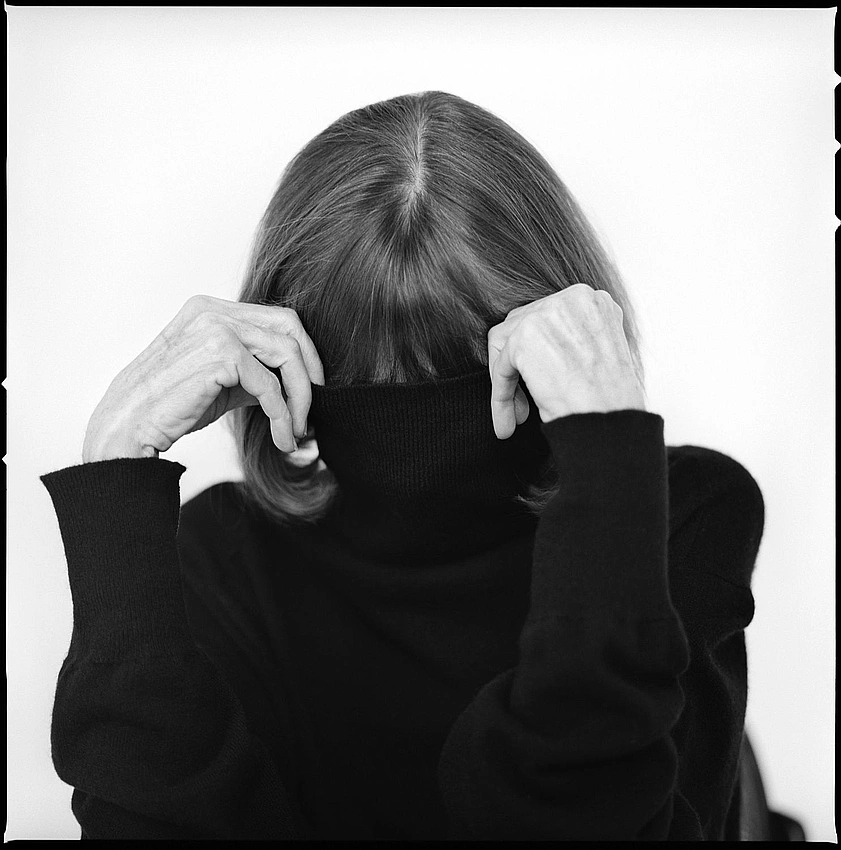
Didion’s writing often carries a sense of incompleteness — not because it lacks resolution, but because it honours ambiguity. Her notes feel provisional, alive, resistant to premature closure.
Adopt the fragment as a legitimate unit:
- A sentence.
- An image.
- A contradiction.
- A question without an answer.
Example:
“Why did the room feel tense? No raised voices. Only the television murmuring election coverage.”
Notes need not conclude. Their power lies in preserving uncertainty — the raw material of later insight.
Precision Is a Moral Choice
Didion’s language is spare not for aesthetic minimalism, but for ethical clarity. Vague words obscure. Exact words reveal.
Compare:
“She seemed upset.”
Versus:
“She folded the napkin twice before speaking. Her voice did not rise, but her hands trembled.”
Precision respects reality. It resists cliché. It refuses the comfort of abstraction.
Practice: Replace generalities with sensory specifics. Ask: What exactly happened? What exactly did I see?
Structure Your Notes: Even Messily
Didion’s essays often appear effortless, yet their architecture is meticulous. Ideas recur, images echo, motifs accumulate. Notes can borrow this instinct for pattern.
Consider organising pages around:
- Scenes (what happened)
- Images (what remains visually)
- Questions (what unsettles)
- Connections (what this resembles)
This does not sterilise spontaneity; it disciplines it. Chaos becomes legible.
Embrace Coolness Without Detachment
Didion’s tone is frequently described as “cool,” but it is never indifferent. Emotion is present, though rarely declared. Feeling seeps through rhythm, juxtaposition, restraint.
Instead of writing:
“I was devastated.”
Try:
“I reread the message three times. Outside, traffic moved as usual. Someone laughed in the corridor.”
Restraint intensifies affect. The unsaid vibrates louder than confession.

Note Contradictions
Didion’s work thrives on dissonance: glamour and decay, freedom and dread, surface and fracture. Notes become richer when they register tensions rather than smoothing them away.
Example:
“The rally felt celebratory. Yet everyone watched the exits.”
Contradictions are not inconsistencies; they are evidence of complexity.
Write Notes for the Future Self
Didion once suggested that notebooks are not records of events but reminders of who one was when noticing them. Notes are messages forward in time.
Write so that later you can ask:
- Why did this detail matter?
- What pattern was forming?
- What anxiety was present but unnamed?
Notes are seeds of essays, stories, analyses. It is an intellectual compost.
Practise the Discipline of Returning
Didion revised relentlessly. Notes are not sacred artefacts; they are working documents.
Return to them:
- Expand a fragment.
- Cut excess.
- Identify recurring images.
- Trace emerging themes.
Meaning is often discovered retrospectively.
To write notes like Joan Didion is to cultivate a form of attentiveness that resists noise, spectacle, and lazy interpretation. It is a practice of intellectual honesty, seeing clearly, naming exactly, and allowing ambiguity to remain unresolved.
In an age of instantaneous commentary, this method feels quietly radical. It privileges perception over reaction, detail over declaration, patience over certainty.
And perhaps that is Didion’s enduring lesson: Writing begins not with expression, but with attention.
#JoanDidion #NotebookThinking #CreativeWriting #LiteraryEssays #ClarityInWriting

Login to comment.
No thots yet. Be the first to share your thoughts!