Kolkata's Road War: History, Identity, and the Battle for Memory

Kolkata's Road War: History, Identity, and the Battle for Memory
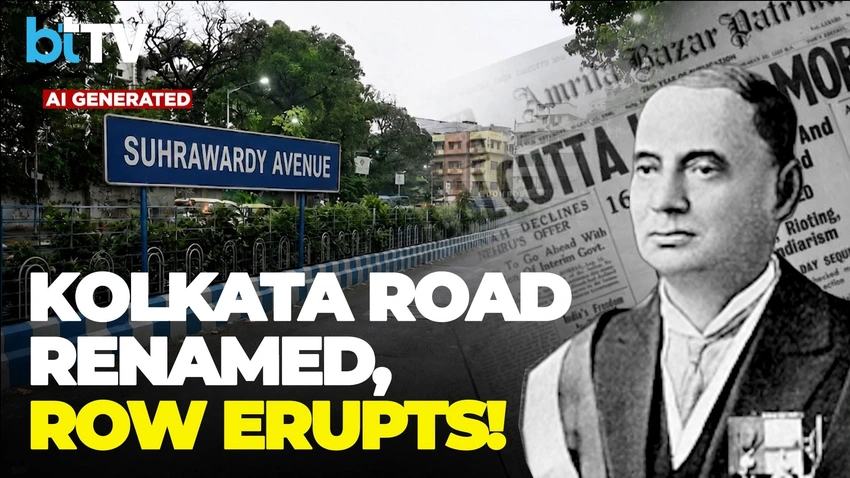
Kolkata's Suhrawardy Avenue renaming to Gopal Mukherjee Road has ignited a fierce political and historical debate. Is this a correction of history or a case of mistaken identity driven by politics? Dive in!
What's in a Name? Kolkata's Street Fight Over History
Kolkata is currently embroiled in a fiery controversy, and it’s all about a street name. The decision to rename the historic Suhrawardy Avenue as Gopal Mukherjee Road has ignited a political and historical powder keg in West Bengal, exposing a deeper struggle over cultural memory and who gets to write the city’s past.
At the heart of the debate is the BJP's assertion that renaming the avenue is a necessary 'correction of a historical wrong'. Their argument centers on the belief that the road honors Huseyn Shaheed Suhrawardy, a figure they associate directly with the devastating 1946 Great Calcutta Killings. For the BJP, honoring such an individual is unacceptable, and they instead advocate for recognition of Gopal Mukherjee, better known as Gopal Patha.
This figure, they claim, played a crucial role in protecting Hindus during the tumultuous pre-Partition riots, making him a worthy recipient of the city's remembrance.
The Identity Crisis: Two Suhrawardys?
However, the Trinamool Congress and the Congress parties are having none of it.
They vehemently dispute the BJP's narrative, introducing a critical detail: the road was not named after Huseyn Shaheed Suhrawardy, the former Bengal Premier. Instead, they insist it was originally named in honor of Sir Hassan Suhrawardy, a distinguished physician, educationist, and a former Vice-Chancellor of Calcutta University.
This changes everything, turning the BJP's 'historical correction' into what the opposition labels a 'case of mistaken identity driven by politics.'
It's a profound battle for the soul of Kolkata's historical narrative. Is the BJP deliberately conflating two distinct historical figures to push a political agenda and reshape public memory?
Or is there genuine confusion that needs to be clarified for the city's residents?
More Than Just Asphalt
The controversy underscores how deeply intertwined history, identity, and political power are, especially in a city as culturally rich and historically significant as Kolkata. Street names are not just navigational aids; they are monuments to collective memory, tributes to individuals, and symbols of a city's values.
When those symbols become points of contention, it reveals the fault lines within society and the ongoing struggle to define who 'we' are and what 'we' remember.
Whether it's a genuine misunderstanding or a strategic re-imagining of history, this renaming debate forces us to confront fundamental questions about historical accuracy, political motivations, and the very nature of cultural remembrance. What do you think? Is this a necessary correction, or a politically charged rewrite of history?
