AI is Now Tracking Which Jobs to Replace. What’s Your Move?

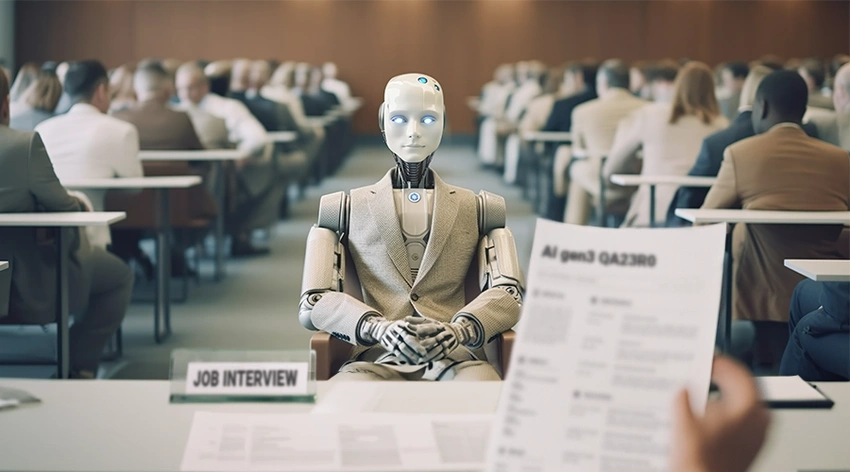
AI is Now Tracking Which Jobs to Replace. What’s Your Move?
Anthropic just launched a tool to track jobs AI can replace. If automation is inevitable, do we need UBI or a total rethink of the social contract? Here is how we survive the shift.
The Metrics of Obsolescence
The ambiguity of the AI revolution is rapidly vanishing. For years, the conversation about artificial intelligence replacing human labor was dominated by vague predictions and sci-fi anxiety. That changed this week. Anthropic has launched a new tool designed to monitor and index exactly which jobs are ripe for displacement based on the theoretical capabilities of Large Language Models. We have moved from guessing to measuring.
This development signals a profound shift in the workspace. It is no longer a question of if a machine can do your job, but rather a calculation of when it becomes cheaper and more efficient for it to do so. This index combines technical capability with economic viability, creating a roadmap for automation that corporate efficiency experts will undoubtedly follow.
The Failure of Traditional Advice
For the last decade, the standard advice given to the workforce was simple: upskill. We were told to learn to code, to focus on STEM, and to embrace the digital economy. However, the capabilities tracked by Anthropic's new tool target those very domains. Coding, data analysis, and technical writing are among the most vulnerable sectors.
The old social contract was built on a premise that is crumbling. It stated that if you educate yourself and work hard, you will find stability. But how does one compete with a system that can absorb the sum total of human coding knowledge in days and execute tasks in milliseconds? We are approaching a point where human cognitive labor, much like physical labor in the 19th century, is being devalued by mechanization.
Universal Basic Income: A Band-Aid or a Foundation?
As this technology accelerates, the calls for Universal Basic Income (UBI) are growing louder. The logic is sound; if AI generates massive wealth while removing the need for human workers, that wealth must be redistributed to prevent societal collapse.
However, UBI often feels like a payoff. It risks creating a permanent underclass effectively paid to stay out of the way of progress. While cash transfers may be necessary to ensure survival, they do not address the crisis of meaning and contribution. Work provides community, status, and structure. Simply cutting a check does not replace the social fabric that employment currently provides.
A New Social Contract
Instead of just UBI, we need to redefine what constitutes value in our society. If AI handles the optimization and production of goods and digital services, human value must shift toward things AI cannot replicate: empathy, care, stewardship, and creativity.
We need a social contract that values:
- Care Work: Teaching, nursing, and elderly care are chronically underpaid. In an AI-driven world, these human-centric roles should become the highest-status professions.
- Community Stewardship: Managing local governance, organizing communities, and maintaining public spaces require a human touch that algorithms lack.
- Creative Exploration: Art and philosophy should be supported not as hobbies, but as essential functions of a society that has solved the problem of survival.
This requires a radical economic shift. It means taxing the productivity of AI systems—essentially a robot tax—to fund not just a basic income, but a robust public sector that employs people in roles that improve the quality of life rather than the quantity of GDP.
The Urgency of Now
Anthropic’s tool is a wake-up call. Corporations are armed with the data they need to cut costs. Governments and labor organizations are currently lagging behind, fighting the battles of the last century. We cannot wait for the unemployment numbers to spike before we act.
The definition of security must be decoupled from the ability to perform tasks that a chatbot can do better. We must build a floor for human dignity that no algorithm can erode. The technology is ready to replace us. The question remains: is society ready to take care of us?

Login to comment.
No thots yet. Be the first to share your thoughts!