No More 'Bang Bus'? Academics Tackle Robotaxi Indecency
No More 'Bang Bus'? Academics Tackle Robotaxi Indecency
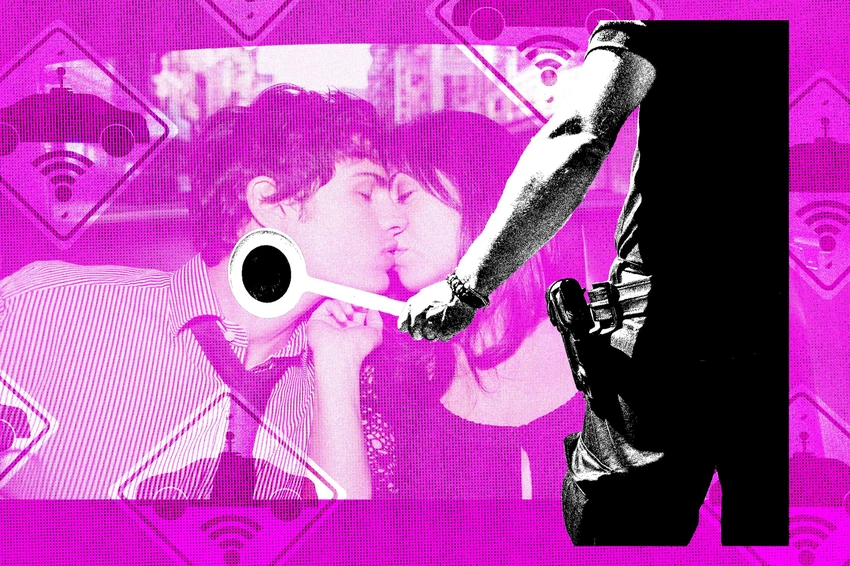
Academics are racing to prevent explicit activities in self-driving cars. Find out why they're worried about the future of public decency in AI-driven mobility.
The future of transportation is hurtling towards us, promising convenience and accessibility through self-driving cars. But there's a rather unconventional problem that academics are already trying to solve: keeping passengers from getting intimate in robotaxis. It sounds like a joke, but trust me, it's a serious concern for those shaping our AI-driven future.
Meet Pavlo Bazilinskyy, an assistant professor at the Eindhoven University of Technology, who found himself on PornHub for work. Yes, you read that right. His mission?
To understand what kind of “antisocial behavior” people engage in during moments of unmonitored privacy. His search for 'public transport' on the site yielded 297 hits. As Bazilinskyy puts it, “People are hard to predict.” This unexpected research highlights the real challenge: what happens when there's no driver to say, 'Hey, stop that!'?
This isn't about being prudes; it's about reputation. Alexandros Rouchitsas, an engineering psychologist and fellow academic, openly admits,
we are taking the side of the parents, the elderly—we are not the cool people here.
Their biggest fear is that a potentially groundbreaking technology, one that could greatly benefit the elderly, children, and people with disabilities, gets a bad rap. “We want automated mobility solutions accepted, trusted by the general public,” Rouchitsas states, emphasizing the need for these services to be seen as equitable and serious.
Rouchitsas's nightmare scenario? Self-driving cars become the new 'Bang Bus.' He explicitly states, “You know 'Bang Bus'? We don't want that.” This concern stems from the observation that new, quasi-private spaces often get co-opted for less-than-savory activities.
From prom-night limos to the Mile High Club, human nature finds a way.
To tackle this head-on, Bazilinskyy and Rouchitsas recently hosted an industry workshop in Gothenburg, Sweden.
Participants, including representatives from major players like Volvo Cars, SmartEye, and even sponsors BMW and Google, brainstormed preventative measures.
The focus?
Consensual interactions, surprisingly. The goal was to generate physical and design interventions that subtly, or not so subtly, encourage people to keep it clean.
Some initial, thought-provoking ideas have surfaced. What if robotaxis were partially transparent? Or perhaps a discreet light could begin to blink if the vehicle's AI senses 'disapproved' behavior?
The academics behind this initiative are hoping for creative solutions to an “elephant in the room” issue, intending to publish a paper based on the workshop's findings. It's a fascinating look at how deeply we need to consider human behavior when designing our technological future, even down to our most intimate moments.
