The 'Pre-requisite' Fallacy: Why You Should Skip Ahead

The 'Pre-requisite' Fallacy: Why You Should Skip Ahead
School teaches 'A' before 'B.' The real world? Start 'B,' fail, then figure out 'A.' This direct approach isn't just faster, it's how true mastery is built.
The 'Pre-requisite' Fallacy: Why You Should Skip Ahead
We're taught, from an early age, that knowledge is a ladder. You must master step one before you can even think about step two. 'Pre-requisite' is the hallowed word, enforced by academic institutions and often, our own ingrained caution.
Calculus before differential equations.
Basic coding syntax before building a web app.
It sounds logical, almost sacred.
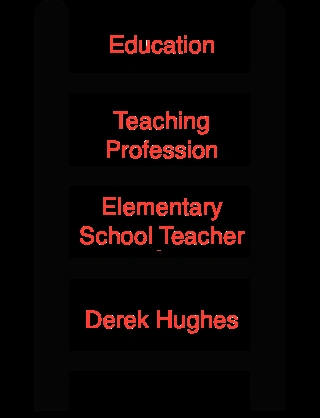
But the real world, particularly the world of creation and innovation, of building startups, writing software, or even just mastering a complex skill, operates on a fundamentally different, often chaotic, logic. Here, the 'pre-requisite' is often a phantom limb, an imagined barrier that slows you down, or worse, stops you altogether. The best way to learn 'A' is rarely to study it in isolation.
It's to plunge headfirst into 'B' and discover that you desperately need 'A' to make any progress.
Think of a founder building a product. Do they sit down and meticulously learn every single aspect of database architecture, front-end frameworks, user psychology, market analysis, and fundraising strategies before writing a single line of code or talking to a potential customer? Absolutely not.
That's a recipe for analysis paralysis, not innovation. They start building. They launch.
They get feedback. They find out their database is too slow, their UI is confusing, or their pitch deck falls flat. Then , and only then, do they furiously learn the specific 'A' that will solve their immediate 'B' problem.
It's about the very nature of learning. Learning 'A' in the abstract is like trying to memorize a map of a city you've never visited. You might know the street names, but you have no feel for the place.
Learning 'A' because 'B' demands it is like getting lost in that city and having to navigate your way out. Every turn, every landmark, every piece of knowledge becomes deeply embedded because it's tied to a visceral experience, a problem that needed solving, a failure that needed correcting.
I've seen countless founders agonize over not knowing enough, delaying their first step. They want to be 'ready.' But readiness is a myth propagated by a system designed for standardized testing, not groundbreaking work. The true genius lies in embracing ignorance and using it as a compass.
The best way to learn is often under duress, when the stakes are high, and the problem is real.
This kind of learning sticks.
It's practical, immediately applicable, and fuels genuine understanding.

So, what does this mean for you? Stop waiting for permission. Stop waiting to 'finish' the pre-requisite.
Identify a 'B' that excites you, a project you want to build, a problem you want to solve. Start. Fail.
Get stuck. And then, when you hit that wall, you'll know precisely what 'A' you need to learn. That focused, just-in-time learning is exponentially more effective than any sequential curriculum.
It's how real progress is made, by jumping in, getting your hands dirty, and letting necessity be the ultimate teacher.
The Direct Path to Mastery
This isn't an excuse for sloppiness, but an argument for strategic impatience.
Don't confuse deliberate practice with endless preparation. The former is about iterative improvement informed by real-world interaction; the latter is often procrastination dressed in academic robes.
Embrace the struggle. Embrace the inevitable failures. They're the most potent learning opportunities you'll ever encounter.
Go build something.
The 'pre-requisites' will reveal themselves exactly when you need them.
