India Defends Farmers, Rejects GM Concessions in US Trade Talks

India Defends Farmers, Rejects GM Concessions in US Trade Talks
India pledges to shield farmers and open select markets with zero tariffs on many US goods, while keeping GM soy and dairy off the table.
India plans to safeguard farmers’ interests while pursuing a broader trade framework with the United States, including zero tariffs on a range of agricultural commodities. The package also contemplates importing produce that is not adequately grown domestically, aiming to balance domestic needs with access to foreign markets.
Under the proposed terms, zero tariffs will apply to a wide list of Indian-origin products, including spices, tea, coffee, copra, areca, cashew, chestnuts, specified fruits and vegetables, avocadoes, bananas, guava, mango, papaya and pineapples. In addition, tariffs on marine produce, rice, honey and processed foods are slated to drop to 18% from current levels, a move designed to boost exports. The United States is the largest market for Indian seafood, accounting for about 36% of total marine product exports, which totaled $2.78 billion in 2024-25.
However, there will be “no concessions” on genetically modified (GM) produce, meat, soyabean, dairy, maize and cereals. Soya and corn remain high-profile US farm exports dominated by GM crops. An import quota on soyabean oil will be maintained, and processing is expected to mitigate GM traces in products.
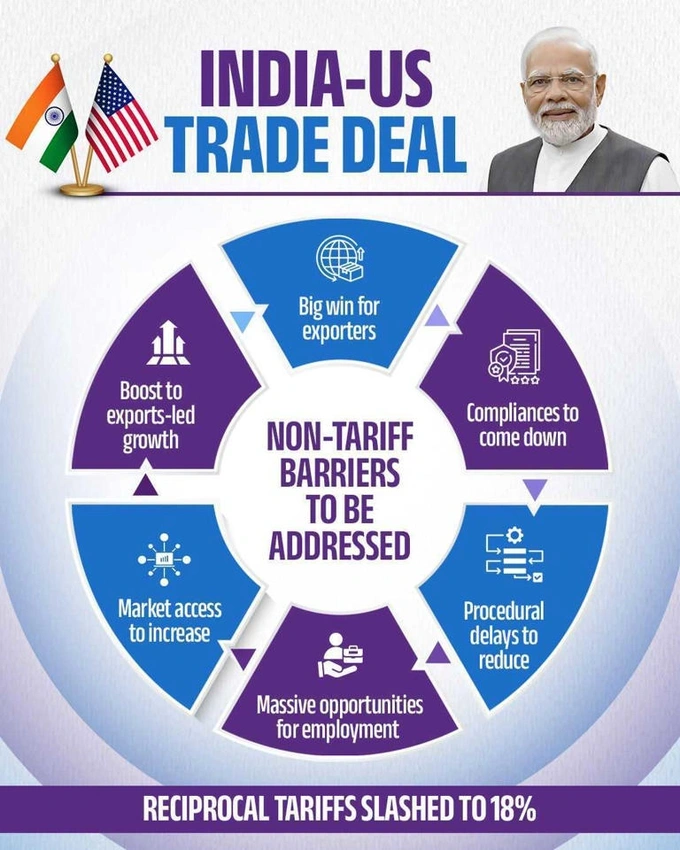
An interim framework notes that India agrees to address long-standing non-tariff barriers to trade in US food and agricultural products, though experts caution that language on GM foods and other sensitive issues still needs clarity. Some analysts view the absence of explicit concessions on GM crops as a potential hurdle in finalizing a detailed agreement, while others see a path toward expanded market access for Indian goods paired with strong safeguards for farmers.
Overall, the framework signals a balancing act: expanding market access for Indian exports and boosting farm incomes, while preserving strict controls on GM commodities and certain key products. The final language will determine how much American access translates into real gains for Indian farmers and processors.
