Amit Shah Pushes for ‘Anti-Terrorism Grid’ and 360-Degree Crackdown

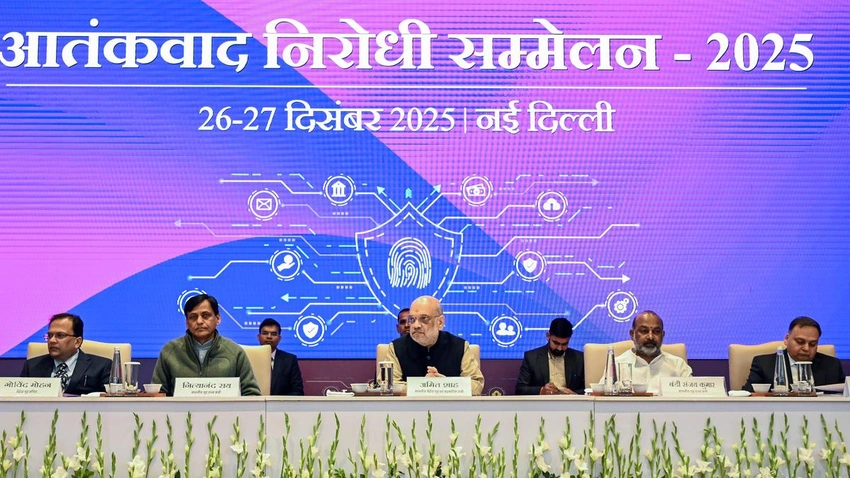
Amit Shah Pushes for ‘Anti-Terrorism Grid’ and 360-Degree Crackdown
Shah calls for nationwide anti-terror infrastructure upgrade, a shared ATS, and a 360-degree plan against organised crime at the Anti-Terrorism Conference-2025 in New Delhi.
New Delhi: Union home minister Amit Shah inaugurated the Anti-Terrorism Conference-2025 and called for a nationwide upgrade of anti-terror infrastructure, proposing an "impenetrable anti-terrorism grid" and a common anti-terror squad (ATS) structure across states. He said this was essential to protect coming generations from evolving threats and to ensure a robust, coordinated response.
He also announced a "360-degree strike" plan against organised crime, emphasising data sharing and the integration of technology to stay ahead of threats that are continually evolving. Shah noted that while central agencies and state police have leveraged technology, much of it remains siloed and underutilised. He urged moving from a "Need to Know" mindset to a broader "Duty to Share" principle.
Shah lauded the Delhi and Jammu & Kashmir police investigations for their diligence, including how the so-called doctor module was busted and three tonnes of explosives recovered before detonation. He said these cases illustrate the value of timely, watertight investigations and vigilant officers.
Recounting the broader strategy, Shah pointed to the ongoing Pahalgam attack probe and indicated that results will be studied by agencies worldwide in the days ahead, potentially placing responsibilities on Pakistan on international platforms. He revealed that for the first time Indian forces have executed a dual-strategy of retribution: "Operation Sindoor" against masterminds and "Operation Mahadev" against ground-level executors.
During the conference, three significant digital tools were launched to support the new framework, though details were not fully disclosed at the podium.
The Home Minister’s remarks come as authorities seek to bolster cross-border and urban security through enhanced data sharing, joint training, and technology-enabled coordination across states and agencies.
