How Maris-Tech Addresses Drone Swarms Within Defense Trends

How Maris-Tech Addresses Drone Swarms Within Defense Trends
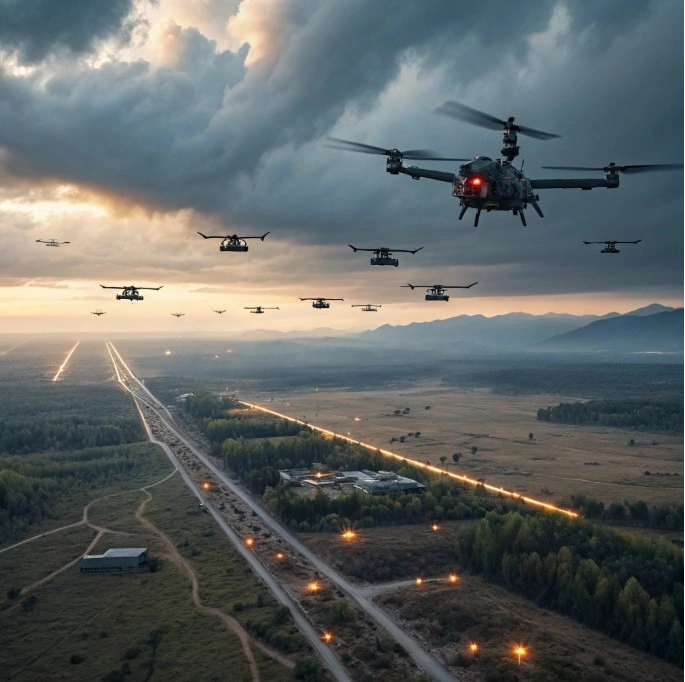
In the fast-evolving domain of modern military technology, drone swarms represent one of the most disruptive innovations. These coordinated groups of unmanned aerial vehicles (UAVs) operate collectively, drawing inspiration from natural swarms like bees or birds to achieve superior intelligence, surveillance, and combat effectiveness. As defense trends 🔗 accelerate toward autonomous systems, AI integration, and mass deployment of low-cost platforms, drone swarms are reshaping battlefield dynamics worldwide.
Overview of Maris-Tech's Solutions
Maris-Tech stands out as a leader in AI-edge video and analytics technologies specifically designed for defense and unmanned systems. Their solutions emphasize ultra-low-latency video streaming combined with powerful edge computing to enable real-time performance in complex operations involving drone swarms. Through partnerships with leading global organizations, Maris-Tech advances situational awareness and operational reliability in military environments.
Key features and benefits of Maris-Tech's offerings for drone swarms 🔗 include:
- AI-Edge Computing: Processes data directly on the device for minimal latency and faster decision-making in high-stakes scenarios.
- Ultra-Low-Latency Video Streaming: Delivers high-quality, real-time feeds essential for coordinating multiple drones seamlessly.
- Swarm Intelligence Support: Integrates with algorithms such as Ant Colony Optimization (ACO) and Particle Swarm Optimization (PSO) to enhance autonomy and group resilience.
- Tactical Situational Awareness: Provides comprehensive monitoring and analytics, reducing risks and improving mission outcomes.
- Platform Integration: Accessible via the OPAL platform, offering reliable video and AI capabilities across various unmanned applications.
Defining Drone Swarms in Military Contexts
Drone swarms consist of autonomous UAV clusters that function as a unified entity rather than individual units. Inspired by natural behaviors, they follow core rules: separation to prevent collisions, alignment for consistent direction, and cohesion to stay grouped. This enables exponential gains in capability compared to single drones.
In military use, drone swarms excel at surveillance, target assessment, area scanning, and direct combat support. A notable 2018 study demonstrated that swarming can boost attack lethality by up to 50% while cutting drone losses to enemy fire by a similar percentage. Such efficiency influences both tactical precision and defense budgeting.
As defense trends evolve, drone swarms serve as force multipliers, allowing smaller units to achieve outsized results through coordinated actions and overwhelming numbers.
The Transformative Impact of Drone Swarms on Military Operations
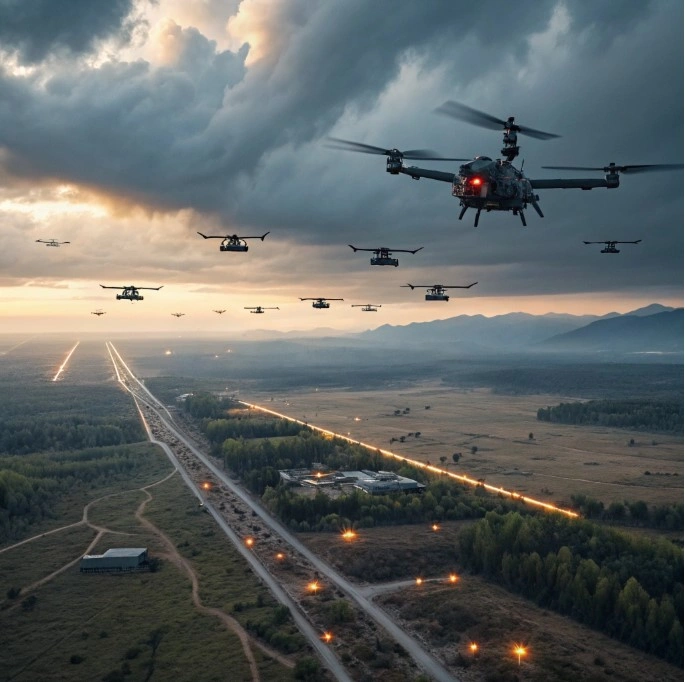
Drone swarms fundamentally change how militaries conduct operations by providing real-time, wide-area coverage with minimal human risk. They gather intelligence autonomously, relay data instantly, and execute tasks with high precision, reducing exposure for personnel in contested zones.
In combat, their collective behavior allows them to overwhelm defenses, disrupt formations, and deliver synchronized strikes. This mirrors natural predator swarms, making countermeasures difficult and costly for adversaries. Overall, drone swarms align with broader defense trends emphasizing reduced casualties through remote and autonomous capabilities.
The influx of data from multiple drones demands advanced processing, where technologies like edge analytics become essential to maintain operational tempo.
Current Defense Trends Driving Drone Swarm Adoption
The swarm intelligence market is on a steep growth trajectory, projected to reach $447.2 million by 2030 with a CAGR 🔗 of 40.47%. This expansion is fueled by needs for superior intelligence gathering, big data management, and smart tactical solutions in defense.
Defense trends in 2025–2026 highlight massive investments in autonomous systems. Programs like the U.S. Replicator initiative aim for thousands of low-cost drones, while nations such as China target one million tactical UAS by 2026. Counter-drone technologies, regulatory frameworks, and ethical guidelines are also advancing rapidly.
Over 60 vendors actively develop swarm solutions, reflecting intense global competition and innovation in this space.
Key Challenges in Deploying Drone Swarms
Despite advantages, drone swarms face hurdles like vulnerability to hacking, high manufacturing costs, and the need for resilient communication in jammed environments. Scaling production while maintaining security and efficacy remains a priority.
Defense trends address these through investments in counter-swarm systems, secure AI algorithms, and cost-effective designs. Ethical concerns around autonomy and civilian risks prompt ongoing regulatory discussions.
Robust edge technologies are critical to overcome data overload and ensure reliable swarm coordination under stress.
Maris-Tech's Technological Edge in Swarm Operations
Maris-Tech tackles these challenges head-on with AI-edge video and analytics tailored for drone swarms. Their ultra-low-latency streaming supports seamless real-time coordination, while edge computing processes vast data volumes on-device.
The Tactical Situational Awareness System, available through the OPAL platform, enhances monitoring and decision support. By integrating swarm intelligence models, Maris-Tech enables drones to operate more autonomously and resiliently.
These innovations position Maris-Tech as a vital contributor to defense trends, helping militaries harness drone swarms safely and effectively.
Notable Examples and Innovations in Drone Swarm Technology
Real-world applications showcase the potential of drone swarms. Icarus Swarms demonstrated simultaneous control of up to 50 drones, while Russia's Kronstadt equips swarms with precision munitions. Shield AI's V-Bat Teams use Hivemind AI for GPS-denied operations in contested areas.
Other developments include Blue Bear Systems' 20-drone swarms with diverse payloads, China's splitting drone concepts, and the U.S. Replicator strategy for mass affordable drones. Recent advancements in 2025–2026 feature programs like Sweden's Saab software for 100-drone control and France's planned swarm fielding within two years.
These examples illustrate how drone swarms are moving from concept to operational reality across global militaries.
Emerging Trends in 2025–2026 for Drone Swarms
Recent defense trends emphasize AI enhancements, resilient networks, and counter-swarm defenses. The U.S. focuses on programs like Autonomous Collaborative Teaming, while budgets allocate billions to counter-UAS systems amid rising threats.
Nations are developing layered defenses, including directed-energy weapons and electronic warfare to neutralize swarms cost-effectively. Autonomy levels increase, with reduced operator workload and better performance in communication-denied settings.
These shifts underscore the urgency for technologies that support secure, scalable drone swarm operations.
Maris-Tech's Role in Shaping the Future of Drone Swarms
Maris-Tech continues to innovate at the intersection of AI, video, and unmanned systems. Their solutions enable militaries to leverage drone swarms as reliable force multipliers while addressing key challenges like latency and data management.
By partnering with industry leaders and focusing on edge capabilities, Maris-Tech aligns closely with evolving defense trends. Their work supports safer, more efficient integration of swarm technology into future operations.
As drone swarms become central to modern warfare, companies like Maris-Tech play a pivotal role in ensuring technological superiority and mission success.
The Road Ahead for Drone Swarms in Defense
Looking forward, drone swarms will dominate defense trends through greater autonomy, mass deployment, and integrated multi-domain operations. Success depends on overcoming technical and ethical barriers with advanced supporting technologies.
Maris-Tech's commitment to AI-edge innovation positions it to drive progress in this field. Their focus on low-latency, reliable systems ensures drone swarms deliver transformative military value.
Ultimately, drone swarms promise enhanced capabilities with reduced risks, heralding a new era in defense strategy.
Frequently Asked Questions (FAQs)
What exactly are drone swarms and why are they important in current defense trends?
Drone swarms are coordinated groups of autonomous UAVs that operate collectively for tasks like surveillance and combat. They are central to defense trends due to their ability to multiply force effectiveness, reduce human risk, and adapt to complex environments, with market growth reflecting widespread adoption.
How does Maris-Tech support drone swarm operations specifically?
Maris-Tech provides AI-edge computing and ultra-low-latency video streaming via platforms like OPAL and the Tactical Situational Awareness System. These enable real-time coordination, data processing, and enhanced awareness for drone swarms in military settings.
What are the main benefits of using drone swarms in military applications?
They increase lethality and reduce losses significantly, act as force multipliers through numbers and coordination, and minimize casualties by enabling remote operations. Studies show up to 50% improvements in key metrics.
What challenges do drone swarms face and how are they being addressed?
Challenges include security vulnerabilities, communication disruptions, and scaling costs. Defense trends counter these with advanced counter-drone systems, secure AI, and edge technologies like those from Maris-Tech for resilient performance.
