Why Las Vegas Feels Like Escapism Turned Into a City

Why Las Vegas Feels Like Escapism Turned Into a City
Why Las Vegas Feels Like Escapism Turned Into a City
Some cities are built around history. Others around culture, trade, or geography. Las Vegas feels different. It is built around an idea: escape.
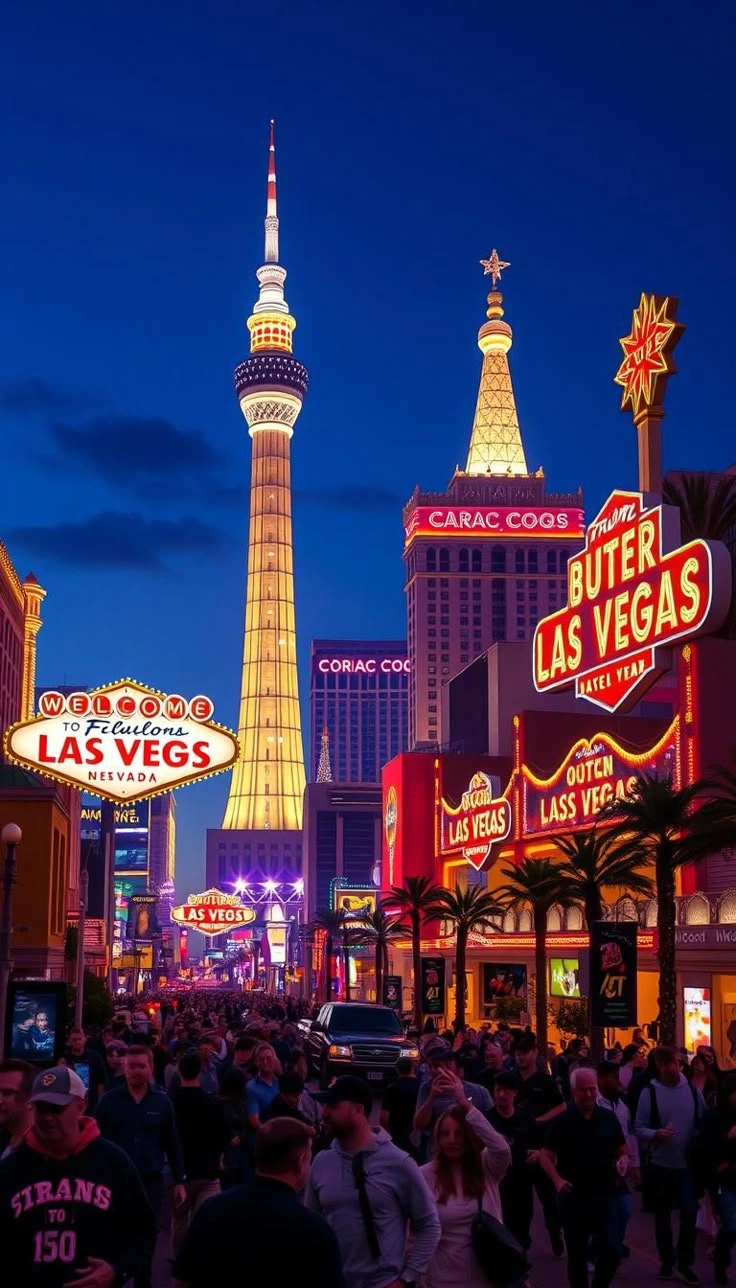
From the moment you arrive, the city makes it clear that it does not want to feel ordinary. Lights are brighter than necessary, buildings are more theatrical than functional, and time itself begins to blur. Day and night stop feeling like opposites. Instead, everything exists in a kind of extended present.
This is what makes Las Vegas feel like escapism turned into a city.
It is not designed to reflect reality.
It is designed to suspend it.
One of the most striking things about Las Vegas is how intentionally it separates itself from its surroundings. The city sits in the middle of a desert: open, quiet, expansive. Yet within that landscape, it creates an environment that feels dense, loud, and constantly active.
This contrast matters.
It emphasizes the artificial nature of the experience.
Inside the city, you are surrounded by stimulation: neon lights, music, movement, color. Outside, there is stillness. The shift between these two spaces feels almost symbolic.
You are either inside the experience or outside it.
And once inside, the city works to keep you there.
The design of the Las Vegas Strip reflects this idea clearly. Casinos, hotels, restaurants, and entertainment venues are placed close together, often connected, making it easy to move from one space to another without ever fully stepping back into ordinary life.
There are no clear pauses.
No obvious moments where the experience stops.
Instead, it flows continuously.
This continuity creates immersion.
You are not just visiting a place: you are participating in a controlled environment where everything is designed to hold your attention.
Time behaves differently in this environment.
Casinos often remove visible clocks and limit natural light. Interiors remain consistent regardless of whether it is morning or midnight. This subtle design choice reduces awareness of time passing.
When time becomes less visible, it becomes easier to stay.
And when you stay, the sense of escape deepens.
This is not accidental.
It is part of how the city functions.
Las Vegas is also built on spectacle.
Many of its most recognizable spaces are not subtle: they are exaggerated versions of something else. Replicas of global landmarks, themed hotels, elaborate shows, and large-scale performances create an atmosphere where everything feels slightly larger than life.
This exaggeration serves a purpose.
It makes reality feel distant.
When you are surrounded by something visually intense, your attention shifts outward. You focus on what is happening around you rather than what is happening within you.
This is a core aspect of escapism.
The ability to temporarily step away from internal thought by entering an environment that demands external focus.
Ultimately, Las Vegas feels like escapism turned into a city because it was built with intention.
Every element: the lighting, the architecture, the layout, the rhythm: works together to create an environment where ordinary life feels distant.
It is not accidental.
It is designed.
And perhaps that is what makes it so fascinating.
Because it shows what happens when an idea: escape, becomes physical.
A place where people go not only to see something different, but to feel different.
Even if only for a while.
And when they leave, what often remains is not just memory of the city itself, but memory of how it felt to exist inside something so deliberately removed from everyday life.
A reminder that sometimes, the most powerful places are not the ones that reflect reality, but the ones that allow you to step outside it: briefly, intentionally, and completely.
