Your Daily Snack Could Be Hiding a Heart Risk: Here's What You Need to Know

Your Daily Snack Could Be Hiding a Heart Risk: Here's What You Need to Know
That innocent-looking snack might be doing more harm than you think. Find out how ultra-processed foods are impacting your heart health and what simple changes you can make today for a healthier future.
The Hidden Danger in Your Daily Snack: How Ultra-Processed Foods Impact Heart Health
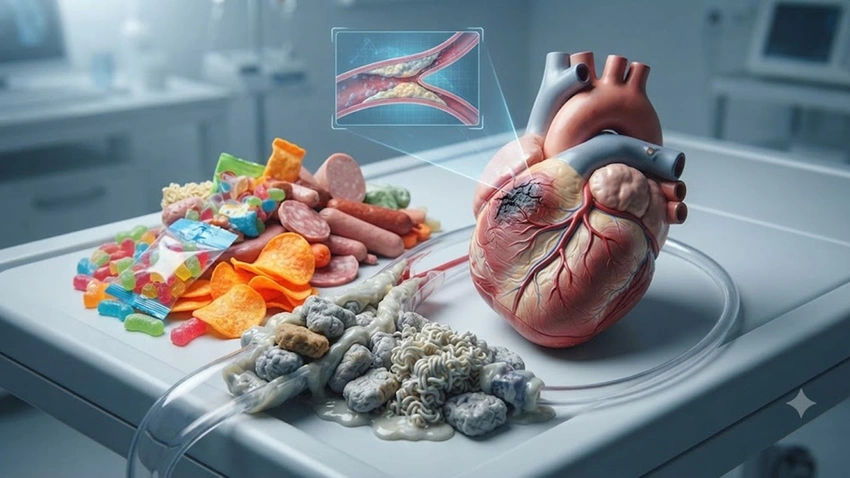
Ever wonder about that quick meal or packaged snack? It turns out, our growing appetite for ultra-processed foods (UPFs) carries a hidden risk, especially for our hearts. New findings suggest that for every additional 100 grams of these foods consumed daily, you could be looking at a 14 per cent higher risk of cardiovascular events .
This isn't just about heart health, though.
Higher UPF consumption is also linked to a host of other chronic conditions.
We're talking about a 23 per cent higher risk of obesity, a 24 per cent higher risk of metabolic syndrome/diabetes, and even a 27 per cent increased risk for depression and anxiety.
Digestive diseases see a 31 per cent higher risk, cancer a 12 per cent rise, and all-cause mortality jumps by 18 per cent.
It's a sobering picture.
More Than Just Calories and Sugar
Many think the problem with UPFs is just the sugar, salt, and unhealthy fats. While those are definitely issues, there's a deeper concern.
As Fauziya Ansari, a dietitian at Apollo Spectra Hospital Mumbai, puts it, 'The concern with ultra-processed foods is not simply that they are packaged, but that many are designed to be convenient, highly palatable, and easy to consume in larger quantities.' This ease of overconsumption piles on calories and unhealthy ingredients, leading to weight gain, high blood pressure, and abnormal cholesterol levels over time.
The 'Cocktail Effect'
What makes UPFs particularly tricky is something experts call the 'cocktail effect'. Dr. Parin Sangoi, a consultant interventional cardiologist at Wockhardt Hospitals, Mumbai Central, explains that this refers to 'the possibility that exposure to multiple additives together could have biological effects that differ from, or exceed, exposure to an individual additive.' Imagine artificial sweeteners, emulsifiers, preservatives, and flavouring agents all working in concert, their combined impact could be far greater than any single ingredient alone.
While this is still an emerging area of research, it highlights why we need to be cautious.
What Can You Do For Your Heart?
The good news is that you have the power to make a difference.
The message isn't about fear, but about mindful choices and dietary quality. As Dr.
Swarup Swaraj Pal, senior consultant cardiovascular and thoracic surgeon at Gleneagles Hospitals Parel, Mumbai, advises: 'Avoid chips, desserts, sodas, colas, and ready-to-eat meals.'
Here are some practical steps:
- Prioritize home-cooked meals over packaged options.
- Fill your plate with fresh vegetables, fruits, whole grains, pulses, and nuts.
- Become a label detective: Read food labels carefully and watch your portion sizes.
- Limit products high in added sugar, salt, and unhealthy fats.
Dr. Sangoi emphasizes this balance: 'An occasional packaged food is unlikely to be the deciding factor in someone's cardiovascular health. The concern is when ultra-processed products become a regular and substantial part of the diet.' So, aim to choose more whole or minimally processed foods.
Your heart will thank you for it!
