Nobel-Winning Breakthrough: Lighting Up the Brain with Optogenetics!

Nobel-Winning Breakthrough: Lighting Up the Brain with Optogenetics!
Discover the revolutionary science of optogenetics, honored with the Nobel Prize! Learn how scientists are now controlling neurons with light, paving the way for new insights into the brain.
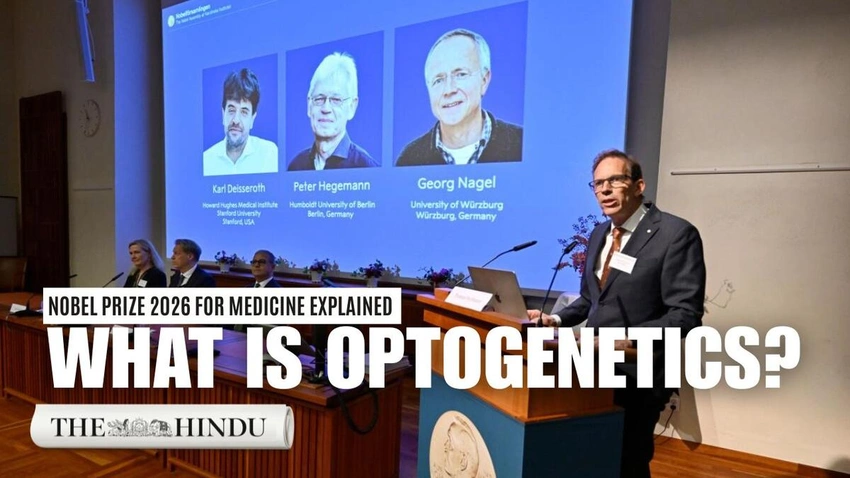
The Karolinska Institute has awarded the prestigious Nobel Prize in Medicine to Karl Deisseroth of Stanford University, Peter Hegemann of Humboldt University in Berlin, and Georg Nagel of the University of Würzburg. Their groundbreaking discoveries have led to the development of optogenetics, a revolutionary technique that allows scientists to precisely turn individual nerve cells on or off using beams of light.
Per Svenningsson, chair of the Nobel Committee for Medicine, emphasized the immense potential of this technique, stating that it
provides opportunities for mapping the brain in a way that we could once only dream of.
Optogenetics stands out for its unparalleled precision in studying a living brain, offering unprecedented avenues to understand the intricate functions of our nervous systems and various neurological diseases and disorders.
This remarkable achievement isn't solely a triumph for neuroscience; it also highlights the extraordinary outcomes when different biological disciplines converge. The foundational discoveries for optogenetics emerged from unexpected research in microbiology, tracing back to the humble alga.
At the close of the last century, Peter Hegemann embarked on a series of studies to unravel how the single-celled alga, Chlamydomonas, detects and responds to light. Known for its "eye spot" containing a light-sensing molecule called retinal, Chlamydomonas fascinated Hegemann.
Using tiny electrodes, he measured the electrical signals generated by the alga, discovering its astonishingly rapid response time: an electrical impulse just 0.5 milliseconds after light exposure, 20 times faster than the human eye.
Hegemann hypothesized that the alga's light detection involved a much simpler process, suggesting its eye spots contained a protein that both sensed light and responded by opening as an ion channel. This idea was controversial at the time, as no known ion channels responded directly to light.
Despite challenges in isolating these unstable proteins, Hegemann's team later leveraged the sequenced DNA of Chlamydomonas to identify two genes capable of creating proteins with the desired light-sensing channel characteristics.
Georg Nagel took the critical next step, verifying the function of these genes. He introduced copies of each gene into different groups of frog eggs, which then produced the corresponding proteins that localized to their cell membranes.
Upon exposure to light, both proteins functioned as ion channels.
Nagel named these genes channelrhodopsin-1 and channelrhodopsin-2. Further experiments revealed that the protein from channelrhodopsin-2, known as ChR2, opened exceptionally quickly, allowing ion flow in just 0.2 milliseconds, explaining the alga's extraordinary speed.
The true excitement for neuroscientists began when researchers introduced the ChR2 gene into mammalian cells, which normally don't react to light. These modified cells generated electrical signals when illuminated. This was a game-changer because ion channels are fundamental to cellular processes, playing a particularly crucial role in our nervous systems.
The electrical impulses that enable neurons to communicate, both with each other and with other body tissues, are mediated by the flow of ions. The ability to control these ion channels with light opened up a world of possibilities for understanding and potentially treating neurological conditions.
Optogenetics has not only revolutionized basic neuroscience research but also holds promise for therapeutic applications.
The Nobel-winning science is already forming the basis of advanced treatments, including optogenetic therapy which researchers are exploring to partly restore sight in blind people by directly manipulating nerve cells with light.
This technique truly exemplifies how fundamental research, even from the most unexpected sources, can transform our understanding of life and offer new pathways for healing.
#Optogenetics #NobelPrize #NeuroscienceResearch #LightControl
