Artemis II: 41-Minute Moon Silence for NASA Crew

Artemis II: 41-Minute Moon Silence for NASA Crew
Artemis II will briefly go offline for 41 minutes as Orion passes behind the Moon, a planned test of autonomous systems before any lunar landing.
NASA’s Artemis II mission will carry a crew aboard the Orion spacecraft on a lunar loop, but there’s one moment everyone will be watching for: a planned 41-minute communications blackout as Orion passes behind the Moon. During this window, there will be no voice contact, no telemetry, and no signal back to Earth. The silence is intentional, a normal part of the flight path rather than a technical hiccup, scheduled for the April 1 trajectory.
Even with the radios off, the crew won’t be idle. Orion is built to operate autonomously during this phase, keeping navigation and life-support systems running while astronauts carry out the planned tasks inside the capsule. Mission Control will be temporarily cut out, but the spacecraft’s onboard systems will guide the ship through the sequence until communications are restored on the far side of the Moon.
Why does this blackout happen? Signals travel as electromagnetic waves that need an unobstructed path. When the Moon sits directly between Orion and Earth, it blocks all transmissions, making it appear that the crew has vanished. Once the spacecraft emerges from behind the Moon, contact is gradually reestablished and ground teams resume monitoring.
Artemis II is designed as a crewed test mission that will orbit the Moon without landing. The goal is to validate life-support, navigation, and deep-space crew systems ahead of future, more ambitious missions. By verifying how Orion performs on a lunar flyby, NASA hopes to pave the way for safe, repeatable crewed missions to the Moon and beyond.
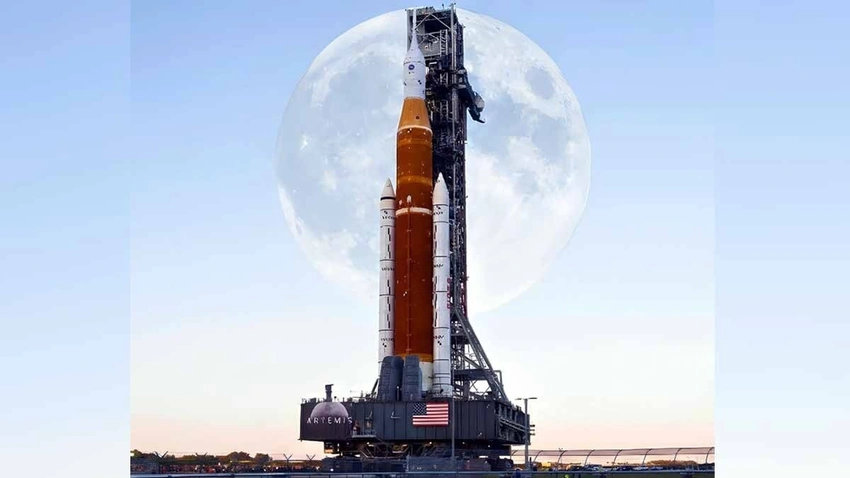
Launch details place the action at Florida’s Cape Canaveral, with the Space System rocket lifting off and tracing a route over the Atlantic before reaching lunar orbit. The mission’s behind-the-Moon phase is a key milestone in the effort to expand human exploration of deep space.
Fans and observers will be watching closely as Artemis II demonstrates both the challenges and the resilience of human spaceflight in the age of sustained Moon exploration.
