Gender Selection Gone Viral: The Ethics of Choosing Your Baby's Sex

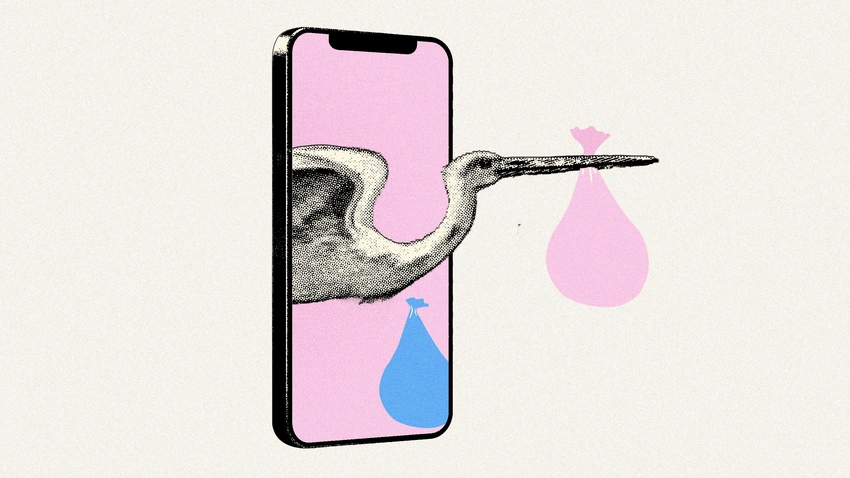
Gender Selection Gone Viral: The Ethics of Choosing Your Baby's Sex
Parents are flocking to 'The Babydust Method' to choose their baby's sex. Is this viral trend based on science, or just hopeful thinking? Dive into the buzz.
Choosing your baby's sex - it's a desire many parents secretly hold, and now, a viral trend is promising to make it a reality. Enter 'The Babydust Method,' a self-published book that's taken social media, especially TikTok, by storm. Despite being largely debunked by the scientific community, its allure is undeniable, prompting tens of thousands to try its advice.
The method's premise, first laid out in 2016, suggests that by precisely timing intercourse relative to ovulation, couples can influence whether they conceive a boy or a girl. Christina Kattula, a 31-year-old yoga teacher in Michigan, was one such parent. Hoping for a son, she tried Babydust after hearing about it on a podcast.
After conceiving a boy, she became a TikTok evangelist, telling her followers, 'Blessed either way.
But it worked for us. If you're on your last kid and you're really, really trying for something, read The Babydust Method.'
This sentiment echoes across social media. Many parents, thrilled with their desired outcome, credit the method.
Some acknowledge its scientific shakiness, like Julie Wise, a mom of two in Massachusetts, who admits it's 'not like a fact; I'm pretty sure it's just like a theory,' yet she's 'kind of a believer.' Others, like Wisconsin day-care owner Courtney Raspor, claim it has a '90 percent success rate.' The belief runs so deep that some go beyond the book's instructions, adding 'woo' elements: Faye Briotti from Australia used pink crystals and painted her nails pink, while a woman named Reagan, hoping for a girl after two boys, got rid of all her baby boy clothes to 'put out into the universe' her desire.
But what exactly is the 'science' behind Babydust? Author Kathryn Taylor, who has a bachelor's degree in microbiology, immunology, and molecular genetics but is not a medical doctor, theorized that after sex, Y-sperm (which lead to boys) capacitate faster but also die off sooner than X-sperm (which lead to girls). Her logic: to conceive a boy, have sex as close as possible to ovulation to give Y-sperm the best chance.
For a girl, have sex a few days before ovulation, allowing Y-sperm to die off, leaving X-sperm to fertilize the egg. She developed this theory after researching on PubMed, hoping to increase her own chances of having a boy.
The problem? Reproductive endocrinologists and ob-gyns like Yale's Sandra Carson, who has written about sex-selection efforts, generally consider such methods scientifically unfounded. The effectiveness parents report is often attributed to confirmation bias or the inherent 50/50 odds of conceiving a boy or a girl.
In a time when high-stakes experiences like pregnancy are fraught with uncertainty, people can become unusually susceptible to seemingly simple solutions, even if they lack scientific backing.
The explosion of social media means these folk-science 'life hacks' can spread faster than ever before, bypassing expert scrutiny.
The Bigger Picture: Hopes and Hypotheses
The allure of gender selection taps into deep-seated parental desires and cultural expectations. While the method itself might be dubious, the underlying impulse to 'plan' a family, down to gender, is potent. The widespread adoption of Babydust highlights a critical intersection: personal hopes, scientific literacy, and the powerful echo chamber of social media.
It challenges us to consider how we discern credible information from captivating but unproven theories, especially when those theories promise to fulfill one of life's most profound wishes.
