AI in Animation: Hype or the Heartbeat of Future Storytelling?
AI in Animation: Hype or the Heartbeat of Future Storytelling?
With industry giants like Mark Stern and Lloyd Braun diving into AI animation, is this technology a creative superpower for artists or a looming threat to human ingenuity? Let's break it down.
The Dawn of a New Creative Era: AI in Animation
The buzz around Artificial Intelligence in creative industries is louder than ever, and nowhere is this more apparent than in animation. We're standing at a fascinating crossroads, where the lines between human ingenuity and machine assistance are blurring, promising—or threatening—to redefine how stories are brought to life.
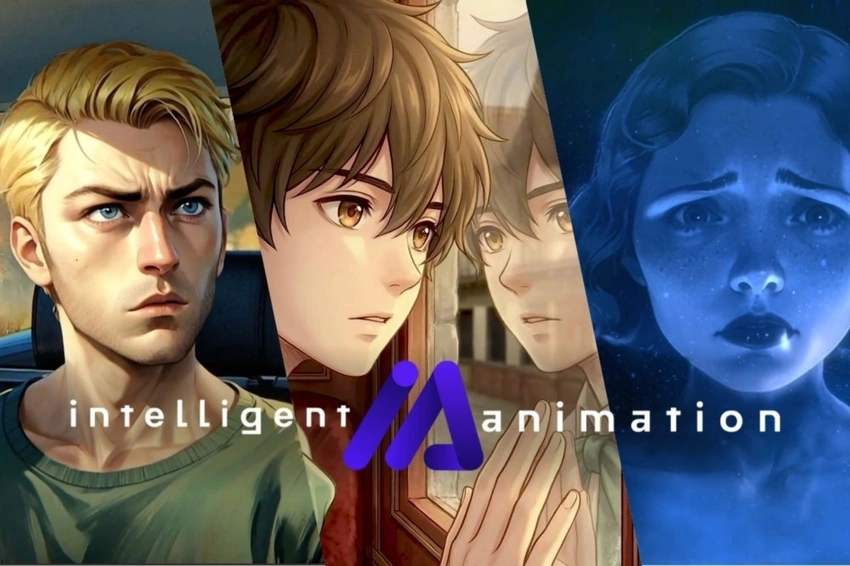
Take the recent groundbreaking move by Mark Stern , the visionary former head of original content for Syfy, and Lloyd Braun , a titan who once chaired ABC and WME. They're actively shaping it with their new venture, Intelligent Animation . It's a bold statement from seasoned executives who understand the entertainment landscape inside out.
Stern's journey into this space began quite organically, fueled by a desire to visually augment podcasts native to his studio, Echoverse. It's about finding innovative ways to enhance existing creative pipelines and unlock new storytelling avenues.
The question isn't if AI will impact animation, but how we choose to wield this powerful tool.
Empowering or Eroding Creativity?
The debate is fierce: Is AI the ultimate assistant, or a harbinger of creative drought? My take is firmly in the camp of empowerment. AI offers unprecedented capabilities for rapid prototyping, generating complex environmental details, character variations, and even assisting with intricate motion sequences that would otherwise demand immense time and resources.
Imagine artists freed from repetitive tasks, focusing instead on narrative depth, emotional resonance, and truly groundbreaking visual concepts.
This isn't to dismiss valid concerns. The fear of job displacement is real, and the worry that unique artistic styles might be homogenized by algorithms is understandable. But history shows us that new technologies, from photography to digital painting, have always faced initial resistance before becoming indispensable tools in the artist's arsenal.
The trick is to view AI not as a competitor, but as a sophisticated brush or a hyper-efficient assistant.
The Intelligent Animation Advantage
Companies like Intelligent Animation, led by experienced minds like Stern and Braun, are precisely what the industry needs to navigate this transition responsibly.
Their background suggests a nuanced approach, understanding that technology must serve storytelling, not overshadow it.
Their focus on leveraging AI to augment existing creative processes, much like Stern's initial idea for Echoverse, points towards a collaborative future rather than a replacement one.
We're not talking about AI crafting entire narratives from scratch without human input, at least not yet, and perhaps never in a way that truly resonates emotionally. Instead, consider the potential for AI to accelerate pre-production, to inspire new visual languages, or to make high-quality animation accessible to a wider range of creators.
This could democratize animation, allowing more diverse voices to tell their stories without prohibitive costs.
Ultimately, the future of storytelling in animation isn't about AI versus human creativity.
It's about AI with human creativity. It's about how forward-thinking studios and artists learn to harness these incredible tools to push boundaries, craft richer worlds, and tell more compelling stories than ever before.
The industry is evolving, and companies like Intelligent Animation are at the forefront of this exciting, albeit complex, new chapter.
