India Tests K-4 Missile From Submarine, Nears Sea-Based Nuclear Triad

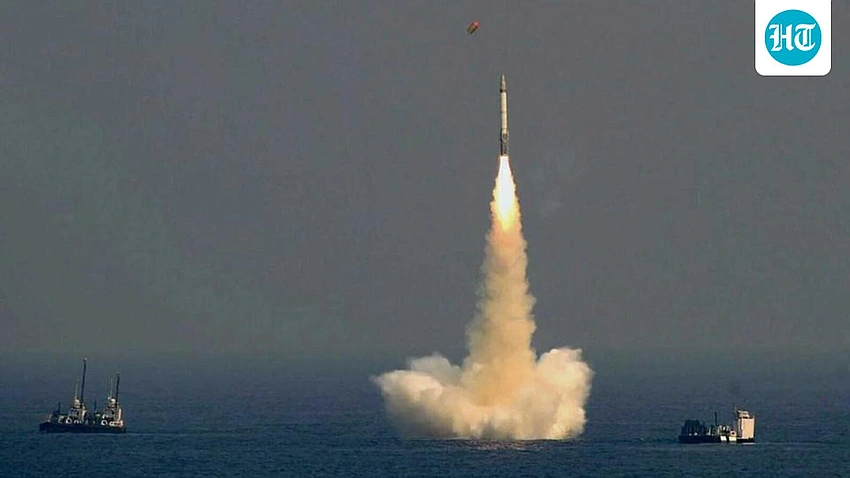
India Tests K-4 Missile From Submarine, Nears Sea-Based Nuclear Triad
India tests the 3,500-km K-4 missile from an SSBN in the Bay of Bengal, signaling progress toward a full sea-based nuclear deterrent.
India carried out a test firing of the 3,500-kilometre K-4 submarine-launched ballistic missile from its nuclear-powered ballistic missile submarine INS Arighat in the Bay of Bengal on December 23. The launch marks a key step toward the final operational validation of the country’s sea-based nuclear triad, with a few more test-firings expected before induction. The K-4, carried by Arihant-class boats, is central to India’s plan to maintain a credible second-strike capability, alongside existing K-15 missiles on other platforms, and new submarines in the pipeline.
Beyond the K-4, the Arihant-class family is set to grow, with INS Aridhaman—the third SSBN in the class—poised for commissioning in the first quarter of 2026. The government has also highlighted ongoing developments, including the S4 launch earlier in the year, and the broader push to expand the fleet as India moves toward a more robust strategic posture. The next generation of submarine-launched systems is expected to push ranges beyond 5,000 km with K-5 missiles, while the country also looks to acquire the Akula-class nuclear-powered, conventionally armed attack submarine from Russia by 2028.
Test timing was adjusted previously; the December 1-3 window was delayed after a Chinese Ocean Mineral Resources Vessel was sighted about 115 nautical miles from the navigation area. Chinese vessels Shi Yan 6, Shen Yi Hao and Lan Hai were reported in the Indian Ocean region around that time, alongside a surface fleet including a Luyang III destroyer, Jiangkai II frigate and a Fuchi-class tanker. Such movements underscore the complex security environment in the region as India pursues its expanding sea-based deterrent.
Defence officials have emphasized that the country’s nuclear platforms traditionally receive careful, restrained handling and that details of operational deployment remain tightly controlled. The broader push toward a sea-based triad is framed as a strategic capability designed to deter potential adversaries while contributing to regional stability. Looking ahead, India’s defense posture is likely to continue evolving with more test-firings, larger submarines, and new missile variants, intensifying scrutiny of the balance between deterrence, safety, and regional dynamics.
