How RAD Leads in LoRaWAN Security Solutions

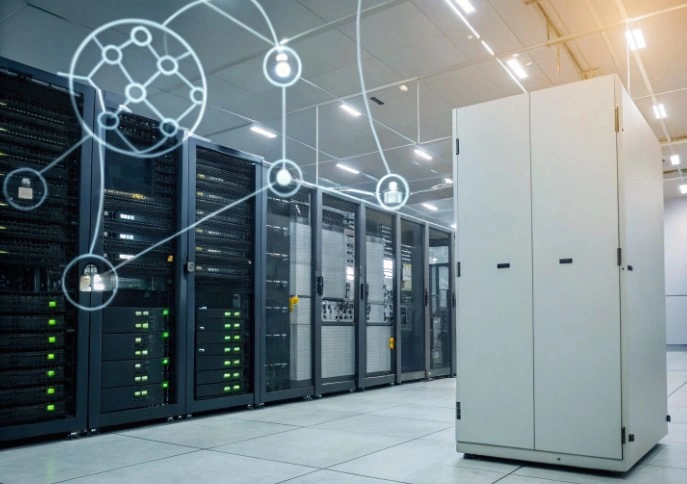
How RAD Leads in LoRaWAN Security Solutions
- The key issue: As IoT networks scale, securing remote and distributed connections across critical infrastructure becomes increasingly complex.
- Market importance: Industrial and utility operators rely on constant data flow from thousands of sensors, where downtime or intrusion can cause significant operational and financial damage.
- The role of modern solutions: Innovative gateways like RAD’s SecFlow-1p combine edge intelligence, LoRaWAN connectivity, and built-in cybersecurity to secure and optimize these environments.
- Why it matters now: With the expansion of smart grids, Industry 4.0, and remote automation, organizations need unified, resilient, and secure frameworks to protect their assets and data.
Where IoT and Security Converge
The rise of connected infrastructure has made LoRaWAN security solutions 🔗 indispensable for industries such as utilities, transportation, and public safety. Networks now reach into remote, harsh environments where conventional IT security practices are not enough. RAD’s networking products and services 🔗 close this gap by providing a cohesive, end-to-end strategy that merges IoT data collection, transport, and protection within one architecture.
The company’s approach integrates intelligent gateways, encrypted communication paths, and proactive network management, ensuring that every IoT endpoint remains visible, managed, and protected from emerging threats.
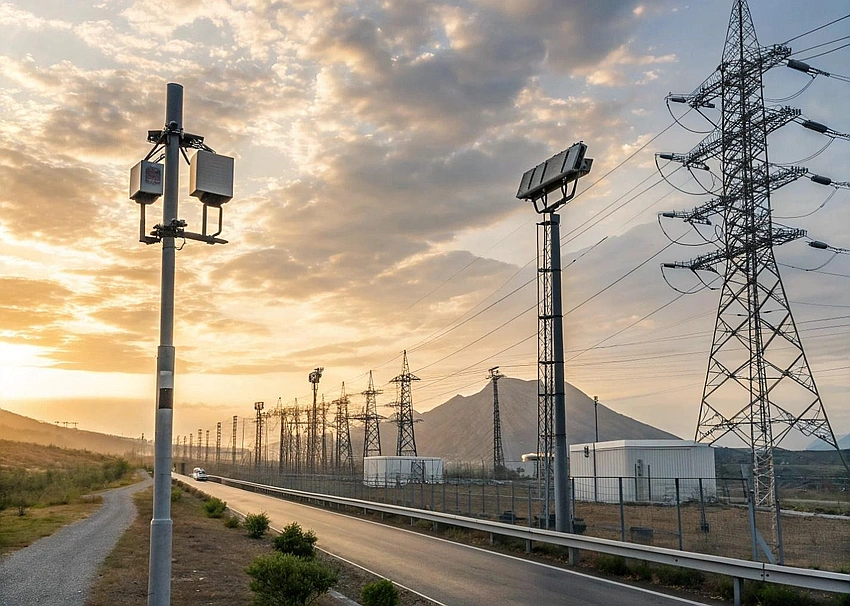
The Role of LoRaWAN in Industrial Networking
LoRaWAN (Long Range Wide Area Network) is the backbone of many modern IoT deployments. It enables long-distance, low-power communication between sensors and gateways—perfect for utilities that monitor pipelines, substations, or water systems spread across vast areas.
Unlike cellular or Wi-Fi networks, LoRaWAN’s low-bandwidth design reduces energy consumption, making it ideal for devices operating for years on a single battery. Its ability to transmit over several kilometers also allows operators to deploy fewer gateways while maintaining complete network coverage.
For industrial use, this translates into lower costs, simpler deployments, and higher data reliability—especially when paired with robust gateways like RAD’s SecFlow-1p.
Introducing RAD’s SecFlow-1p: A Secure IoT Gateway
At the heart of RAD’s IoT portfolio lies the SecFlow-1p IoT LoRaWAN Gateway, a compact and ruggedized device engineered to handle the rigors of industrial and outdoor conditions. It aggregates data from LoRaWAN sensors, remote terminal units 🔗 (RTUs), and smart meters, securely transmitting it through fiber, wireless, or LTE/5G connections.
The SecFlow-1p’s modular architecture allows for seamless integration into any operational technology (OT) network. Whether supporting a power substation, a water treatment facility, or a smart city deployment, the gateway offers exceptional flexibility and security—helping operators maintain consistent connectivity and uptime even in isolated locations.
Built-In Cybersecurity: Defending the Edge
SecFlow-1p is not just a data collector—it is a cybersecurity powerhouse. Its architecture incorporates encryption protocols, IPsec VPN support, and advanced firewalling to secure every packet of information. The gateway safeguards both northbound and southbound data flows, preventing interception or tampering between sensors and control centers.
Unlike many competing IoT gateways that require add-on security modules, RAD embeds its defenses at the hardware and software levels. These LoRaWAN security solutions protect against DDoS, spoofing, and intrusion attempts while ensuring compliance with critical infrastructure protection standards.
For organizations operating in high-risk sectors such as energy or defense, this built-in protection provides confidence that sensitive telemetry data is always safe.
Edge Computing and Intelligent Data Processing
The gateway’s integrated edge computing capabilities transform how IoT data is handled. Instead of sending all sensor data to a central cloud, the SecFlow-1p processes information locally. This minimizes latency, conserves bandwidth, and allows for instant analytics—crucial when time-sensitive decisions must be made in the field.
For instance, a smart grid operator can detect irregular power flow and trigger corrective actions immediately, without waiting for data to travel to a remote server. The ability to host containerized virtual functions also enables custom applications, from predictive maintenance to AI-based fault detection.
RAD’s networking products and services complement this with centralized management via RADview, giving operators real-time visibility and control over thousands of connected devices across multiple sites.
Private 4G/5G and Hybrid Connectivity
Another major advantage of the SecFlow-1p is its connectivity flexibility. Supporting private LTE and 5G networks—including 450 MHz, Anterix 900 MHz, and CBRS bands—the gateway enables fully independent communication infrastructures. This ensures continuous operations even when public networks fail or become congested.
Its hybrid support for fiber, Wi-Fi, Wi-Fi HaLow, and LoRaWAN gives enterprises a smooth migration path as they scale their networks. Operators can adopt new wireless technologies without overhauling existing infrastructure, reducing both cost and complexity.
Why RAD Leads in Secure Industrial IoT
RAD’s leadership in secure IoT connectivity stems from its end-to-end ecosystem. From field gateways and industrial routers to encryption SFPs and centralized management systems, every component is designed to interoperate securely.
With over four decades of networking innovation, RAD brings the reliability and resilience required for mission-critical operations. Its vertically integrated technology stack—developed entirely in-house—means tighter security control, faster innovation cycles, and long-term support.
Through solutions like SecFlow-1p, RAD enables organizations to deploy IoT networks that are not only connected but also inherently secure and manageable. This comprehensive approach positions RAD as a trusted partner for governments, utilities, and enterprises worldwide.
Industry Applications
• Power Utilities: Encrypted substation communication and continuous monitoring of transformers and transmission lines.
• Transportation: Secure telemetry for rail systems, traffic monitoring, and airfield communications.
• Public Safety: Protected channels for first responders and emergency coordination centers.
• Smart Cities: Reliable aggregation of data from lighting systems, parking sensors, and environmental monitors.
Each use case demonstrates how a secure, flexible gateway such as SecFlow-1p transforms conventional infrastructure into intelligent, self-healing networks capable of adapting to evolving threats and demands.
The Future of Secure IoT Networking
As digital transformation accelerates, edge-based security and hybrid connectivity will become standard expectations. The convergence of AI analytics, SD-IoT (Software-Defined IoT), and private 5G will redefine how industrial networks operate.
RAD continues to innovate in this direction, integrating predictive analytics and smart diagnostics into its gateways and routers. By combining automation, visibility, and defense, RAD helps operators move toward self-managed, resilient infrastructures that keep critical systems online around the clock.
Organizations adopting LoRaWAN security solutions today are effectively future-proofing their operations. They gain scalability, transparency, and protection against threats that legacy architectures can no longer handle.
FAQs
What is LoRaWAN and why is it important for industrial IoT?
LoRaWAN allows low-power, long-range communication between sensors and gateways, ideal for monitoring dispersed assets like substations or pipelines.
How does SecFlow-1p ensure IoT network security?
It integrates IPsec encryption, firewalling, and secure management protocols to safeguard every data flow.
Can SecFlow-1p operate in private 5G networks?
Yes. It supports private 4G/5G networks on Anterix, 450 MHz, and CBRS bands, ensuring reliable and independent connectivity.
Which industries benefit most from RAD’s solutions?
Utilities, transportation, government agencies, and smart city operators that require dependable, secure IoT communication.
How does edge computing improve performance?
By processing data locally, it reduces latency, minimizes bandwidth use, and enables real-time decision-making at the device level.
What differentiates RAD from other providers?
RAD’s vertically integrated technology, global expertise, and commitment to security innovation set it apart in industrial networking.
Does SecFlow-1p support multi-technology backhaul?
Yes. It can transmit over fiber, LTE/5G, Wi-Fi HaLow, and LoRaWAN links for unmatched flexibility.
How does RAD’s SD-IoT enhance resilience?
It creates self-healing network topologies that maintain connectivity even during component failures or cyber incidents.
Can SecFlow-1p integrate with legacy infrastructure?
Absolutely. It interfaces with SCADA systems and other legacy devices, enabling secure modernization without full replacement.

Login to comment.
No thots yet. Be the first to share your thoughts!