5 Graphic Novels to Read If Persepolis Has Ruined Everything Else for You

5 Graphic Novels to Read If Persepolis Has Ruined Everything Else for You
5 Graphic Novels to Read If Persepolis Has Ruined Everything Else for You
If Persepolis made you realise that history can feel more personal, funny, strange and painfully human in a graphic novel, these five books might be exactly what you’ve been looking for.
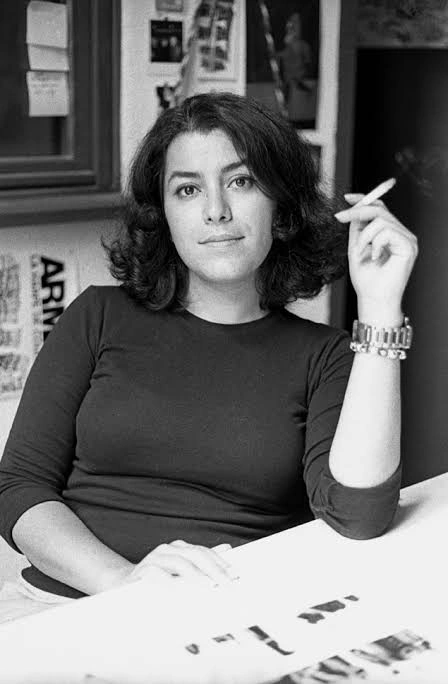
 The trouble with Persepolis is that it makes the graphic novel look deceptively simple. Marjane Satrapi draws a girl with a black veil, a cassette tape, a cigarette, a row of schoolgirls and suddenly an entire political history has somewhere to live. Iran is no longer a headline. It is Marjane's bedroom, her grandmother's house, the awkwardness of being thirteen and the particular humiliation of having your parents think you are too young to understand what is happening around you.
That is probably why finding “something like Persepolis” is so difficult. What you are really looking for is not another book about revolution or exile. You want that feeling of history becoming personal on the page. These five come surprisingly close.
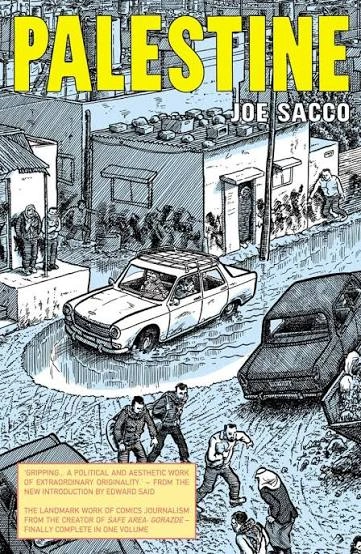
Palestine: when journalism becomes a drawing
Joe Sacco's Palestine is probably the most obvious place to go next, and also one of the best. Sacco travelled through the West Bank and Gaza in the early 1990s, speaking to Palestinians living under Israeli occupation and turning those encounters into a work of graphic journalism. It was originally published as a series before being collected as a book. What makes it so compelling is the awkwardness of the form. Sacco is present in his own reporting. He listens, asks questions, gets tired, and moves through unfamiliar places. The people he meets are not arranged neatly around a historical argument. Their stories keep interrupting it. That feels close to what Satrapi does in
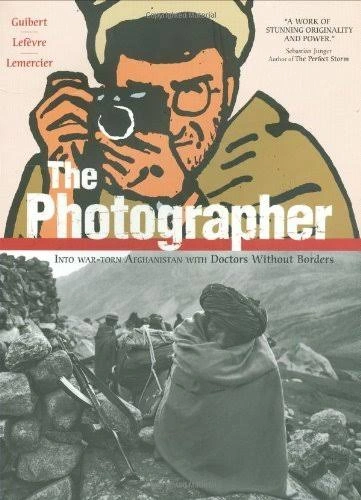
The Photographer: a war seen one photograph at a time
Didier Lefèvre went to Afghanistan in 1986 with a Médecins Sans Frontières mission during the Soviet-Afghan War. He went as a photographer, intending to document the journey and the people caught inside the war. Years later, Emmanuel Guibert turned Lefèvre's photographs and memories into The Photographer, combining photographs with drawn sequences.
It is an unusual thing to read because the photographs keep breaking through the drawings. You can be following a hand-drawn figure across a mountain and suddenly find yourself looking at the actual face of the person you have just been reading about. That collision between memory and evidence gives the book its force. Afghanistan does not remain a distant place where something called “the war” happened. You feel the walking. You see the people waiting. The historical event becomes a physical journey.
If Persepolis taught you that political history can be carried inside a childhood memory, The Photographer shows what happens when someone tries to carry a war home in photographs.
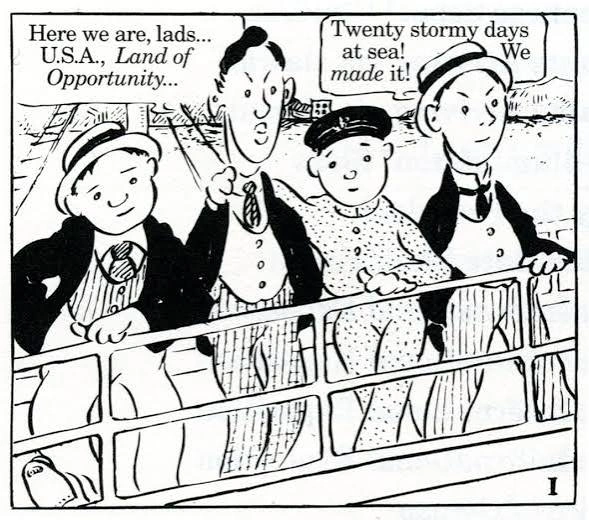
The Four Immigrants Manga: history with a sense of humour
Henry Yoshitaka Kiyama's The Four Immigrants Manga is much older than the books surrounding it here. First published in 1931, it follows four young Japanese immigrants in San Francisco during the early twentieth century as they look for work and attempt to build lives in a country where discrimination is part of the landscape. Kiyama himself was an immigrant, and the book draws heavily from his experiences. What makes it fascinating is the comedy. The characters get themselves into ridiculous situations, and the episodes often end with a gag. Yet the humour sits alongside the reality of exclusion and discriminatory policies directed towards Japanese immigrants.
That combination feels important. Persepolis is funny in ways that people sometimes forget when they talk about it as a political memoir. Marjane is a child. She likes punk music. She wants trainers. She has arguments with her parents. A revolution is happening, but she is still a person who occasionally behaves like an idiot. Kiyama understood that, too. Sometimes the most revealing way to write about prejudice is to let people remain funny while they are living through it.
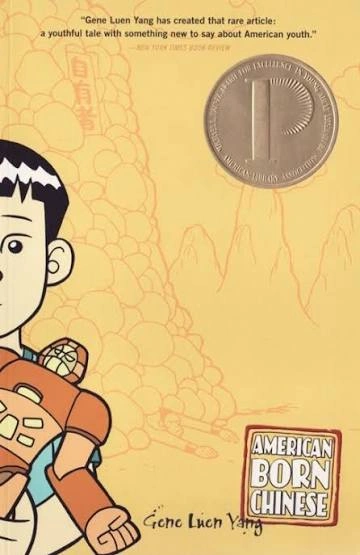
American Born Chinese: the story that hides another story
Gene Luen Yang's American Born Chinese is the book on this list I would recommend if what you loved most about Persepolis was its treatment of identity. The book follows Jin Wang, a Chinese-American teenager struggling with where he belongs. Alongside his story are episodes involving the Monkey King and a character named Danny whose Chinese cousin, Chin-Kee, embodies racist stereotypes. The three strands eventually converge. Yang takes his time before showing you why these stories belong together. That is part of the pleasure. You spend much of the book thinking you understand what you are reading, only to realise that the book has been arranging the pieces somewhere underneath you. There is something very Persepolis about that experience. Satrapi writes identity as something you keep discovering retrospectively. The person Marjane was at fourteen only makes complete sense once you know who she becomes.
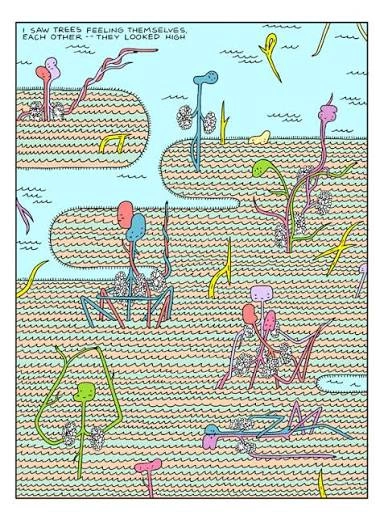
Big Kids: growing up as a body horror story
Michael DeForge's Big Kids is the strangest recommendation here, which is exactly why I want it on the list. It follows a teenage boy exploring his sexuality while his body changes, but the book keeps introducing something more surreal into ordinary adolescence: his family and friends begin turning into twigs. The transformation is never treated as a simple metaphor with one neat answer waiting at the end. That is what makes DeForge's work so interesting. Puberty is already an absurd thing to experience. Your body changes without asking permission, everyone suddenly seems to know things you do not, and you are expected to act as though none of this is strange. Big Kids takes that feeling seriously enough to make it bizarre.
What Persepolis leaves behind
Perhaps the best thing about these books is that none of them really resembles Persepolis. They take different routes through migration, war, racism and adolescence, but they share Satrapi's instinct for bringing history down to human scale. A war becomes a man carrying a camera through Afghanistan. Immigration becomes four men trying to make rent in San Francisco. Racism becomes a teenager who desperately wants to fit in. A revolution becomes a girl arguing with her parents about music.
That is the particular magic of the graphic novel. The page can hold the historical record and the ridiculous little details of a person's life at the same time. Persepolis understood this almost perfectly. These books are worth reading because they understand it too.

Login to comment.
No thots yet. Be the first to share your thoughts!