Centre seeks report after elephants killed by train in Assam's Hojai

Centre seeks report after elephants killed by train in Assam's Hojai
Centre orders a report into the Hojai elephant-train crash and urges monitoring of elephant movements along tracks to prevent future tragedies.
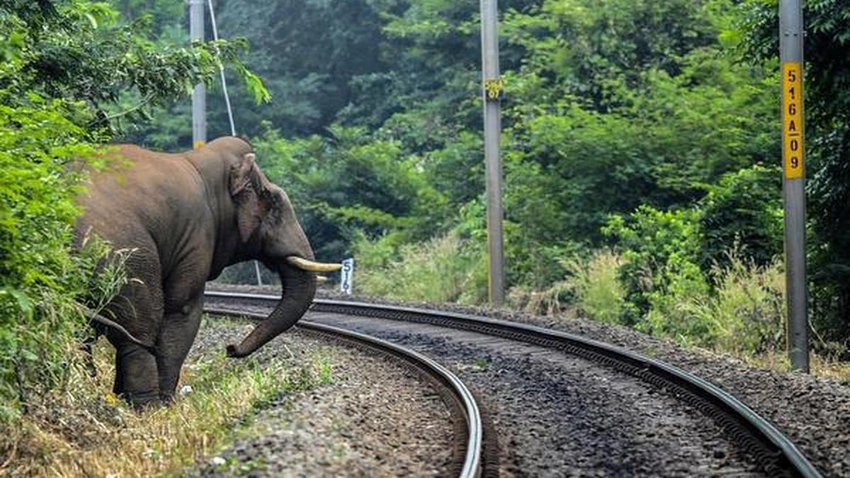
Eight elephants were killed when a herd was struck by the Sairang-New Delhi Rajdhani Express near Hojai in Assam, derailing five coaches and the engine in the early hours of Saturday. The incident highlights the ongoing risk that railway lines running through elephant habitats pose to both wildlife and rail operations. A team comprising railway and forest officials, along with local stakeholders, has been formed to coordinate response efforts in Assam and other hotspot areas where elephant habitats intersect rail corridors. The Centre has directed railway authorities to work closely with forest departments to monitor elephant movement along tracks and to report back with findings from the incident.
There are about 1,100 elephant accident zones nationwide, where preventive measures are being scaled up. In this case, authorities emphasised the need for improved driver awareness and faster communication between train operators and forest teams to avert similar tragedies in the future. The government’s focus on stronger coordination seeks to balance wildlife protection with essential rail connectivity, particularly in states with dense elephant populations.
On the funding front, Environment Minister Bhupender Yadav noted allocations of ₹112 crore for the Sundarbans Tiger Project and ₹344 crore for elephant conservation over the last five years, though he alleged much of these funds remained largely unutilised. He also cited biodiversity and tourism figures to illustrate the broader importance of conservation, with the Sundarbans drawing around 9.5 lakh tourists annually and Ranthambore drawing roughly 18-19 lakh. The broader message is clear: safeguarding elephants and other wildlife is not only about preventing tragedies but also about sustaining biodiversity-heavy economies and communities living near habitats.
Officials said district magistrates have been instructed to keep forest departments updated on elephant movements along highways as well as rail lines. This integrated approach reflects a growing recognition that protecting wildlife corridors is essential for reducing human-wildlife conflicts and ensuring safe, reliable rail travel across elephant-rich landscapes.
