Delhi's New Barapullah Phase-III Faces Gridlock; AI Promises Relief!

Delhi's New Barapullah Phase-III Faces Gridlock; AI Promises Relief!
Commuters caught in 3-km jams on Delhi's new Barapullah corridor just after opening! Discover why & how AI-powered traffic solutions are set to revolutionize city travel. #DelhiTraffic
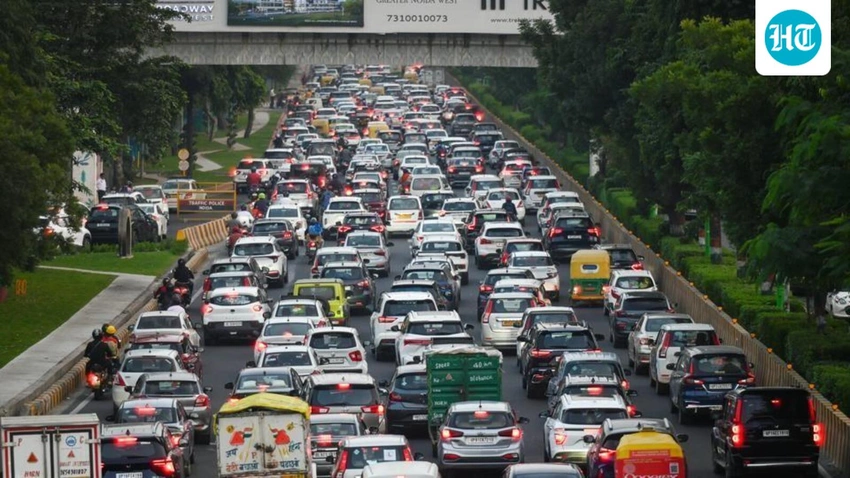
Delhi's much-anticipated Barapullah Phase-III corridor, meant to ease the daily grind for thousands of commuters, opened with a frustrating start this week, immediately plunging users into extensive traffic jams. A day after its inauguration, the new route, intended to provide a faster link between East and South Delhi, saw delays stretching up to an hour and queues of vehicles spanning 3-4 kilometers.
Commuters expressed significant disappointment, questioning the very purpose of the new infrastructure if it led to worse conditions.
Many who took to the new corridor on its opening day reported being stuck for prolonged periods. Amitabh Mathur, a commuter heading from Mayur Vihar to IIC, recounted being trapped for over 40 minutes, with the jam extending for several kilometers. Another, Gaurav Anand, mentioned that the stretch from Mayur Vihar towards Ashram was even temporarily closed during peak hours, exacerbating the problem.
Sachin Raghav from Greater Noida, who spent over two hours on the flyover, expressed disbelief, stating,
What was the point of saying that it would only take 15 minutes when it had to actually take more than the regular time?
The Delhi Traffic Police attributed this initial gridlock to a sharp increase in traffic volume on the new route. A key factor identified was the corridor's design, where seven lanes eventually merge into a mere three, creating a significant bottleneck that couldn't handle the sudden influx of vehicles. This situation highlights the persistent challenge of managing Delhi's burgeoning road traffic, even with new infrastructure.
However, there's a glimmer of hope on the horizon. To combat the city's notorious congestion, Delhi is rolling out a comprehensive ₹1,789.52-crore traffic-management project covering 42 major corridors. A central component of this initiative is the new AI-enabled Intelligent Traffic Management System (ITMS).
This advanced system is designed to revolutionize traffic flow by enabling signals to adapt automatically to real-time traffic conditions, optimizing signal timings dynamically across the city.
One of the most promising features of the ITMS is its ability to create "green corridors" for ambulances and other emergency vehicles. This means that traffic signals will automatically turn green ahead of an approaching emergency vehicle, ensuring a clear and swift path through congested areas.
This technology promises to significantly reduce response times for critical services, potentially saving lives.
The project also includes provisions for enhanced enforcement and is planned for implementation over two years. While the initial experience with Barapullah Phase-III has been challenging, these broader technological interventions aim to bring much-needed relief and efficiency to Delhi's complex urban transportation network.
