More Than Halfway Through 2026, Are We Really Living in 2016 Again?
More Than Halfway Through 2026, Are We Really Living in 2016 Again?
More Than Halfway Through 2026, Are We Really Living in 2016 Again?
A decade later, we’re not just nostalgic for 2016. We’re nostalgic for the internet, culture, and carefree version of ourselves we didn’t realise we were losing.
I can’t quite believe 2016 was a decade ago; some parts of it still feel stubbornly recent, which is why the mythology that has grown around the year surprises me. Ten years ago, it was simply the year everyone was having; now it arrives on TikTok as an aesthetic—a ‘core’, if you will—accompanied by old Instagram photographs, the grungiest Snapchat filters that I am not even sure belong to 2016, and sticky pop songs that had once seemed impossible to escape. Then came the meme “2026 is the new 2016”, as early as December 2025, and has been repeated often enough to acquire a life beyond jest, as memes often do. People are not only revisiting the culture of 2016. They are beginning to live out the present through it.
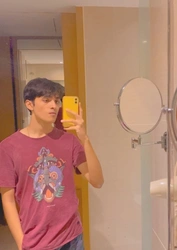
That is a more interesting phenomenon than another round of Y2K-style recycling. The 2016 revival is less about bringing back a particular wardrobe or playlist than about recovering a particular way of experiencing popular culture. The old photographs are recognisable partly because they look so little like photographs made for the internet we have now: the flash is harsh, the framing is accidental, and somebody is usually pulling a face. They carry the traces of a time when documenting a moment and constructing an image of yourself had not yet become quite so difficult to separate.
The 2016 we have invented
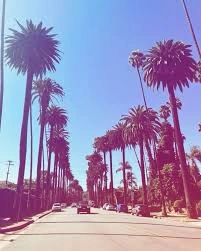
The historical 2016 was considerably less pleasant than its current reputation. It was a year of political upheaval and uncertainty, and the people living through it had no reason to regard December as the end of some culturally coherent golden age. Yet those complications have largely fallen away from the version of the year circulating now. What remains are the things that can survive the compression of a social-media post: a photograph, a song, a filter, a familiar piece of clothing.
This is a particularly efficient form of cultural memory. An entire year can be reduced to a handful of recognisable objects, and those objects can then be made to stand for an atmosphere. The Sheaf's recent examination of the 2016 revival points towards this selective reconstruction, particularly the way contemporary nostalgia separates the culture of the period from the circumstances in which it actually existed.
The effect is visible whenever an old photograph reappears online. Nobody has to explain why it feels like 2016. The image itself seems to know. The quality of the camera, the clothes, the background, even the way people are standing in relation to one another become evidence. A photograph that once recorded an ordinary evening can now function as a document of a lost social world.

Before the feed knew what you wanted
The strongest part of the nostalgia concerns the internet. By 2016, social media was hardly new. Instagram had already become a major part of everyday life, Snapchat had its own visual language and smartphones had made the camera an extension of the body. Yet the online environment remembered from that period seems less aggressively organised than the one that followed.
The old chronological feed is an especially revealing example. It is strange now to remember that seeing a post once depended largely on when someone had uploaded it. There was no great mystery about why a friend's photograph had appeared at the top of the screen: they had posted it five minutes ago. The system did not appear to know you personally.
The difference between that experience and the contemporary feed is not simply technical. It changes the atmosphere of being online. A platform that presents you with whatever has been selected for you produces a different relationship with attention from one that merely shows you what your friends have posted.
This helps explain why the photographs of 2016 have become so desirable. Their imperfections suggest a weaker pressure to optimise the self. The image could be blurry because the camera was bad. It could be badly composed because nobody had yet decided that every photograph needed to look intentional. People were performing online, certainly, but the performance had not yet acquired quite the same degree of professional polish.
Abbie B. Elliott's account of the current nostalgia gets close to this particular feeling: the attraction lies in a period when people were already deeply immersed in online culture, while still retaining the impression that social media was one part of life rather than its organising principle. That is a difficult distinction to measure, but remarkably easy to recognise.
The past is getting younger
There is another reason 2016 feels significant in 2026: the interval required for something to become nostalgic appears to be shrinking.
The older model of nostalgia involved genuine distance. A song disappeared from popular circulation, a decade passed, a generation changed, and then somebody rediscovered it. Contemporary culture has compressed that process. Luminate's 2026 Retro Revival report records substantial engagement with older music among listeners aged 13 to 24, including interest in music released before some of those listeners were born. Older film and television catalogues are also performing strongly on streaming platforms.
The cultural past is therefore no longer confined to the memories of people who lived through it. A teenager can acquire nostalgia for a period that belongs to somebody else's childhood. The internet supplies the photographs, the playlists and the references, while the algorithm supplies the route into them.
That makes nostalgia increasingly independent of memory. You do not necessarily have to remember an era for it to feel familiar.
The commercial implications are obvious. Old culture comes with a reputation already attached to it. A new song has to persuade an audience that it deserves attention; an oldsong can return carrying the accumulated authority of having survived. The retro revival is therefore not simply a sentimental return to the past. It is also a market in which familiarity itself has become valuable.
Even the supposedly accidental photograph has become reproducible. Grain can be added. Flash can be simulated. A carefully composed photograph can be made to look as though nobody cared how it turned out. We have reached the peculiar point at which spontaneity has its own visual language.
Why 2016?
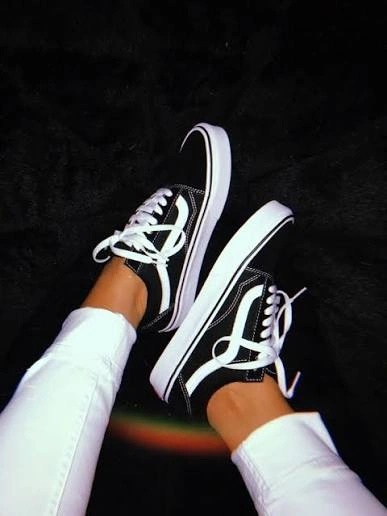
A decade is long enough to make the past visible, evidently. Someone who was sixteen in 2016 is twenty-six now. Someone who was twenty-six is thirty-six. A whole set of people have crossed the boundary between remembering themselves as young and recognising that other people now remember them as young.
The year is also recent enough to remain intimate. Its cultural objects have not yet become genuinely foreign. The songs can still be recognised. The photographs can still contain people we know. The platforms are familiar enough to remember using, but old enough to have acquired a faint archaeological quality. This is probably why 2016 works better as a nostalgic object than 2010 or 2005 might. It sits at the precise point where personal memory begins to resemble cultural history.
There is a second advantage to the year. We know how it ends. A completed year is remarkably easy to romanticise. Its events have acquired consequences. Its trends have acquired names. Its cultural significance can be argued over because the evidence is already there. The uncertainty that surrounded the year while it was happening has been replaced by hindsight. The present cannot offer that kind of narrative comfort.
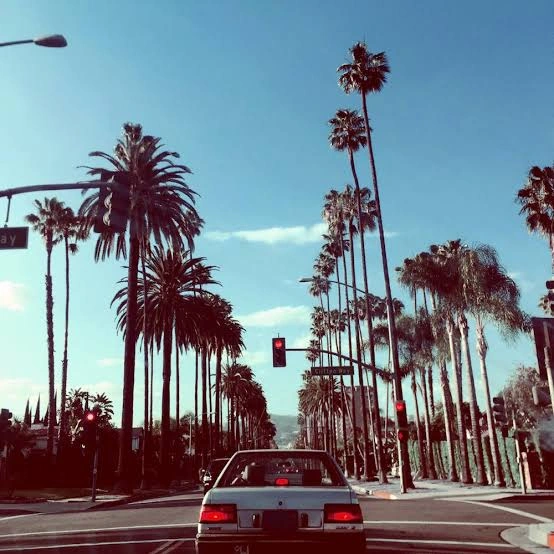
And why now?
The strange thing about calling 2026 the new 2016 is that the comparison says as much about the present as it does about the past. There is a recognisable exhaustion underneath the nostalgia. Contemporary culture moves quickly enough that the recent past is constantly being excavated for material. Old songs return before they have had time to become properly old. A fashion trend can disappear and reappear within a few years. Internet culture increasingly resembles an enormous archive being searched for something that might make the present feel more coherent.
The Sheaf's argument about being “stuck in the past” points towards this broader discomfort. The attraction of 2016 is partly that it provides a stable cultural reference point at a time when everything else seems to be changing too quickly. The BBC's coverage of the revival captures the same peculiar shift: a year that was, until very recently, part of living memory has begun to acquire the status of a cultural era.
Perhaps this is what makes the comparison between 2016 and 2026 so compelling. The two years do not need to resemble one another in detail. They only need to occupy similar positions in our emotional understanding of the present: both are moments in which popular culture feels capable of becoming nostalgic almost as soon as it has happened.
The year we are already losing
There is a final irony in all of this. The people whose photographs now constitute the visual archive of 2016 had no idea that they were making an archive. They were taking pictures because they were somewhere, because someone had a phone, because the evening seemed worth recording. The significance came later, when the circumstances around the photograph had disappeared.
The same thing is happening now, although we are conscious of it in a way previous generations were not. We know that 2026 will eventually become material for nostalgia. We know that today's songs will acquire the warmth of distance. We know that the technologies which currently seem permanent will eventually look dated. We even know the language in which the future will describe us: remember when everything was simpler?
And still, knowing this changes very little. The present does not announce the moments that will matter. It is made up mostly of things too ordinary to notice while they are happening: the photograph taken badly, the song heard on the way home, the conversation nobody thinks to record. Their significance is produced later, when memory has had time to rearrange them.
This may be the real reason 2026 feels like 2016. We are looking at a completed year and mistaking its completeness for simplicity, while living through another year whose meaning has not yet settled.
Perhaps ten years from now, somebody will look back at 2026 with the same bewilderment with which we now look back at 2016. They will find our photographs strangely intimate. They will hear a song that we currently regard as disposable and attach an entire period of their life to it. They will wonder why the internet seemed so much less complicated then.
They will have forgotten, as we have, that the people inside the photograph could not see the decade waiting behind them.
That is the part of nostalgia that is impossible to reproduce deliberately. We can bring back the filter, the song, the clothes and the photograph. We can recreate almost everything except the blissful ignorance of not knowing we were dwelling in the past.
