Kelly Clarkson's AI Chart Shocker: Separate But Equal?

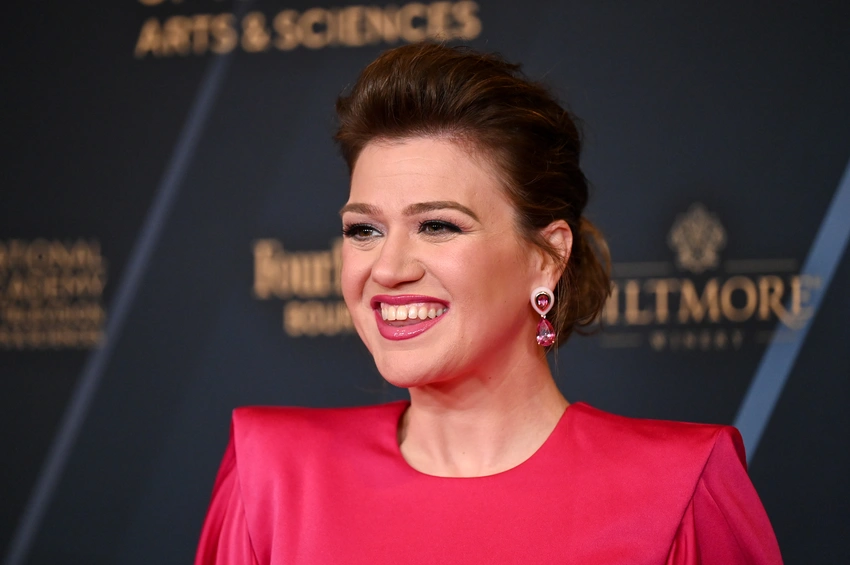
Kelly Clarkson's AI Chart Shocker: Separate But Equal?
Kelly Clarkson is shaking up the music world with her 'controversial' take on AI: she loves it, but thinks AI-generated music needs its own charts. Is she right?
Kelly Clarkson has never shied away from an honest opinion, and her recent thoughts on artificial intelligence in music are no exception. Appearing on the Las Culturistas podcast, she dropped what she admitted was a “controversial” take, one that's got the industry buzzing: she loves AI, but draws a firm line at AI artists competing directly with humans on music charts.
Now, before you jump to conclusions, Clarkson isn't anti-AI. Far from it. She's quick to say, “I love AI.
Controversial, I don't care.” She believes it can do “amazing things” and even confessed to having fun with it artistically herself. Her enthusiasm for the creative potential is clear: “It's really cool and creative what we're going to create with AI musically.” She envisions a future where
People who maybe can't do certain things will be able to do it now and I think it's a fun field to play in.
The Human Touch vs. Algorithmic Artistry
But here's where her 'issue' arises. The core of her argument is about fair competition and valuing human artistry. "But when you see AI artists competing on a chart with humans, I have an issue.
I think there should be a separate chart.” This isn't about shunning AI, but about creating a distinction, a clear delineation for listeners and creators alike.
Her analogy perfectly encapsulates her point:
It's basically like having Olympics and then you're having robots compete with humans, well who's going to throw it further? Oh, I wonder.
It's a straightforward, common-sense comparison that highlights the fundamental difference in creation. While AI can simulate creativity, it lacks the lived experience, the emotion, the sheer humanity that defines a human artist's output.
Where Do We Draw The Line?
Clarkson recognizes that AI “is not going anywhere.” It’s a powerful tool with applications far beyond music, offering “so many amazing scientific things.” Her stance isn't about halting progress, but about responsible integration. “I don’t think it’s going anywhere but I think you have to be able to differentiate… We can’t lose human. We can’t lose what that is.”
Her perspective offers a valuable middle ground in an often-polarized debate. It's not a rejection of technological advancement, but a strong call for preserving the unique value of human creativity in the digital age. By suggesting separate charts, she proposes a way for both human and AI-generated music to flourish and be celebrated, each in their own right, without one undermining the other.
What do you think - is it time for separate musical arenas?
