India's Russian Oil Imports Soar in May: A Key Global Energy Shift

India's Russian Oil Imports Soar in May: A Key Global Energy Shift
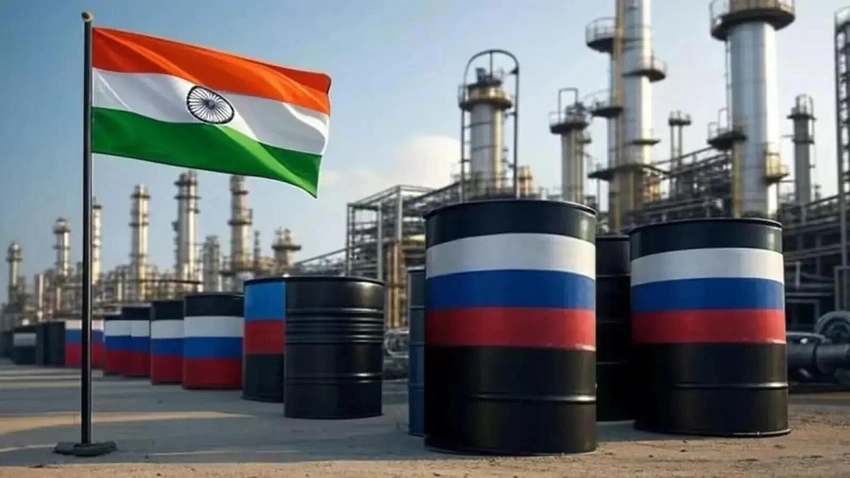
India solidified its position as the second-largest buyer of Russian oil in May, with imports soaring to 5.8 billion euros. Indian refiners are driving this global energy shift. #IndianOilImports #GlobalEnergy
India significantly ramped up its imports of Russian oil in May, solidifying its position as the world's second-largest buyer of Russian fossil fuels. A report revealed that India imported an estimated 5.8 billion euros ($6.7 billion) worth of Russian hydrocarbons during the month.
The surge was predominantly driven by crude oil purchases, which constituted about 83% of the total, valued at 4.8 billion euros. Alongside crude, India also imported 550 million euros worth of oil products and 429 million euros in coal from Russia. This substantial increase in Russian imports contributed to an 8% month-on-month rise in India's total crude import volumes in May, with Russian imports specifically jumping by 21%.
Several of India's major refining hubs played a crucial role in this heightened activity. The Vadinar refinery in Gujarat saw a 36% increase in unloaded Russian crude volumes from April levels, while the nearby Jamnagar refining complex experienced a 14% rise. State-run refiners also re-engaged with Russian oil supplies, with the New Mangalore and Visakhapatnam refineries, which had briefly halted imports, restarting and significantly increasing their purchases by 13% and 42% respectively in May. The Paradip refinery on Odisha's east coast also recorded its highest volume of Russian crude in two years, underscoring the continued appeal of discounted Russian barrels for Indian refiners amidst evolving geopolitical landscapes.
India's strategy to increase Russian oil imports comes in the wake of Western sanctions and trade restrictions imposed on Moscow following its invasion of Ukraine. This has reshaped global energy flows, with India emerging as a key destination for Russian energy. Interestingly, this approach has received backing from some international figures. Finland's Foreign Minister, Elina Valtonen, for instance, supported India's purchase of Russian oil, stating that such transactions bought under the price cap help stabilize global energy supplies.
While India stood as the second-largest buyer, China remained the top importer of Russian energy in May, with purchases totaling nearly 7 billion euros ($8.1 billion). The sustained demand from major economies like India highlights the complex interplay of economic interests and geopolitical realities in the global energy market.
