Poland Rail Sabotage on Aid Route to Ukraine, PM Says

Poland Rail Sabotage on Aid Route to Ukraine, PM Says
Poland's PM condemns sabotage on a key rail line used to deliver aid to Ukraine, with officials warning foreign links are likely as investigations unfold.
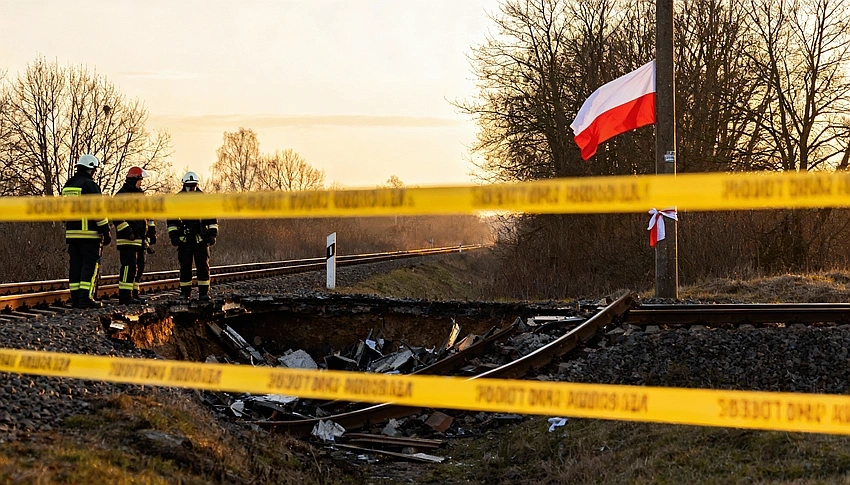
Poland’s prime minister Donald Tusk condemned an unprecedented act of sabotage aimed at the security of the Polish state and its citizens, after two separate incidents were reported on a key railway line towards Ukraine. The line, on the Deblin-Warsaw route, is critical and carries up to 115 trains a day, including trains delivering aid to Ukraine. In the first incident, near the village of Mika, authorities confirmed damage to a section of track as a result of an explosion, with Tusk saying it was mostly likely intended to blow up a train on that route. Separately, a second incident near Puławy involved damage to the overhead line that forced an emergency stop of a passenger train carrying 475 passengers, with reports of a possible obstruction on tracks. No injuries were reported in either case.
Security services minister Tomasz Siemoniak said the likelihood that the incidents were inspired by foreign intelligence services was deemed to be very high, and noted that parts of the investigation must remain confidential due to involvement of a foreign state. Defence minister Władysław Kosiniak-Kamysz added that the armed forces would inspect the remaining 120 kilometres to the Polish-Ukrainian border to check for further obstacles and ensure the line remains secure.
The two acts of sabotage are being treated as coordinated, with authorities stressing the severe risk to aid deliveries and civilian safety. The government has pledged to pursue those responsible regardless of who their backers might be, underscoring the priority placed on protecting critical infrastructure and humanitarian routes to Ukraine. As investigators work to piece together what happened, officials stressed the need for transparency and vigilance given the potential international implications of the attack.
