Why Are We Still Reserving Our Indian Clothes Just for Diwali?

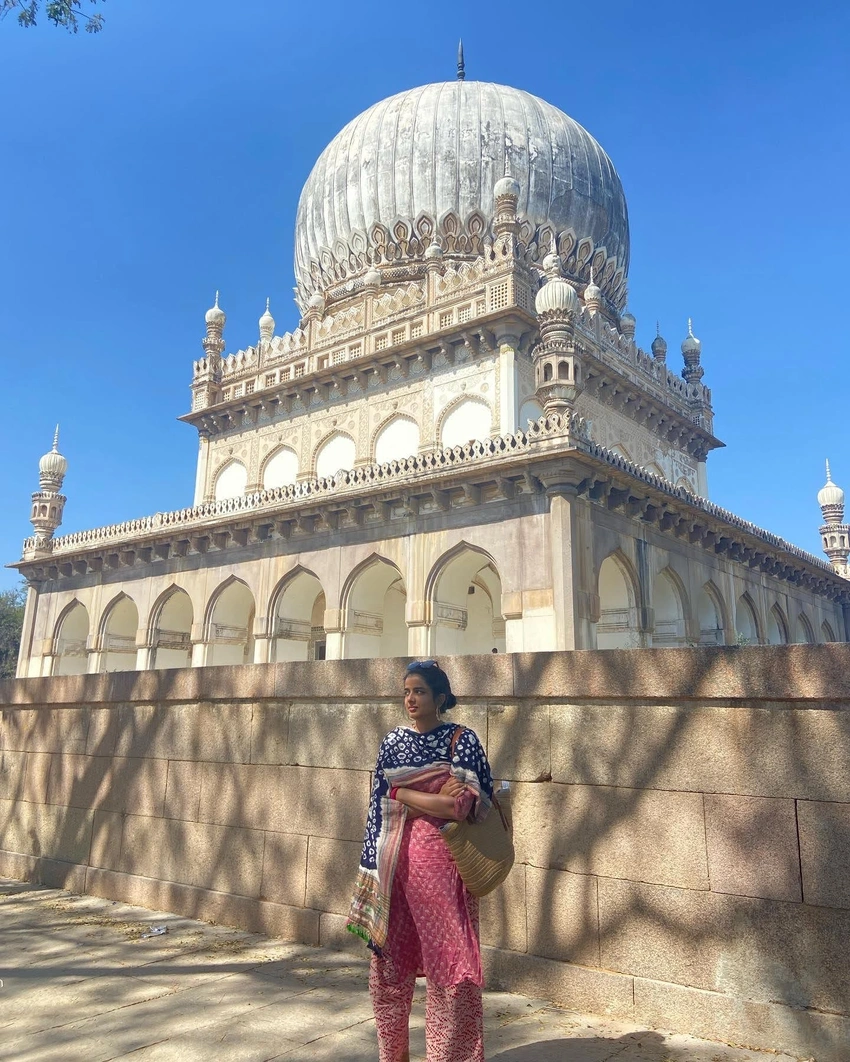
Why Are We Still Reserving Our Indian Clothes Just for Diwali?
A fresh look at why traditional Indian attire like the salwar kameez deserves a spot in our daily wardrobes beyond weddings and festivals.
I once wore a salwar kameez to a first date, only to learn that it would be used to write off my personality. My date surmised that I was the shaadi type. That is quite a lot to conclude from an outfit.
As someone who works in fashion, this incident got me thinking about the curious business of dressing oneself. We spend years working with clothes, yet when it comes to our own wardrobes, we often draw arbitrary lines between the Western and the traditional. On one hand, we have the sombre Western dresser with black, grey, and navy blue dominating the space.
On the other is her excitable counterpart, someone who loves wearing silks in rani pink, bandhej in purple, and kalamkaris, complete with a trunkful of dupattas and boxes of jhumkas. The Indian half of our wardrobes is considerably more sentimental.
It features items purchased from artisans, small bazaars, and little shops from across the country.
There are silver jhumkas bought from a Sikh gentleman near Hawa Mahal in Jaipur, and ajrakh kurtas from Zaid Khatri in Ajrakhpur. These pieces are, in many ways, a travel diary. They served as uniforms in Bharatanatyam classes, oppressive dress codes in pre-university years, and reliable traveling companions through rural India.
They are practical on unreserved trains and comfortable in remote villages. Yet, when high-stakes scenarios enter the picture, a client meeting or a room full of people in the fashion industry, we become guarded. We relegate ethnic wear to the godforsaken term Aunty.
Why is that? In films, the salwar kameez-wearing girl has often been the one who needs a makeover. Think of Shefali, played by Amrita Puri in Aisha, whose kurta-heavy wardrobe made her unfashionable, warranting an intervention.
The sari, on the other hand, never faced this issue.
It can be sexy, powerful, and glamorous, as seen with Rani in Rocky Aur Rani Kii Prem Kahaani.
Perhaps the salwar kameez has simply been terribly unlucky in its public relations.
In fashion, we celebrate Indian textiles, crafts, and artisanal traditions on runways, yet we rarely translate them into our mundane, everyday lives.
It is time to break the cycle and wear our heritage whenever we damn well please.

Login to comment.