Israel hits southern Lebanon with airstrikes amid fragile ceasefire

Israel hits southern Lebanon with airstrikes amid fragile ceasefire
Israel launches a fresh wave of airstrikes on southern Lebanon, targeting towns near the border as tensions with Hezbollah flare despite a ceasefire.
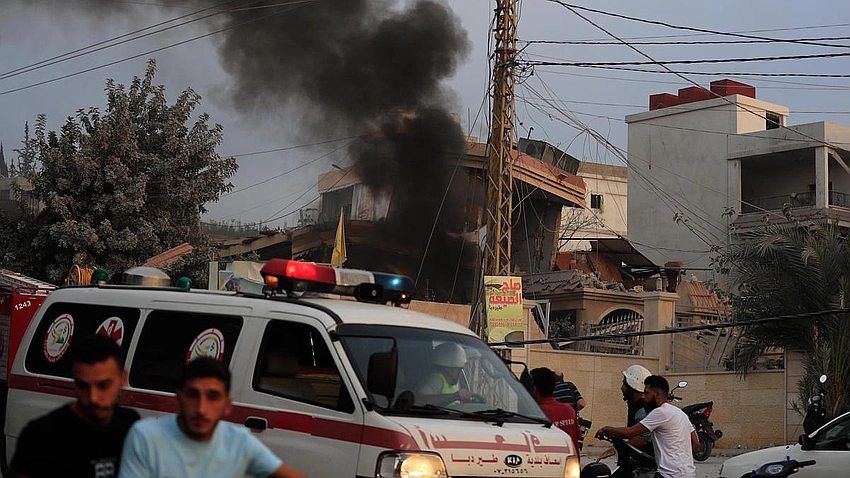
Israel launched a new wave of airstrikes in southern Lebanon, with warplanes targeting the towns of Kfar Dounine, Tayr Debba and Zawtar al-Sharqiya about an hour after evacuation warnings were issued to residents. No deaths were reported at the time of briefing, and the strikes stood out for their intensity and for coming after a government warning to civilians to move away from potential targets. The timing underscored the enduring volatility along the border, even as a ceasefire agreement held for nearly a year.
The fighting comes amid a broader dispute over Hezbollah’s weapons capabilities and the terms of a ceasefire that envisages Hezbollah disarming and both sides refraining from cross-border violence, while Israel is expected to withdraw from Lebanese territory. Notably, Israel still maintains five positions inside Lebanon, a factor that critics say complicates any lasting peace. Israeli officials have contended that the assault was aimed at preventing Hezbollah’s rearmament and reducing what they describe as the group’s military infrastructure.
In the lead-up to the strikes, an Israeli military spokesperson released maps of the buildings designated as targets and urged residents to keep a distance of at least 500 metres. The spokesperson stressed that the structures were believed to be linked to Hezbollah, a claim repeatedly invoked by Israeli authorities whenever the region faces renewed clashes. Israeli operations in Lebanon have been frequent for years, but Thursday’s episode appeared unusually forceful and was preceded by the evacuation advisory, a pattern associated with attempts to limit civilian casualties.
Hezbollah, for its part, has reiterated support for the Lebanese army and signaled its readiness to resist what it calls the Israeli occupation, while simultaneously indicating it remains committed to the ceasefire. The group has fired at Israel only once since the December 2024 ceasefire and recently sent an open letter to Lebanon’s leadership, asserting its right to resist while discouraging direct negotiations with Israel. In response, Lebanese officials have urged restraint, and Israeli officials have pledged continued vigilance along all border fronts. The current cycle of strikes underscores the fragility of the ceasefire and the risk of a broader escalation that could draw in regional powers and impact civilians across southern Lebanon.
Cover image source: Israeli jets strike southern Lebanon towns, escalating attacks 🔗
