DMK’s K.N. Nehru files nomination on day one in Tiruchi West

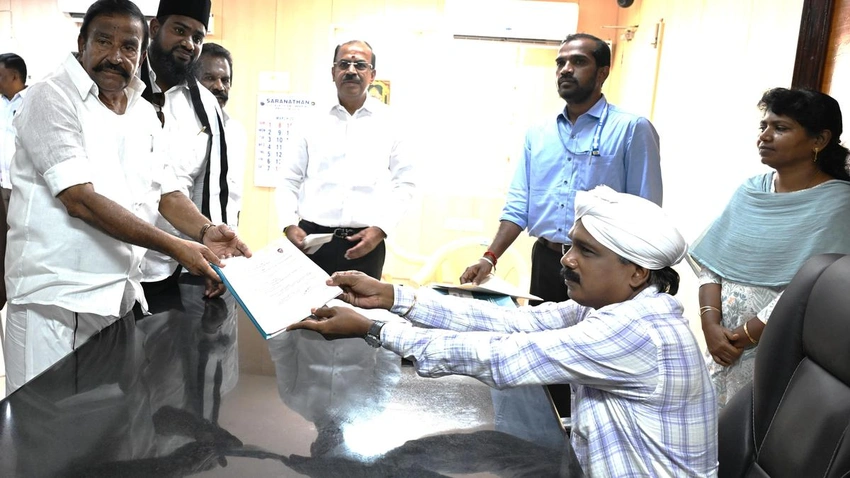
DMK’s K.N. Nehru files nomination on day one in Tiruchi West
DMK leader K.N. Nehru files nomination for Tiruchi West on the first day of filings in Tiruchi district, with Kathiravan and NTK candidates also submitting papers.
On Monday, the first day of nomination filings for the Assembly polls, DMK leader and Municipal Administration and Water Supply Minister K.N. Nehru filed his papers for the Tiruchi West constituency before the Revenue Divisional Officer and Returning Officer Salai Thavavalan. At 73, Nehru is contesting the seat for the sixth time since 2006, with DMK functionaries and alliance partners by his side.
In the accompanying affidavit, Nehru declared moveable assets worth about ₹1.25 crore in his name and roughly ₹2.39 crore in his wife's name. He reported self-acquired immovable assets valued at about ₹1.17 crore, inherited assets around ₹12.57 lakh, and immovable assets in his spouse’s name valued at ₹1.50 crore. He indicated no liabilities and no pending criminal cases. After filing, Nehru expressed confidence that the people trust the DMK alliance and Chief Minister M.K. Stalin’s promises, adding that Tiruchi East has long been a DMK stronghold when asked about actor Vijay contesting from that seat.
Apart from Nehru, S. Kathiravan — the DMK candidate for Manachanallur — also filed his nomination. Kathiravan reported movable assets of ₹37.38 crore in his name, ₹14.90 crore in his wife’s name, and ₹4 crore in his son’s name. His immovable assets (self-acquired and inherited) totaled about ₹44.50 crore in his name, ₹31 crore in his wife’s name, and ₹21.72 crore in his son’s name, with liabilities of ₹16.80 crore. In another development, K. Bhuvaneswari of Naam Tamilar Katchi (NTK) filed her nomination, and a couple of Independents also submitted papers. NTK has candidates in nine of the district’s constituencies, signaling a wide-scale outreach ahead of polling.
The nomination day underscores a high-stakes campaign in Tiruchi district as parties begin positioning around local concerns such as water supply, roads, and livelihoods.
