OpenAI Unveils GPT-5.5 and Workspace Agents for Seamless AI Workflows

OpenAI Unveils GPT-5.5 and Workspace Agents for Seamless AI Workflows
OpenAI reveals GPT-5.5 and introduces workspace agents in ChatGPT, enabling autonomous cross-team tasks and smarter coding and research capabilities.
OpenAI has unveiled GPT-5.5, a more powerful iteration that the company says improves coding, makes better use of computing resources, and advances research capabilities. The announcement signals a continued push toward more capable AI that can tackle complex tasks with less hand-holding. The company emphasizes stronger performance in programming, data handling, and multi-step reasoning that could speed up development and experimentation across teams.
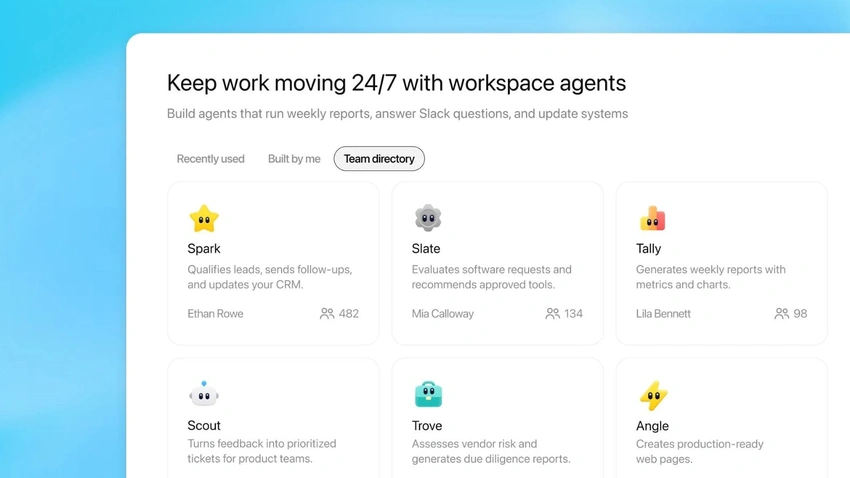
In a related move, OpenAI rolled out workspace agents in ChatGPT, turning the AI from a passive helper into autonomous teammates across an organization. These agents are designed to work in the cloud, handling repeatable and structured workflows that involve multiple tools and collaborators. They can operate even when users are offline and can be integrated with workplace tools like Slack, email systems, and internal databases to keep context and progress in sync.
Within a company, workspace agents can tackle a wide range of activities, such as writing code, summarizing documents, preparing reports, or even responding to messages. A sales agent, for example, could pull insights from call notes, analyze customer data, draft follow-up emails, and share updates with the team—all automatically as part of predefined workflows. Users describe the desired workflow in natural language, and ChatGPT guides them step by step in building and deploying the agent.
Industry observers say the combination of a stronger GPT-5.5 model and autonomous workspace agents marks a milestone for enterprise AI, shifting from static assistants to proactive collaborators. However, security, governance, and oversight will be critical as organizations scale these capabilities to avoid data leaks and ensure predictable outcomes. The overall momentum points to AI-enabled collaboration becoming a core driver of productivity in the modern workplace.
