Caltech shows precision gene tweaks could fortify crops without GM hurdles

Caltech shows precision gene tweaks could fortify crops without GM hurdles
Caltech shows precision gene tweaks could fortify crops without GM hurdles
Caltech scientists reveal precision genetic engineering that could transform farming and fight climate change.
Agriculture is under threat. Rising heat and water scarcity are pushing crops to their limits. A new study from Caltech shows how precision genetic engineering can change the game.
Agriculture is under threat. Rising heat and water scarcity are pushing crops to their limits. A new study from Caltech shows how precision genetic engineering can change the game.
Trevor Nolan, assistant professor of biology and bioengineering, has published a roadmap in Science. His team explains how subtle tweaks in plant gene expression can make crops stronger. This is not about blunt genetic modification. It is about fine control.
The research focuses on brassinosteroids. These plant hormones regulate cell division and elongation. Too much or too little stops growth. The right balance creates deeper roots and better nutrient uptake. Nolan calls this the Goldilocks effect.
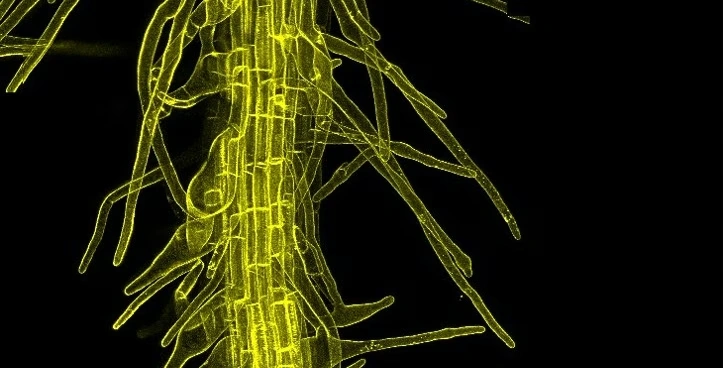
His lab used single cell transcriptomics and advanced imaging. They tracked how roots grow cell by cell. They mapped hormone signals across time and space. This precision revealed how plants adapt to stress.
The findings go beyond Arabidopsis thaliana. Nolan and collaborators at Ghent University are applying the same methods to rice maize and sorghum. These are staple crops for billions. The goal is clear. Build plants that survive drought and deliver food security.
One user comment on Phys.org 🔗 captured public sentiment. This is the kind of science we need right now. Feeding people must be the priority. Another reader added If this works in real fields it could be revolutionary.
The tone of the research is confident. Nolan insists that precision engineering is safer and smarter than broad edits. It avoids unintended side effects. It uses the plant’s own systems.
Funding came from the Research Foundation of Flanders the Shurl and Kay Curci Foundation and Caltech’s Rosen Bioengineering Center. The collaboration shows global urgency.
This work is not just academic. It is a call to action. Climate change is accelerating. Farmers need tools. Precision genetic engineering offers one.
The message is simple. Future crops can be designed to thrive not just survive.
Trevor Nolan, assistant professor of biology and bioengineering, has published a roadmap in Science. His team explains how subtle tweaks in plant gene expression can make crops stronger. This is not about blunt genetic modification. It is about fine control.
The research focuses on brassinosteroids. These plant hormones regulate cell division and elongation. Too much or too little stops growth. The right balance creates deeper roots and better nutrient uptake. Nolan calls this the Goldilocks effect.
His lab used single cell transcriptomics and advanced imaging. They tracked how roots grow cell by cell. They mapped hormone signals across time and space. This precision revealed how plants adapt to stress.
The findings go beyond Arabidopsis thaliana. Nolan and collaborators at Ghent University are applying the same methods to rice maize and sorghum. These are staple crops for billions. The goal is clear. Build plants that survive drought and deliver food security.
One user comment on Phys.org 🔗 captured public sentiment. This is the kind of science we need right now. Feeding people must be the priority. Another reader added If this works in real fields it could be revolutionary.
The tone of the research is confident. Nolan insists that precision engineering is safer and smarter than broad edits. It avoids unintended side effects. It uses the plant’s own systems.
Funding came from the Research Foundation of Flanders the Shurl and Kay Curci Foundation and Caltech’s Rosen Bioengineering Center. The collaboration shows global urgency.
This work is not just academic. It is a call to action. Climate change is accelerating. Farmers need tools. Precision genetic engineering offers one.
The message is simple. Future crops can be designed to thrive not just survive.
#PrecisionBreeding #PlantBiotech #SustainableFarming #CropScience #AgTech
