Rogue SpaceX Falcon 9 Rocket Set to Slam into the Moon This Week!

Rogue SpaceX Falcon 9 Rocket Set to Slam into the Moon This Week!
A 4,000kg SpaceX Falcon 9 rocket stage, abandoned in orbit after a past mission, is on an unexpected collision course with the Moon. Discover the details of this rare event and what scientists hope to observe from the im
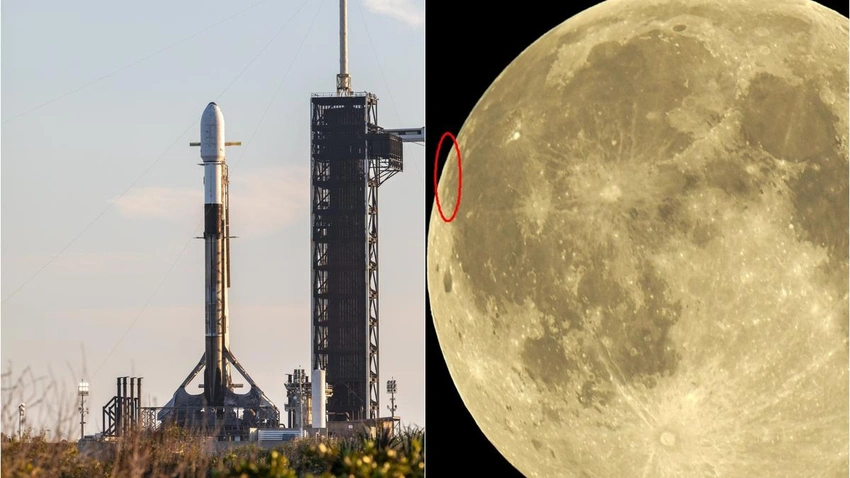
Prepare for an unusual lunar event this week as a rogue SpaceX Falcon 9 rocket stage is projected to crash into the Moon's surface. The 4,000-kilogram rocket body, which has been hovering aimlessly in high-Earth orbit for over 1.5 years, is expected to make an impact near the Einstein crater on August 5 at 12:05 PM IST.
This isn't a planned maneuver by SpaceX. The Falcon 9 rocket was originally launched over a year ago, carrying two private robotic lunar landers, Blue Ghost and Resilience. While SpaceX's Falcon 9 rockets are renowned for reusing their first stages, the upper stages are typically single-use. Usually, these upper stages are deorbited and guided back to a controlled area for recovery or destruction. However, in this particular mission, the rocket used up all its upper-stage fuel to successfully deploy its rovers, leaving it without the capacity for a controlled deorbit.
Julianna Scheiman, director of NASA satellite missions at SpaceX, addressed the situation recently. She stated that SpaceX had carried out "a different manoeuvre to ensure that the second stage itself is safe per the appropriate rules and regulations." However, it appears that despite these efforts, natural forces acted on the abandoned rocket, altering its trajectory and setting it on an unintended collision course with our celestial neighbor.
The impact is anticipated to create a crater approximately 89 feet wide on the lunar surface. While there's no danger to Earth, astronomers are keenly awaiting this event. It provides a unique opportunity to study the Moon's subsurface and the dynamics of such high-velocity impacts. This rare, unintentional lunar crash offers an unplanned experiment for scientists to gather valuable data on our Moon.
