Why ‘Non‑Veg’ Milk Is Holding Up the India–US Trade Deal?

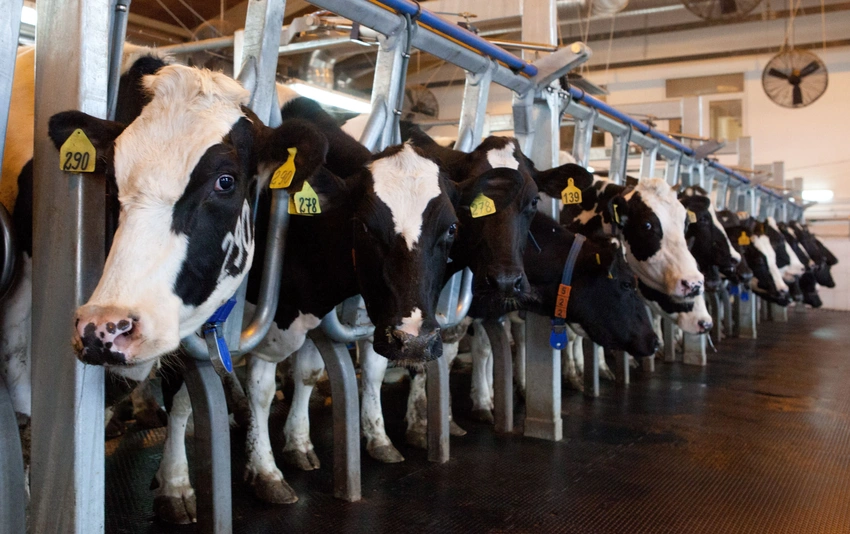
Why ‘Non‑Veg’ Milk Is Holding Up the India–US Trade Deal?
The trade agreement between the US and India faces challenges, particularly over dairy imports. Cultural issues might impact negotiations as the deadline approaches. Learn more about the situation.
An obstacle has been encountered in the trade agreement between the United States and India. The two sides are having difficulty reaching an agreement on dairy and agriculture as the negotiations go on. According to reports, cultural concerns about "non-veg milk" are the reason India is reluctant to permit American dairy imports into the nation. This occurs amid US President Donald Trump's August 1 deadline to negotiate with nations or face high tariffs.
"Non-Vegetarian" Milk: What Is It?
To ensure that the imported milk originates from American cows that have not been fed animal-based products, such as meat or blood, India is exerting pressure on the US for stringent certification. India has allegedly declared it a "non-negotiable red line," citing cultural and religious objections.
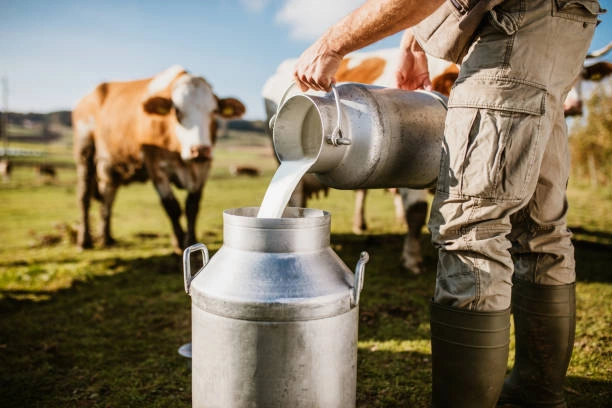
A 2023 World Atlas study estimates that 38% of Indians identify as vegetarians. Every day, Hindus incorporate ghee and milk into their religious ceremonies.
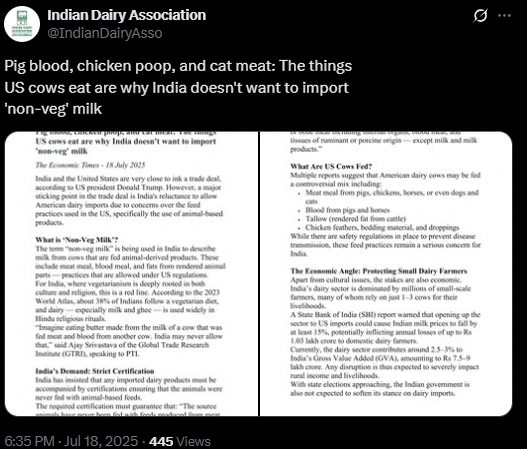
“Imagine eating butter made from the milk of a cow that was fed meat and blood from another cow. India may never allow that,” Ajay Srivastava of Global Trade Research Institute (GTRI), a New Delhi-based think tank, told PTI.
For food imports, veterinary certification is required by India's Department of Animal Husbandry and Dairy.
"The source animals have never been fed with feeds produced from meat or bone meal, including internal organs, blood meal, and tissues of ruminant origin and porcine origin materials except milk and milk products," is a requirement for granting these certificates.
What American Cows Are Fed?
Animal products are used as cattle feed in the United States. Cows are still permitted to consume feed that contains parts of fish, poultry, pigs, horses, and even dogs or cats. Additionally, according to a 2004 Seattle Post-Intelligencer report, cattle can still be fed pig and horse blood for protein and tallow, a hard fat made from rendered cattle parts, as a source of fat.
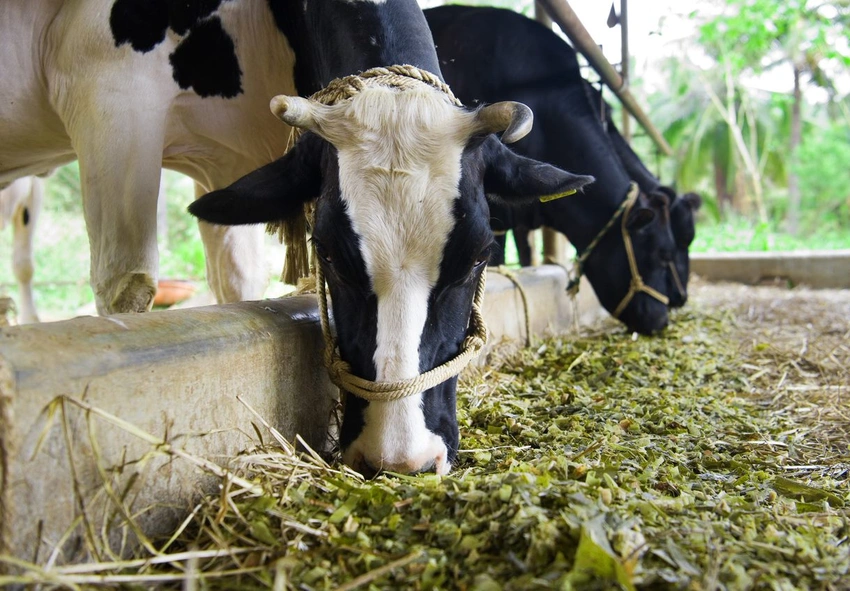
A combination of bedding material, feathers, spilled feed, and chicken droppings can be used as a low-cost feed additive, according to reports, even though there are regulations on animal ingredients in cattle feed to stop the spread of diseases.
Why India Won't Give In On Dairy?
Dairy products from cows fed animal products are no longer allowed to be imported into New Delhi.
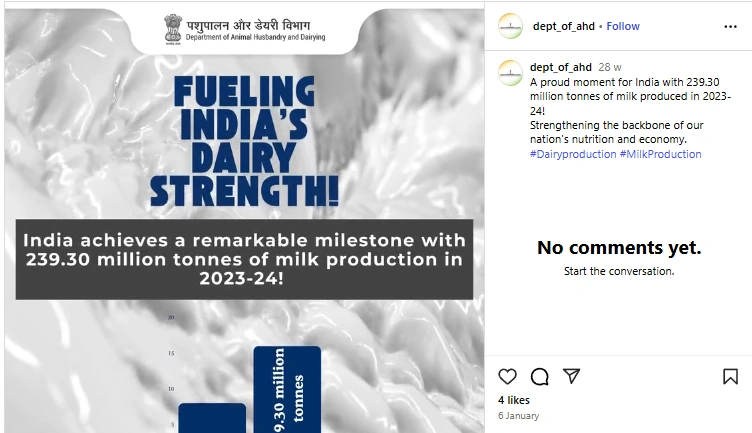
India, the world's biggest milk producer and consumer, might not consent to the US entering its dairy market. Over eight crore Indians are employed in the dairy industry, which also provides food for over 140 crore people. According to the Basic Animal Husbandry Statistics 2024, India produced 239.30 million tonnes of milk in 2023–2024.
India must examine its economic aspects in addition to its religious and cultural ones. A recent analysis by the State Bank of India (SBI) estimates that opening the dairy industry to American imports could result in yearly losses for Indian dairy farmers of Rs 1.03 lakh crore. The study highlighted the substantial subsidies that the US dairy industry received, as well as the effect on the earnings of small-scale dairy farmers.
In addition to illustrating food science, the "non-vegetarian milk" controversy captures a conflict between trade politics, economics, and culture. The outcome of this dispute could have long-term effects on US-India relations.
#TradeTalks #USIndia #DairyImports #Agriculture #CulturalConcerns
